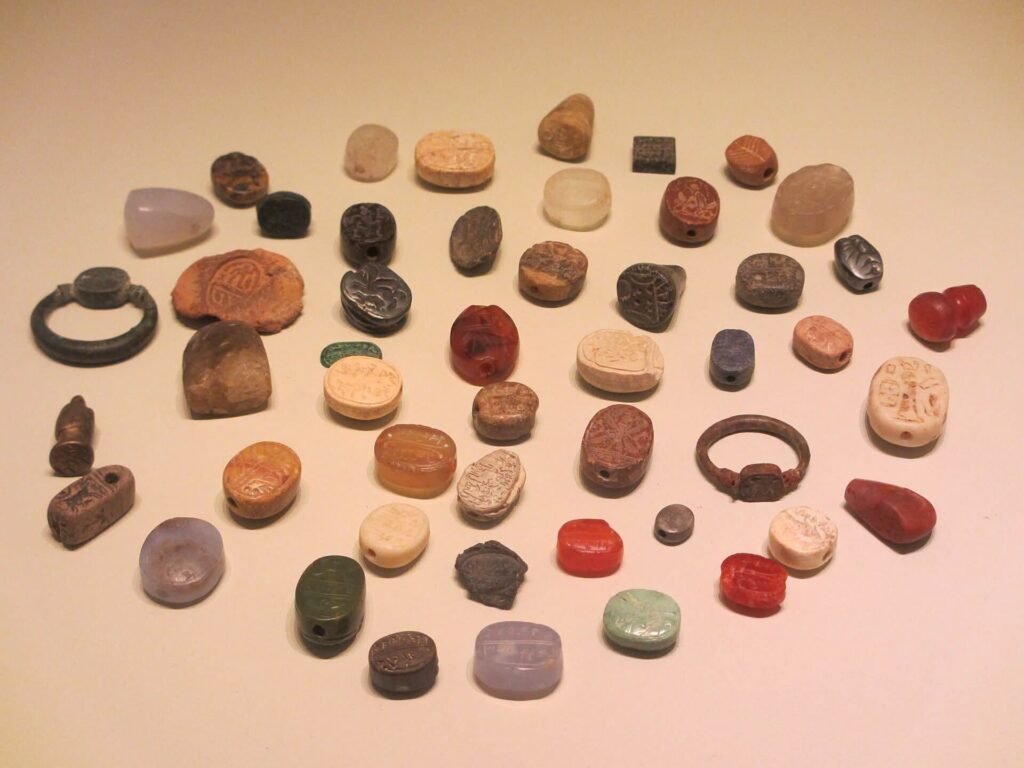
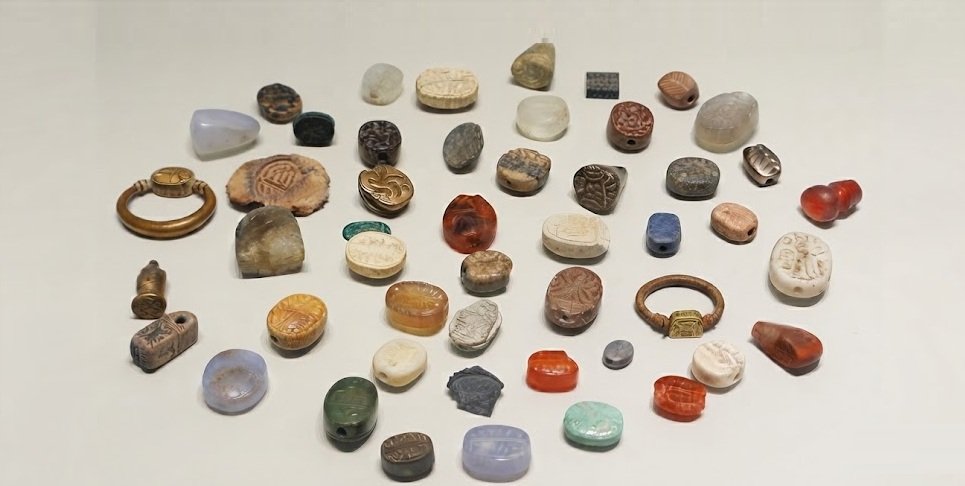
Approximately 2,700-year-old ancient Hebrew seals exhibited at the Israel Museum in Jerusalem are among the most important archaeological finds from the Kingdom of Judah period. According to experts, these artifacts provide valuable information about the daily life and state administration of people who lived in Jerusalem in the 8th and 7th centuries BC.
The seals, dating back to the First Temple period, are engraved with personal names written in ancient Hebrew. These seals were used to seal letters, legal documents, and various storage vessels, serving the function of a modern signature. Each seal was considered a unique mark distinguishing its owner and served to prevent the forgery of documents.
During archaeological excavations, dozens of seals and clay seal impressions were discovered in Jerusalem and various areas of the ancient Kingdom of Judah. Some of them bear the names of state officials mentioned in the Bible, creating remarkable parallels between archaeological finds and historical sources. Other seals bring the traces of ordinary people whose names were not preserved in history to the present day.
Scientists state that these finds were made approximately 100 to 200 years before the Babylonian army occupied Jerusalem and destroyed the First Temple in 586 BC. According to experts, the seals are of significant historical importance for studying the administrative and social life of the Hebrew-speaking society that existed in Jerusalem at that time.
These exhibits, currently preserved at the Israel Museum, are considered one of the most valuable examples of the material and cultural heritage of the ancient Kingdom of Judah.