
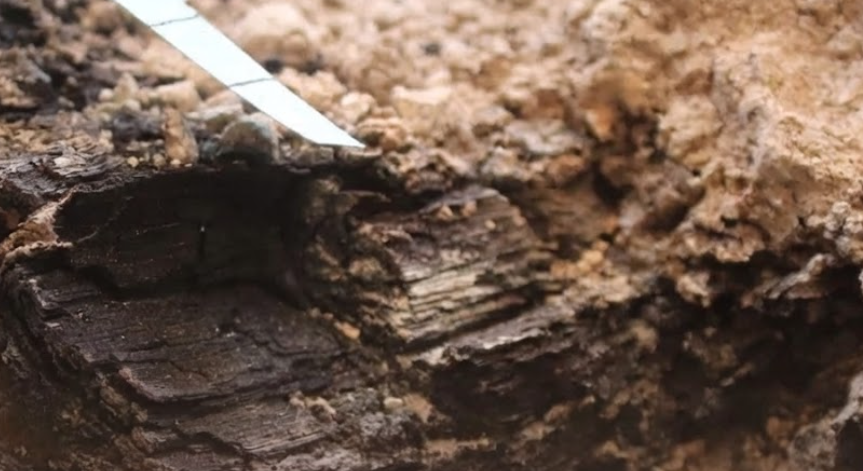
Rare wooden beams, believed to have burned during the destruction of the First Temple in 586 BCE, have been discovered during archaeological excavations in Jerusalem. The Israel Antiquities Authority released information regarding the find ahead of the Tisha B'Av fast.
According to the agency, the discovery of such well-preserved wood samples from the Iron Age in Israel is considered a rare occurrence.
The beams, made of sycamore wood, were unearthed during recent excavations at the Givati Parking Lot in the City of David, within the Jerusalem Walls National Park. The excavations were conducted jointly by experts from the Israel Antiquities Authority and Tel Aviv University.
Researchers concluded that the beams were part of the roof covering an inner courtyard of a building dating back to the First Temple period. When the Babylonians occupied Jerusalem and destroyed the First Temple in 586 BCE, the resulting fire caused the roof to collapse, leaving the wood preserved under a layer of plaster that had detached from the walls and melted due to high temperatures.
One of the excavation directors, Efrat Bocher, stated that this specific layer of plaster allowed the wooden beams to remain in an exceptionally good state of preservation for thousands of years.
According to experts, this find will make a significant contribution to obtaining new scientific data regarding the architecture of the First Temple period and the destruction that occurred in Jerusalem in the 6th century BCE.