The night of 20 January
A city whose television had been cut off learned of the state of emergency towards morning — when hundreds of people were already in hospitals and morgues.
How it unfolded
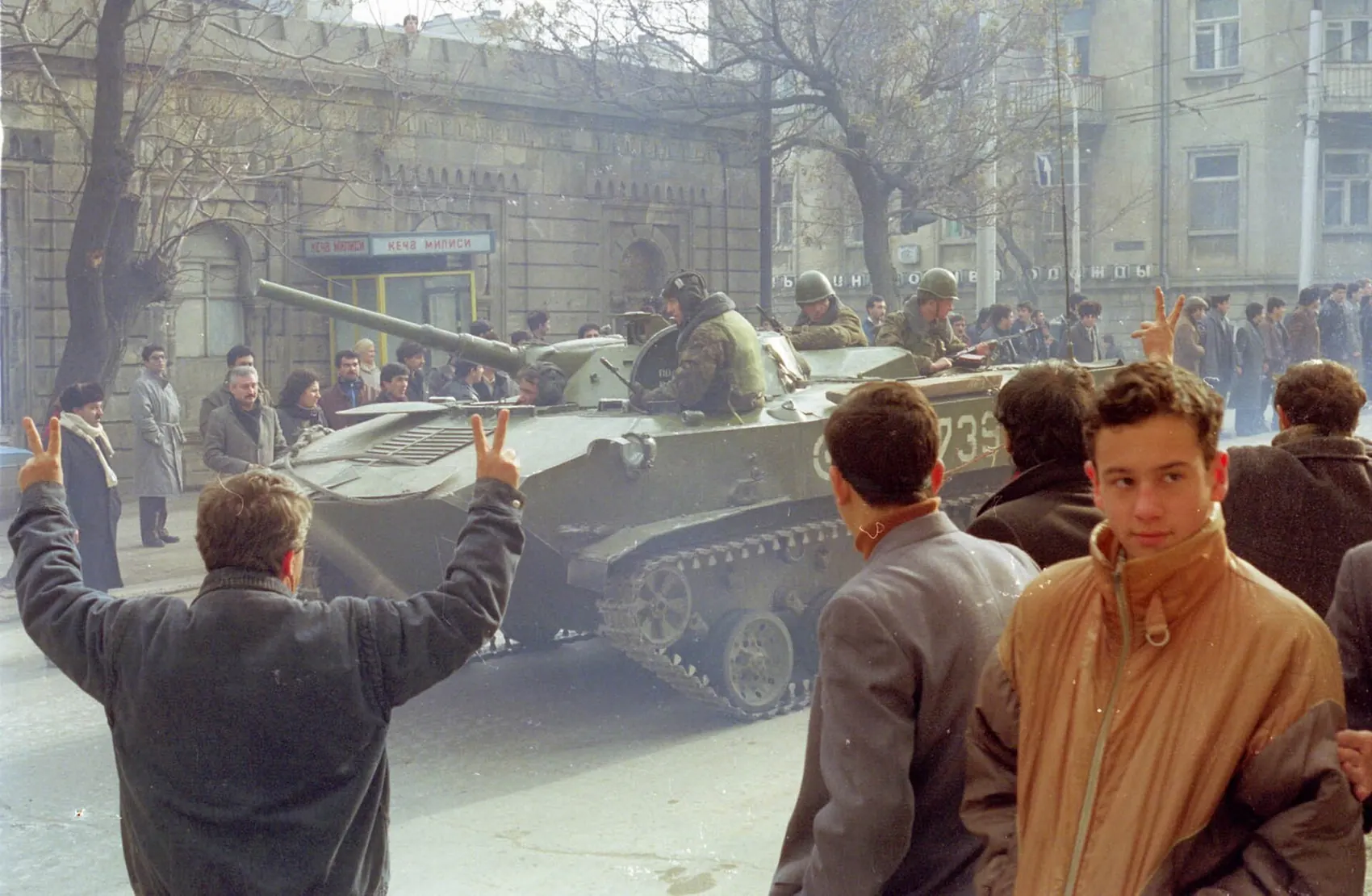
The operation was codenamed “Udar” (“Strike”). It involved the 76th and 106th airborne divisions, the 56th and 21st air assault brigades, interior troops and cadets of military colleges; the 106th was commanded by Colonel Alexander Lebed. The advance came from three directions, along the ring roads.
On the evening of 19 January an explosion disabled the power unit of Azerbaijani television and radio: broadcasting fell silent and the press did not appear. For several days the only source of news for the country and the world were the broadcasts of Radio Liberty, presented by Mirza Khazar and his team.
The columns pushed through the barricades, crushing cars, including ambulances. Witnesses said soldiers fired at people running away and at the windows of houses. According to the researchers Dmitry Furman and Ali Abbasov, 82 people had already been killed by the time of the radio announcement, most of them with no connection to the pickets; 44 of the 82 had entry wounds in the back.
Hours and places
At about 19:30 the power unit of Azerbaijani television and radio is blown up. The city is left without information. Other accounts put the loss of broadcasting at 19:15.
Troops enter along the whole circle of the ring roads while simultaneously unblocking the barracks. The bloodiest fighting is around the Salyan barracks, near the Baku hotel, in Bayil and the suburban settlements.
Armoured vehicles crushed cars regardless of who was inside; a bus carrying civilians was fired on. Soldiers also opened fire on police officers.
The state of emergency is announced on the radio and in leaflets dropped from helicopters. Most residents hear of it when the dead and wounded are already in hospital.
That was the ammunition expenditure for the night given by the city's military commandant — the figure was published in Moskovskiye Novosti by Stanislav Govorukhin.
In all, 84 weapons were confiscated, most of them homemade. The Soviet defence minister spoke of 40 thousand armed fighters; journalists in the city found no such evidence.
Voices of those days
Elmira Kafarova, chair of the Presidium of the Supreme Soviet of Azerbaijan, protested on the radio, saying the troops had been sent in without her knowledge. Abdurrahman Vazirov, first secretary of the republic's Communist Party, had left for Moscow before the operation began.
The film director Stanislav Govorukhin wrote at the time: “The Soviet Army entered a Soviet city… like an army of occupation: under cover of night, on tanks and armoured vehicles, clearing its path with fire and sword.”
Baku.ws news
The feed of the news portal
 EconomyAzerbaijani oil has become cheaper909080808010:09
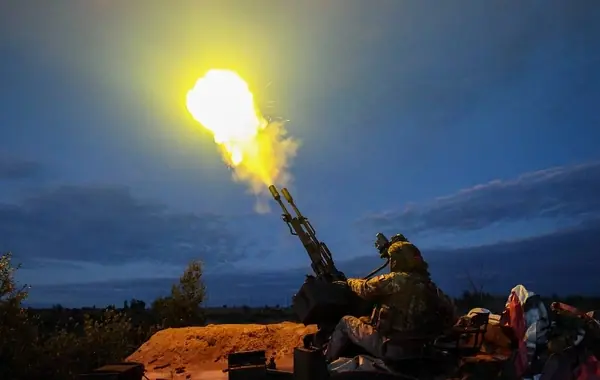 WorldThe number of drones shot down on approach to Moscow has risen to 103, three people injured10:00
 PoliticsDeputy: Statements by Russian officials directed at Azerbaijan entail legal liability23:57
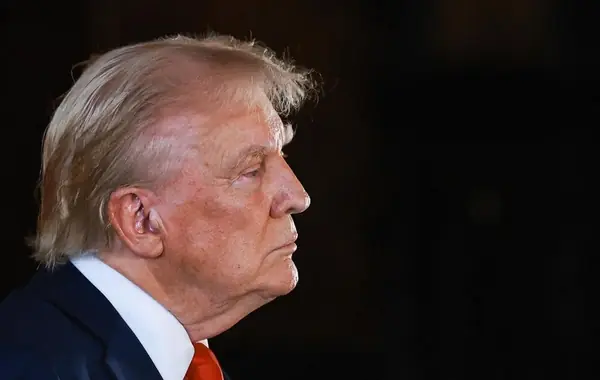 WorldTrump doubts Iran's readiness to sign a deal with the US23:56
Headlines and photographs come from baku.ws; the feed was updated on 18 August 2026. The links lead to the publisher's site.
Sources
Facts were checked against Wikipedia articles in three languages, the Human Rights Watch report “Black January in Azerbaijan”, reports by Memorial and the Helsinki Group, the figures of the republican commission of inquiry and the resolution of the Milli Majlis of 29 March 1994. Estimates of the death toll differ — all of them are given on the “Victims” page.