Background
The night of 20 January was no accident: two years of conflict, a paralysed government and decisions taken in Moscow and Yerevan led up to it.
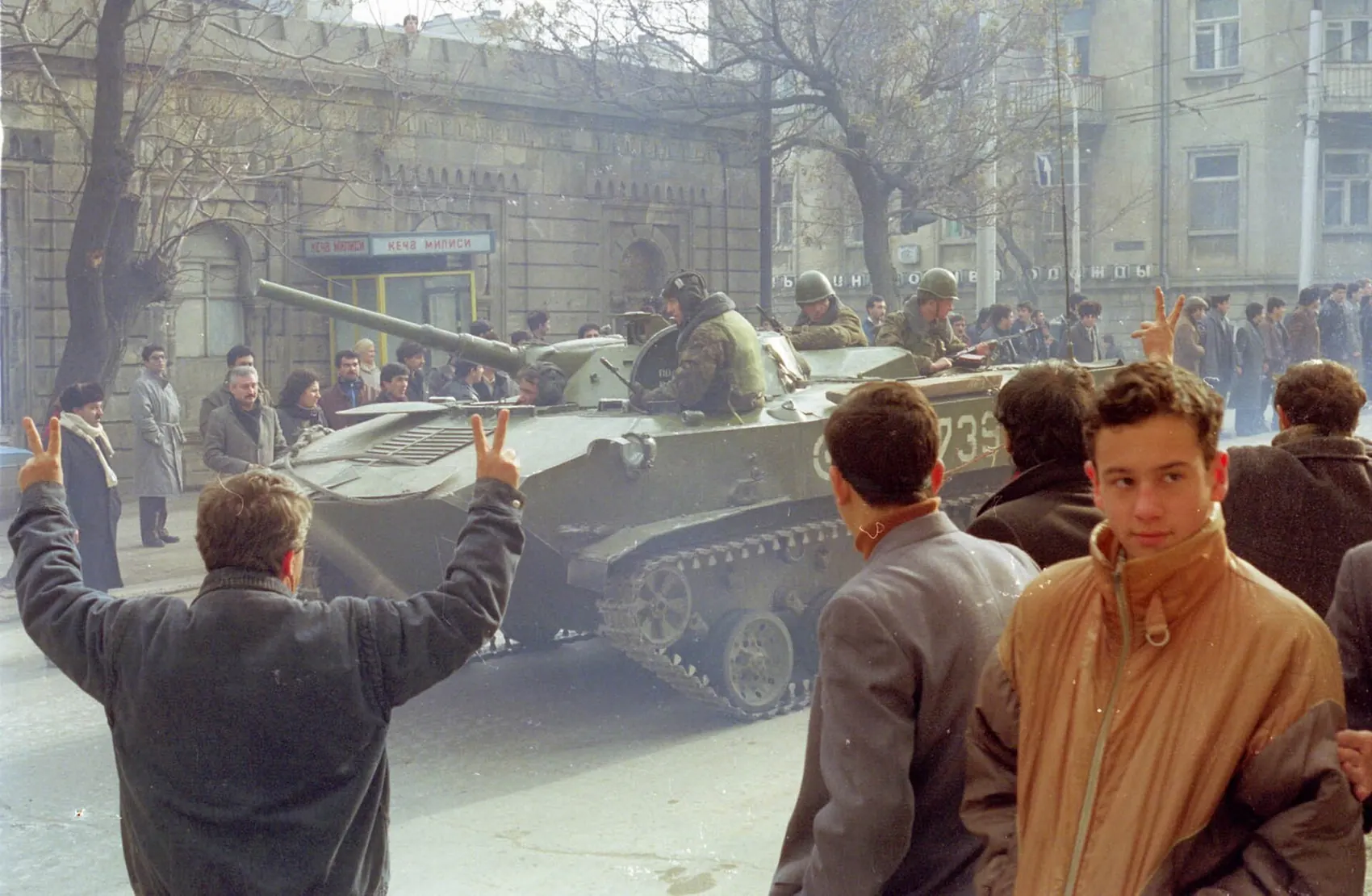
How the republic came to that night
From 1988 the Karabakh conflict displaced hundreds of thousands of people from Armenia and Azerbaijan. Azerbaijani refugees who had lost their homes gathered in Baku; the republican government, split and disoriented, was losing control while the influence of the Popular Front grew — in December 1989 the administration of Jalilabad was handed over to it without resistance, and two weeks later the same happened in Lankaran.
On 9 January 1990 the Supreme Soviet of the Armenian SSR included Nagorno-Karabakh in its budget and allowed its residents to vote in Armenian elections, bypassing Soviet norms and Azerbaijani jurisdiction. In Baku this provoked outrage and mass rallies demanding the resignation of the republican leadership and independence.
On 13 January a pogrom against the Armenian population began in Baku: according to Human Rights Watch 48 people were killed, and thousands fled or were evacuated by the military. Police and the garrison did not intervene, citing the absence of orders from Moscow. This is one of the darkest pages of those weeks, and it cannot be passed over when telling the story of January 1990.
The weeks before the assault
- Power passes to the Popular Front
The local authorities of Jalilabad hand administration to the Popular Front; two weeks later the same happens in Lankaran.
- A decision in Yerevan
The Supreme Soviet of the Armenian SSR includes Nagorno-Karabakh in the republic's budget and admits its residents to Armenian elections.
- A national defence committee
The Popular Front sets up a national defence committee with branches in factories and offices in Baku.
- Pogrom in Baku
A pogrom against the Armenian population begins; according to HRW 48 people are killed. The army and police do not intervene.
- A state of emergency — but not in Baku
Emergency rule is imposed in several districts of Azerbaijan; Baku is left out of the decree. Activists begin blockading military barracks.
- A force around the city
A grouping of more than 50 thousand troops is concentrated on the approaches to Baku; the bay is blocked by ships of the Caspian Flotilla.
- Barricades
The Popular Front blocks the entrances to the city with hundreds of cars, trucks and buses.
- The decree and the blast at the television centre
The Presidium of the Supreme Soviet of the USSR approves a decree on a state of emergency in Baku from 20 January. At about 19:30 special forces disable the power unit of the television and radio centre.
What the sides said
Moscow justified the deployment by the need to protect the Armenian population and by the threat of a seizure of power. Yet as early as 26 January the Soviet defence minister Dmitry Yazov stated openly at a press conference that the aim of the operation had been to prevent the Popular Front from overthrowing Communist rule.
Human Rights Watch noted that documents of the military prosecutor's office in Baku indicate the operation had been planned before the January pogrom. The independent Shield organisation, made up of lawyers and reserve officers, found no evidence of the “armed fighters of the Popular Front” cited as grounds for the use of weapons.
Baku.ws news
The feed of the news portal
 EconomyAzerbaijani oil has become cheaper909080808010:09
 WorldThe number of drones shot down on approach to Moscow has risen to 103, three people injured10:00
 PoliticsDeputy: Statements by Russian officials directed at Azerbaijan entail legal liability23:57
 WorldTrump doubts Iran's readiness to sign a deal with the US23:56
Headlines and photographs come from baku.ws; the feed was updated on 18 August 2026. The links lead to the publisher's site.
Sources
Facts were checked against Wikipedia articles in three languages, the Human Rights Watch report “Black January in Azerbaijan”, reports by Memorial and the Helsinki Group, the figures of the republican commission of inquiry and the resolution of the Milli Majlis of 29 March 1994. Estimates of the death toll differ — all of them are given on the “Victims” page.