
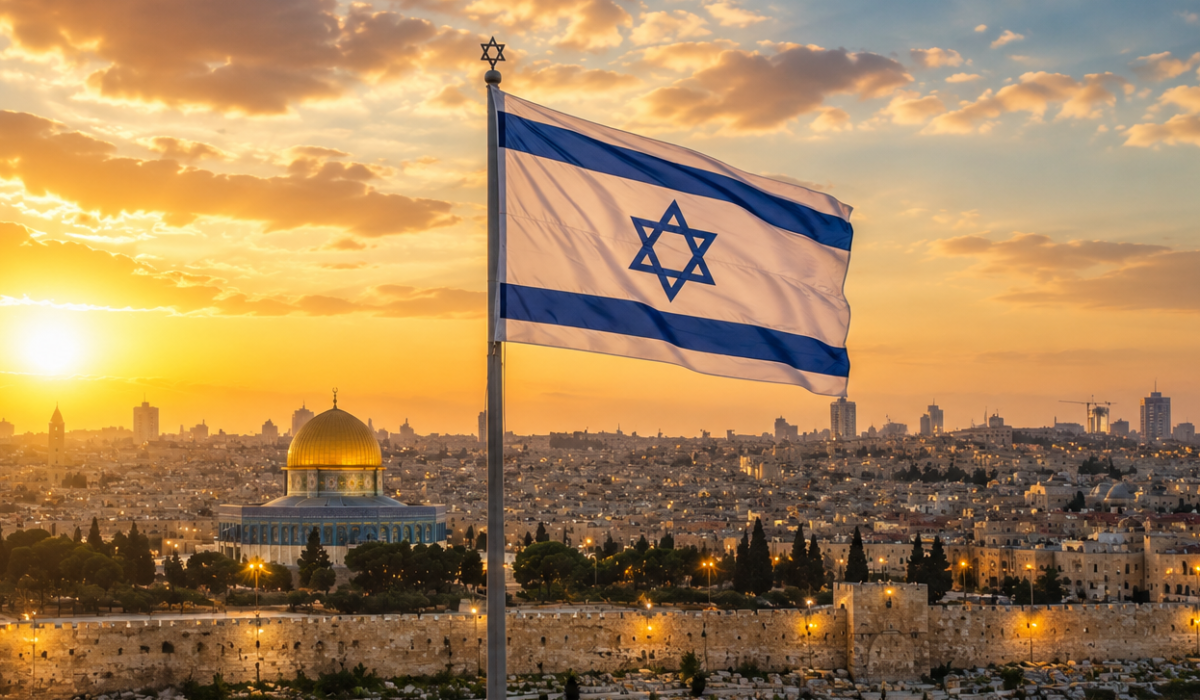
Today, the Israeli-Palestinian conflict is one of the world’s and the Middle East’s greatest problems. One of the core issues in this conflict is the Jerusalem question. On one side stands Israel, which has declared Jerusalem its eternal capital, while on the other side are Arabs who claim the city belongs to them. A third party—the Christian world—seeks to give Jerusalem a special international status. In this article, by referring to historical sources and sacred texts, we will attempt to examine which nation Jerusalem is more closely connected to.
Jerusalem is one of the world’s oldest cities. It is a sacred city where three heavenly religions intersect and where different cultures have developed. Before discussing Jerusalem, let us turn our attention to Abraham, the prophet honored in all sacred texts, and his lineage.
As noted in the sacred texts, Abraham lived in Mesopotamia. The people to whom he belonged were idolaters. One day, God commanded him to leave his homeland and go to the land that He would show him. Abraham, following God’s command, traveled with his wife Sarah and his nephew Lot from Haran to the land of Canaan.
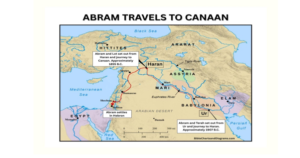
The Torah describes this event as follows: «Leave your country, your people and your father’s household and go to the land I will show you.» (Genesis 12:1) The Quran states: «We delivered Lot and Abraham to the land We had blessed for all peoples.» (Anbiya, 71)
As can be seen from this, God’s command for Abraham to leave his homeland was part of a divine plan. According to the sacred texts, Jerusalem and the lands surrounding it were sanctified and blessed by God.
Abraham had two sons: Ishmael, born to him by his maidservant Hagar, and Isaac, born to his wife Sarah. Abraham took Ishmael and Hagar to what is now the Arabian Peninsula. Isaac remained in the land of Canaan and became his father’s heir.
Isaac had two sons: Jacob and Esau. Jacob had twelve sons. Jacob’s second name was Israel. Therefore, his descendants came to be called the «Children of Israel.» Later, due to the name of Judah, one of Jacob’s sons, this people came to be called «Jews.»
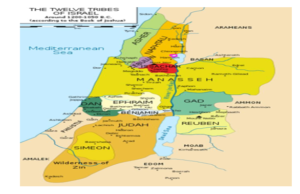
During the time of the prophet Joseph, the Children of Israel migrated to Egypt. According to the sacred texts, this occurred by God’s will. During Joseph’s rule, they lived a prosperous life in Egypt. However, after Joseph’s death, the situation changed. The new ruler did not recognize Joseph and rejected his faith. As a result, the Children of Israel were subjected to harsh slavery, and the oppression against them increased.
These events created the conditions for the emergence of a divine savior. By God’s command, this savior would lead the Children of Israel back to the lands promised to Abraham.
The Quran states regarding this: «We wished to show favor to those who were oppressed in the land, to make them leaders and heirs, to establish them in the land.» (Qasas, 5–6)
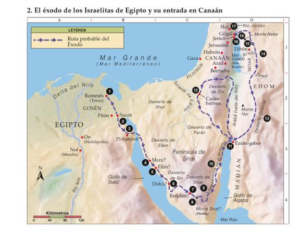
As can be seen from this verse, God wished to return the Children of Israel to the lands promised to Abraham. For this purpose, He chose Moses. By God’s command, Moses led the Children of Israel out of Egypt toward the promised land. This journey was not easy, but divine will demanded it.
As the Children of Israel crossed the Red Sea and approached the land of Canaan, they saw that other peoples lived there. Thus, entering the sacred land was not easy for them. Moses and his people wandered in the wilderness for forty years. Finally, Moses died before entering the promised land.
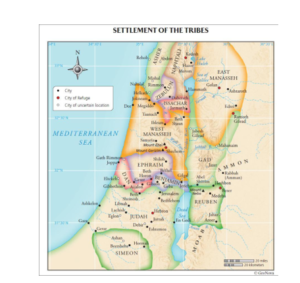
The task of bringing God’s people to the sacred land fell to Joshua, son of Nun. Under Joshua’s leadership, the Children of Israel settled in the land of Canaan. However, they had to wage a long struggle against the various peoples living there.
The greatest achievements of the Israeli people were attained during the reign of David. Around 1000 BCE, David captured the city of Jerusalem from the Jebusites and, uniting the twelve tribes of Israel under a single state, declared the city the capital of the Kingdom of Israel. At that time, the city was known by the name Urusalim.
After David conquered the city, he brought the Ark of the Covenant to Jerusalem. It was believed that the stone tablets of the Torah, which God had given to Moses on Mount Sinai, were kept in this Ark. Thus, Jerusalem became not only a political center but also a religious one.
During David’s reign, the Israeli state grew stronger and gained supremacy over neighboring peoples. David is discussed extensively in both the Quran and the Torah. The Quran states:
«O David! We have made you a successor on earth.» (Sad, 26)
As can be seen from this verse, David was considered chosen by God and given a special mission. Through him, God granted the Israeli people strength and supremacy. David united all the tribes of Israel and established a powerful Kingdom of Israel with Jerusalem as its capital.
However, an important question arises here: Why was Jerusalem specifically chosen as the capital?
Undoubtedly, there were more favorable cities to serve as a capital. Jerusalem was not situated on the banks of a major river, nor was it located on important trade routes. Throughout history, many capital cities have been built in areas near sea ports, rivers, or major trade routes. Jerusalem, however, possessed none of these advantages.
According to religious tradition, the choice of Jerusalem as the capital was the result of divine will. This is because God had granted special sanctity to these lands. According to traditions, Adam was created here and spent part of his life here. Moreover, the sacred Temple, which would later be built by Solomon, the son of David, was to be built precisely in this place.
David ruled Israel with justice, and his reign is considered one of the golden ages of the Jewish people. Although David wished to build a sacred house for God during his lifetime, this honor was not granted to him.
The Sacred Book states regarding this:
«When your days are over and you rest with your ancestors, I will raise up your offspring to succeed you, your own flesh and blood, and I will establish his kingdom. He is the one who will build a house for my Name, and I will establish the throne of his kingdom forever.» (II Samuel 7:12–13)
(Part I), to be continued…
Murad Salmanov