
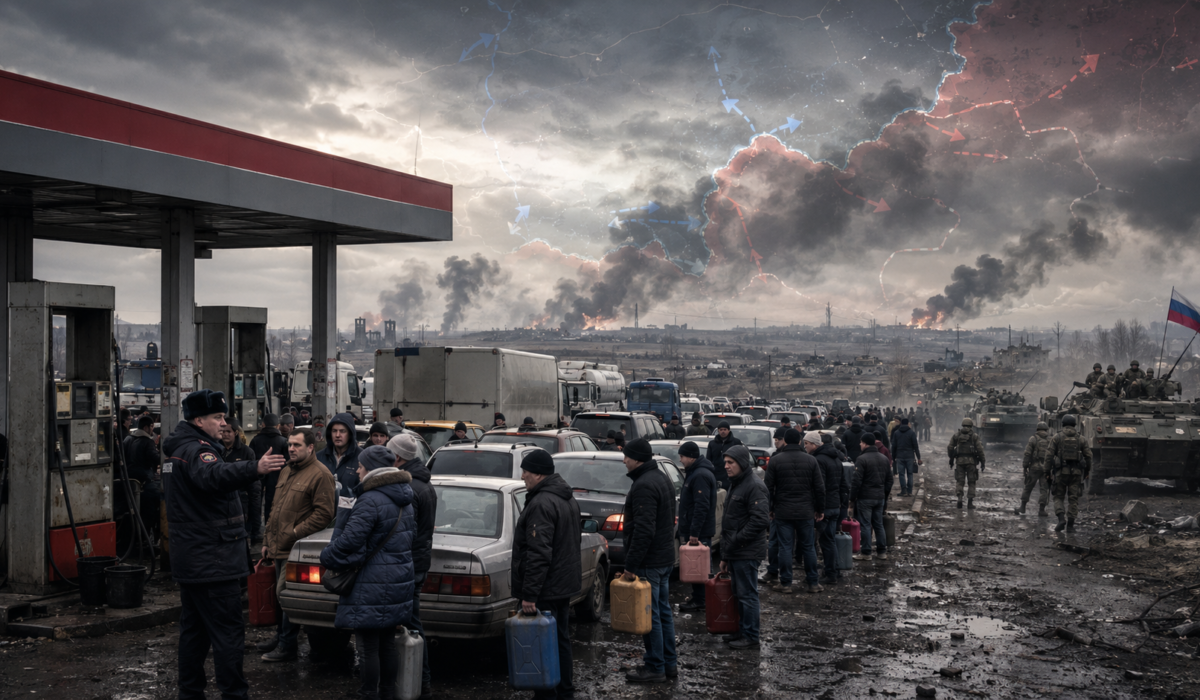
Russia's fuel infrastructure is facing a large-scale crisis that is becoming critical. Despite official statements about "no problems" and directives to stabilize the market, the situation on the ground indicates the opposite: a gasoline shortage is forcing consumers to seek shadow procurement channels at prices many times higher than market rates. Key destabilizing factors:
Logistical collapse: Effective distribution of reserves is hampered by significantly stretched supply routes and the inability to predict new crisis zones. Disruptions in the operation of oil refineries (ORs) make it impossible to promptly replenish shortages.
Electoral factor: Ahead of the September State Duma elections, Russian authorities are limited in their ability to let fuel prices rise, which is a classic market mechanism for stabilizing demand. This "political lag" creates an opportunity for further weakening of the fuel sector.
Social tension: Queues at gas stations provoke conflicts among consumers, becoming an additional destabilizing factor.
Frontline situation: tactical changes The operational situation is characterized by positional struggle with attempts by the Russian side to intensify advances in key directions.
Konstantinovka: As a strategically important point on the way to the Sloviansk-Kramatorsk agglomeration, the city remains a zone of the most intense clashes. Russian troops are actively using aviation and "infiltration" tactics with small groups to bypass defenses. Ukrainian forces are holding positions on the northern and northwestern outskirts, building new defensive lines.
Sumy direction: Stated plans to create a "security zone" in the region have not demonstrated significant dynamics over the past year and a half; progress remains insignificant.
Lyman: Holding this area is critical for logistical control over adjacent territories. Attempts to storm it with the aim of turning Lyman into a springboard for further strikes continue.
Zaporizhzhia direction: In the Orekhovo area, a maneuverable struggle is observed for tactical heights and control over logistical arteries feeding the Russian grouping "Vostok".
Forecast: The coming months will be associated with an escalation of fighting for the Sloviansk-Kramatorsk agglomeration. Given current rates, the active phase of the assault on these cities is likely closer to the end of autumn. The overall background of hostilities remains extremely complex for both sides, with personnel shortages and the ongoing fuel crisis in Russia remaining determining factors in the development of the situation until the end of the current year.