From the «blue hour» on Baku’s boulevard to a journey through the Caucasus rocks: Tali Stein traveled around Azerbaijan, met with Mountain Jews, visited ancient villages, and discovered a country even more colorful than expected. We present her article published on Ynet about her trip to our country.
There are destinations where you arrive, look around, and say to yourself: ‘It’s nice, not bad.’ And there are places where you are mesmerized by the views opening before you and ask yourself: ‘Wait a minute, why is this place so beautiful and captivating?’ Baku and Azerbaijan undoubtedly belong to the second group.
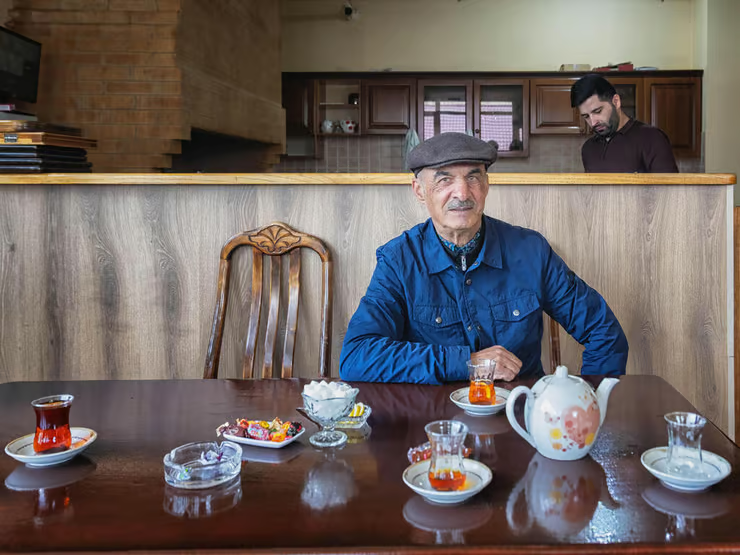
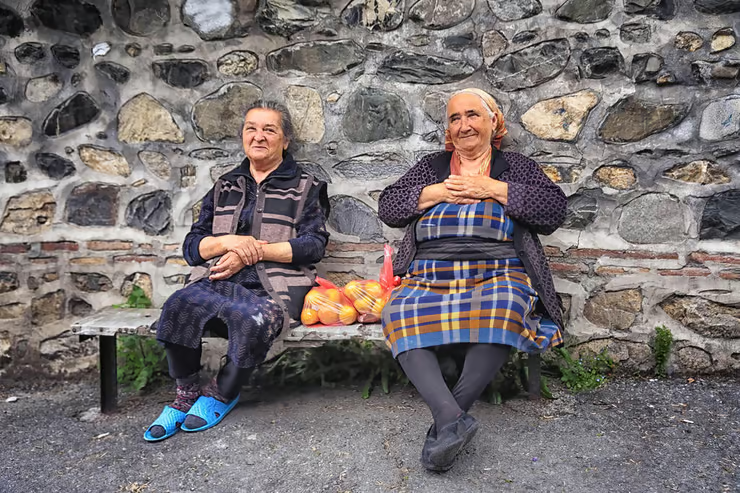
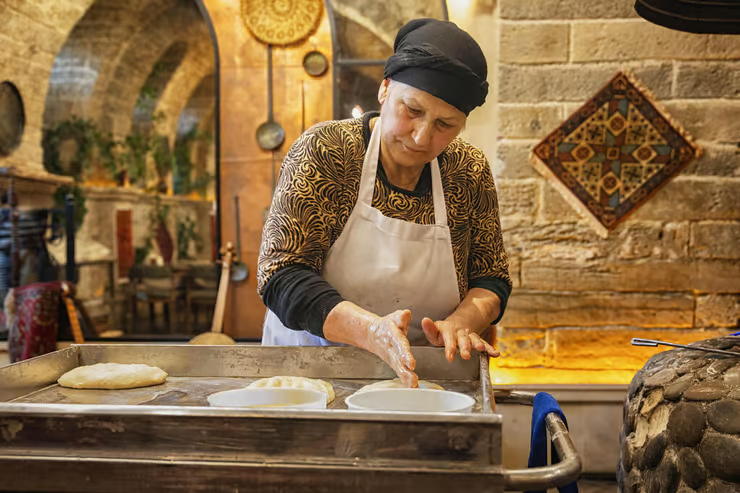
Baku impresses from first glance: a beautiful, cosmopolitan city that surprises you at every step and around every corner. Everything here creates a unique impression, from Azerbaijani tea served in armudu glass cups to meetings with friendly local residents who greet you with warm smiles.
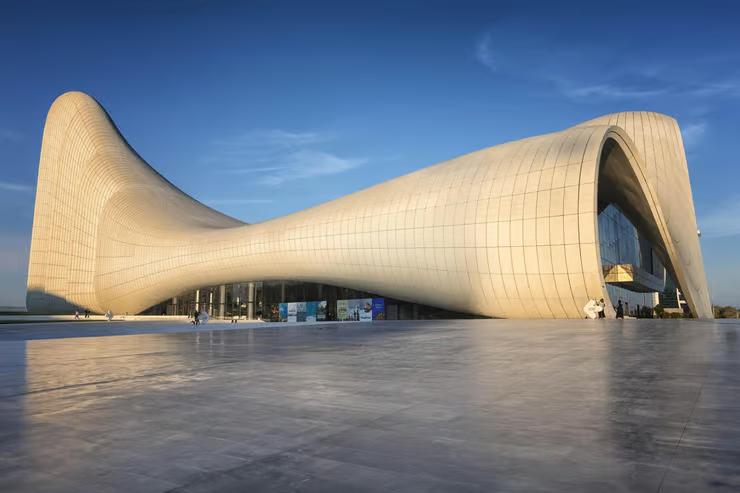
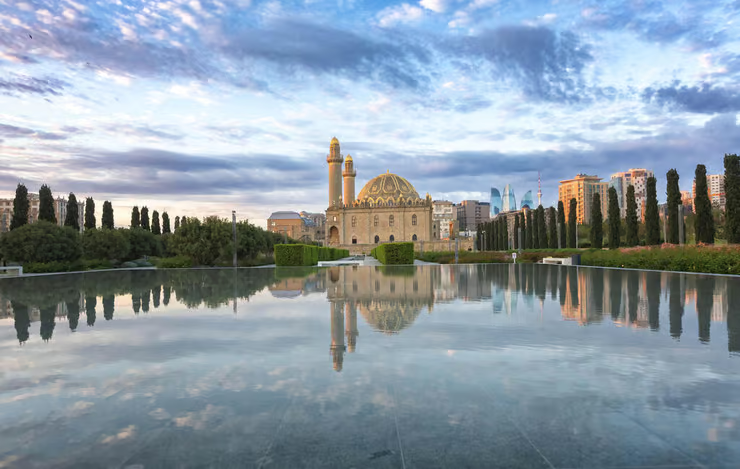
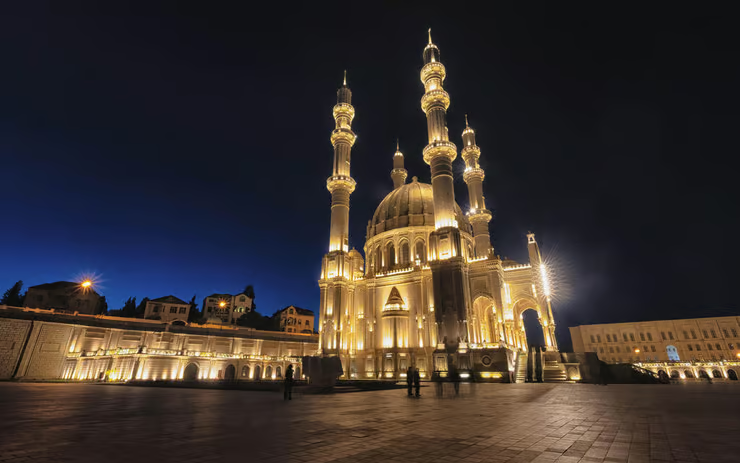
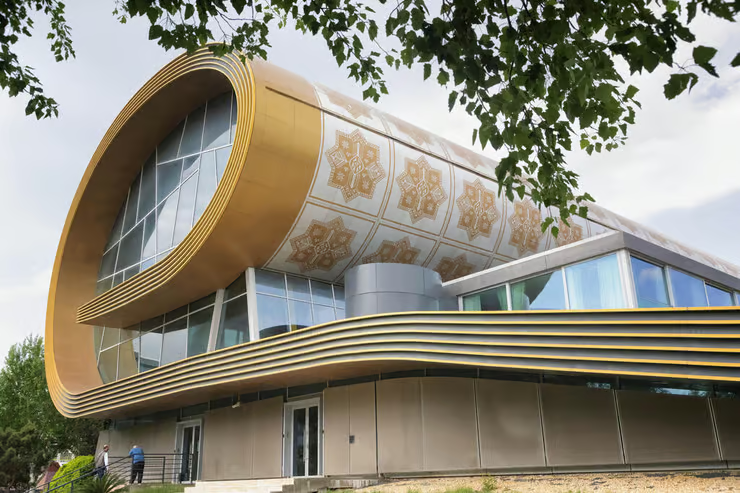
The secret of Baku’s unique charm lies in an unexpected yet harmonious combination of the old and the new. On one side are ancient architecture, winding cobbled streets, and historic mosques such as Taza Pir and the Heydar Mosque, while on the other are futuristic and innovative structures like the Heydar Aliyev Center and the magnificent Carpet Museum, designed in the shape of a rolled carpet.
The city’s cosmopolitan nature is also evident in modern, comfortable hotels offered to tourists at affordable prices, as well as in the rich and wide variety of local and international cuisine available.
One of the things that surprised me was the close ties that have existed between Azerbaijan and Israel for many years. These relations manifest in cooperation across security, strategic, economic, cultural, and scientific spheres. Full diplomatic relations between the two countries have existed since 1992.
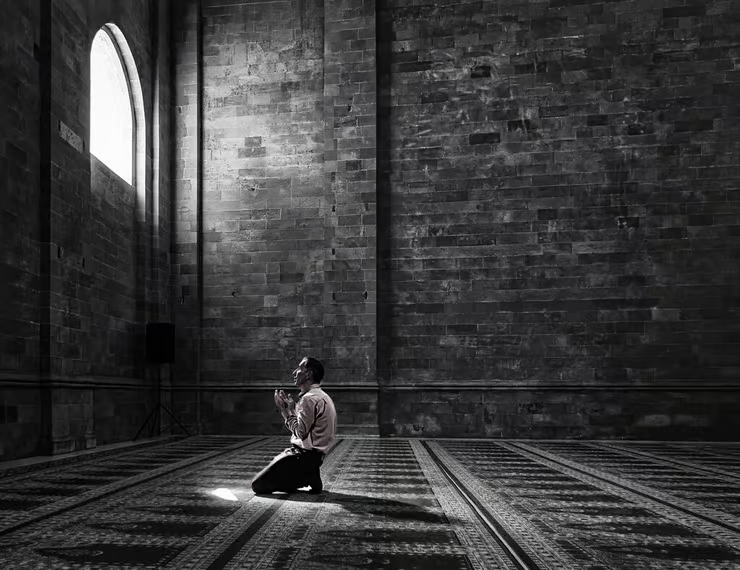
Azerbaijan is a Muslim country, and the majority of its population belongs to the Shia branch. However, most of the population is secular, and there is a separation between religion and state in the country. These characteristics, along with the presence of a thriving Jewish community in the country, make Azerbaijan an attractive destination for tourists from Israel and Western countries.
Baku is even more beautiful at night
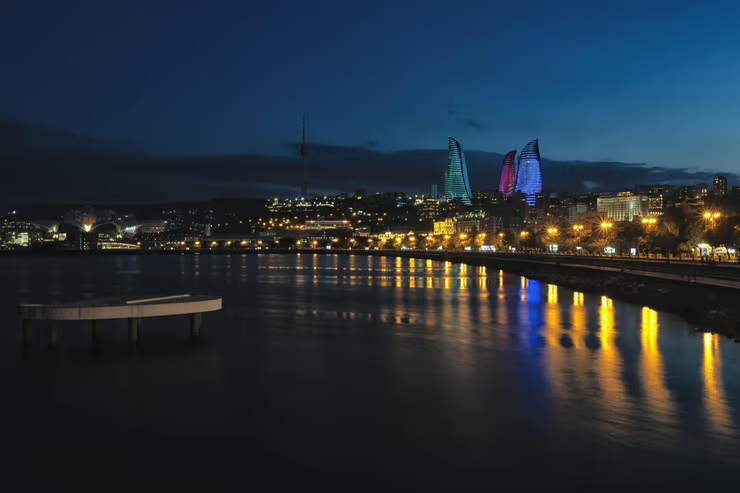
During our stay in Baku, our eyes could not get enough of the city’s beauty. On our first evening in the city, we walked along the boulevard and enjoyed the harmony of ancient and modern. In the background, the famous Flame Towers were illuminated in various colors.
This refers to three skyscrapers built to represent the element of fire, considered a symbol of Azerbaijan.
It was particularly enjoyable to observe Baku and take photos both in the evening and during the so-called «blue hour» — the short period after sunset when the sky turns a deep, magical blue.
We saw that the city looks even more beautiful in the evening and night hours. Therefore, it is recommended to explore Baku after dark as well.
It is also advised not to limit oneself to viewing the Heydar Aliyev Center only from the outside. At least a few hours should be dedicated to this magnificent building, one of the city’s most striking structures. Distinguished by its fluid shape with almost no sharp angles, the building hosts interesting exhibitions and displays inside.
Azerbaijani nature: A completely different world outside Baku
The charm of Azerbaijan does not end at the borders of the capital. To truly feel the soul of the country, we ventured outside the city to discover its wild nature and rich history.
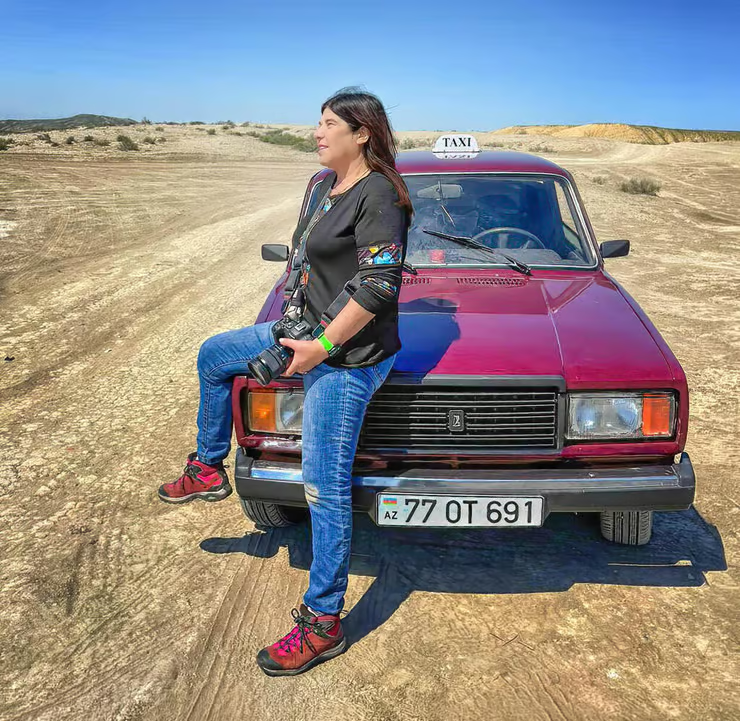
One of the best ways to experience the rugged and wild beauty of Azerbaijani nature is traveling in off-road vehicles through difficult terrain.
A caravan of jeeps led us through hidden mountain passes, deep green valleys, rushing rivers, and remote villages that are difficult to reach in ordinary cars.
It was a breathtaking experience that allowed us to come face to face with the purest and most impressive natural landscapes of the Caucasus.
Khizi mountains and the Candy Cane Mountains
We also traveled to the Khizi region, located north of Baku. The area is distinguished by particularly dramatic mountain landscapes.
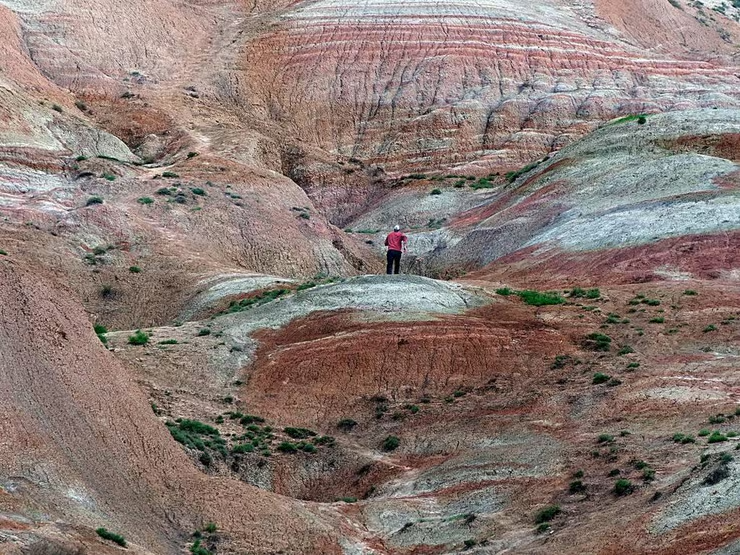
One of the main attractions here is the Candy Cane Mountains, a rare geological natural phenomenon.
Due to the unique mineral composition of the soil, the mountains are covered with striking natural stripes of red, pink, purple, white, and yellow. This landscape creates the impression of walking on another planet.
Bubbling earth and a landscape reminiscent of Mars
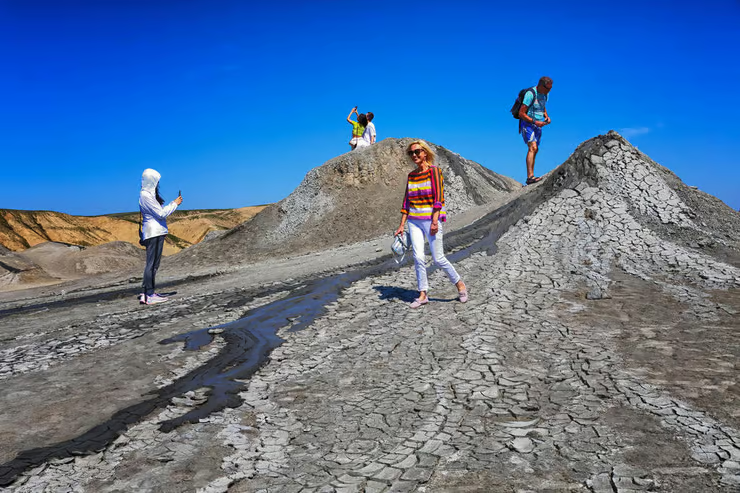
Azerbaijan is also famous for its abundance of mud volcanoes. The number of mud volcanoes in the country is exceptionally high compared to other parts of the world.
These areas resemble sets from science fiction movies. The reddish colors are reminiscent of the surface of Mars.
During this geological phenomenon, mounds are formed from which mud, gas, and water continuously emerge. The scenery creates an extraordinary, fascinating, and almost otherworldly impression.
Khinalig — like time travel
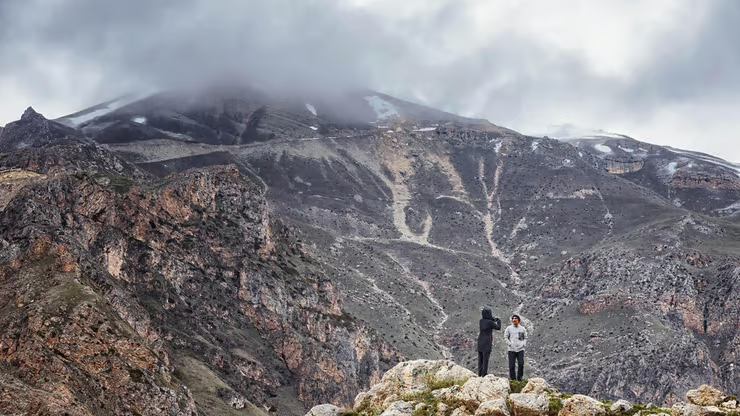
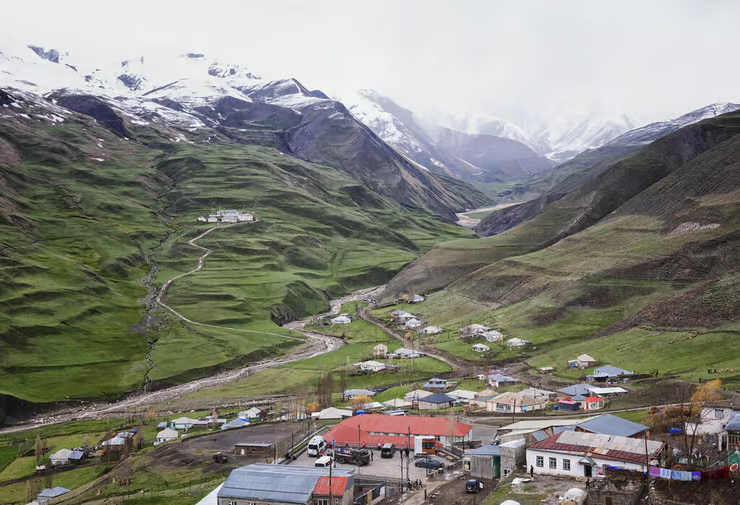
Another location that left a special impression on me was the village of Khinalig, located in the Greater Caucasus.
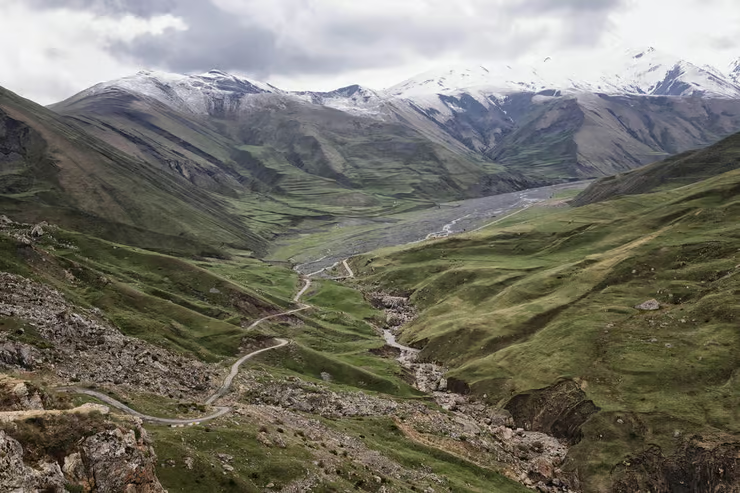
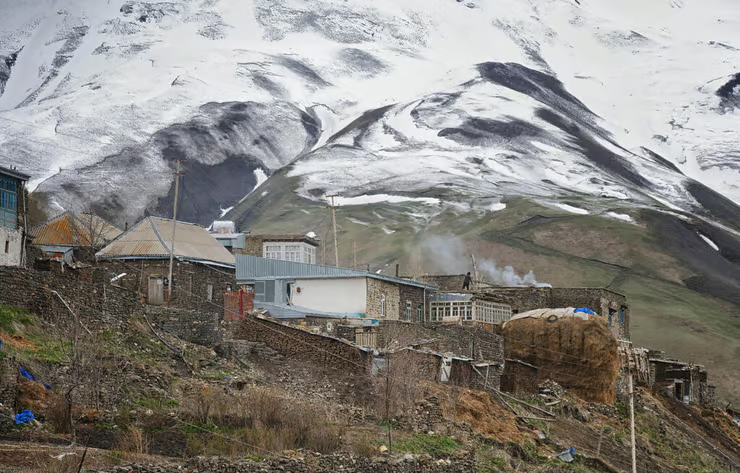
This is an ancient and isolated village located at an altitude of about 2,300 meters above sea level. Khinalig is considered one of the oldest continuously inhabited settlements in the world.
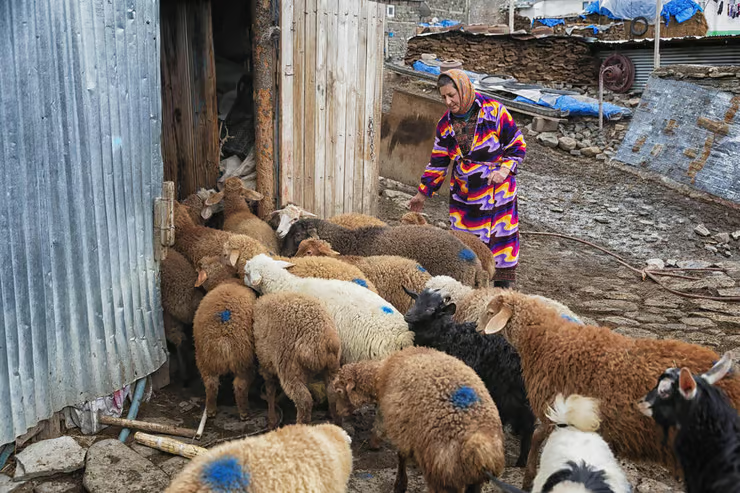
The villagers preserve their unique culture, language, and customs unlike those of any other group.
The road to Khinalig is a winding and exciting route passing between giant cliffs. The view of ancient houses built one above another on the mountain slope is unforgettable.
I particularly recommend not missing a visit to this beautiful and unique village set among the Caucasus Mountains. In the village, one can order a meal in advance at one of the homestays and taste various dishes of the local cuisine.
It should be noted that Khinalig village and the «Transhumance Route» have been included in the UNESCO World Heritage List since 2023.
Visit to Sheki
Sheki is one of the oldest and most beautiful cities in Azerbaijan. The city was once an important stop on the Silk Road.
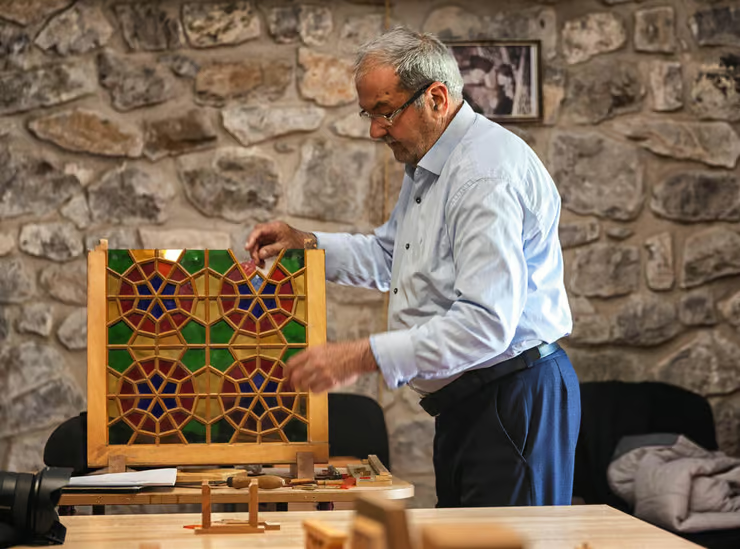
Surrounded by dense forests and the Caucasus Mountains, Sheki is famous for the magnificent Palace of Sheki Khans. The palace windows feature stunning stained glass made of colorful glass. It is particularly noteworthy that no nails or glue were used in constructing these structures.
The city is also famous for its traditional sweets, especially Sheki halva.
A trip to Sheki is recommended to see the picturesque city, its rich cultural heritage, and unique local cuisine. During the visit, we also had the opportunity to meet numerous local residents who showed us warm hospitality.
Then we visited the Jewish town
Krasnaya Sloboda is presented as the only settlement outside Israel and the US with an entirely Jewish population. Mountain Jews live here.
The settlement is located in the Quba district, on the bank of the river. There are magnificent houses, active synagogues, and a community proud of its historical roots that warmly welcomes Israeli tourists.
A visit to Krasnaya Sloboda is an emotional and fascinating experience connected with the traces of Jewish history in the Caucasus.
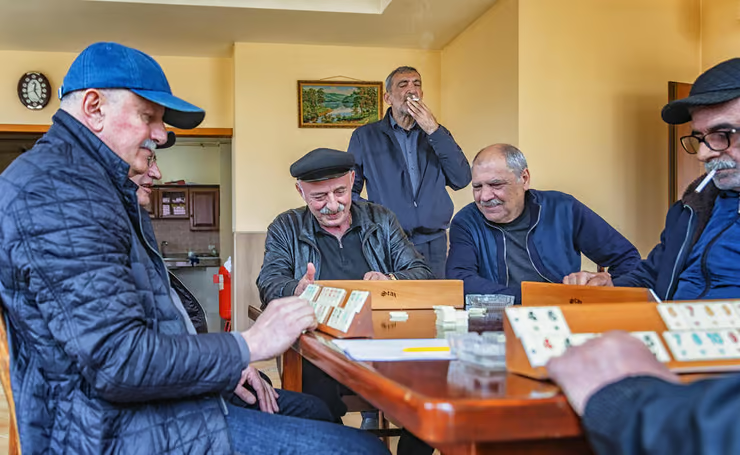
The Jewish community here lives in peace and mutual cooperation with the Muslim community. We met with representatives of the local Jewish community at the club in the settlement.
Many of them have relatives living in Israel, and they speak Hebrew to a certain level.
This meeting was deeply moving, and I recommend visiting Krasnaya Sloboda to everyone.
Conclusion
Azerbaijan became an extraordinary, surprising, and unforgettable destination for me.
A well-maintained and futuristic capital, a rich culture, hospitable people, a warm and friendly attitude toward Israelis, as well as the combination of the rugged and wild nature of the Caucasus Mountains make Azerbaijan one of the recommended destinations for Israeli tourists seeking a new, interesting, and non-standard travel experience.
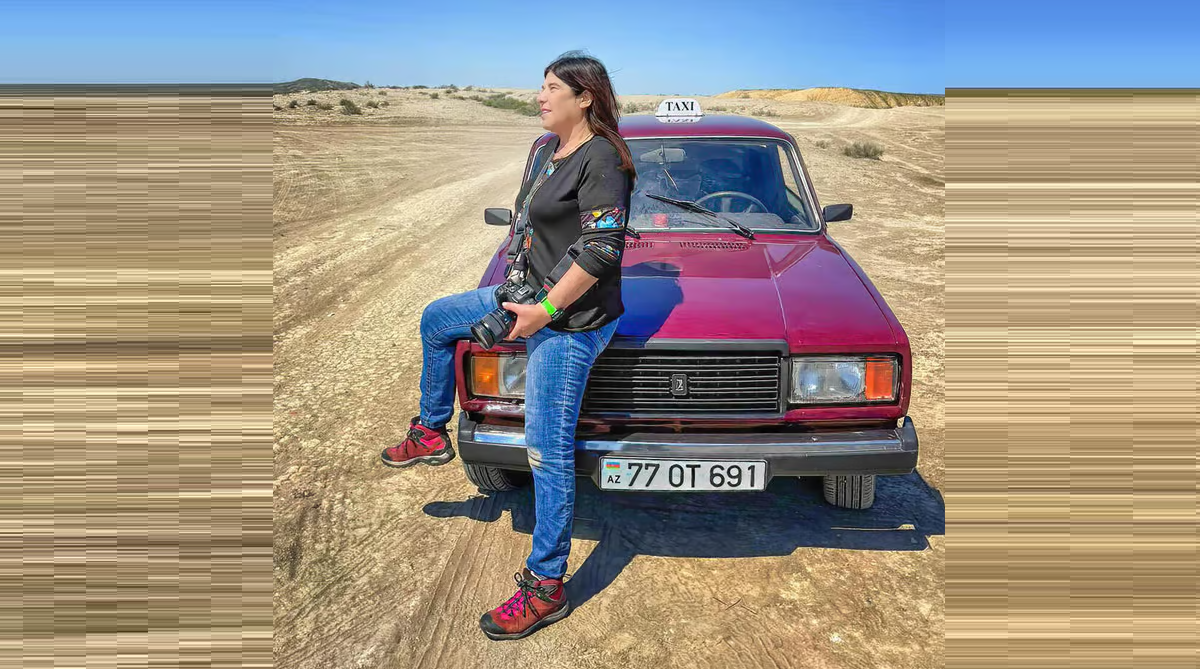
It should be noted that Tali Stein is a culture and nature photographer.