
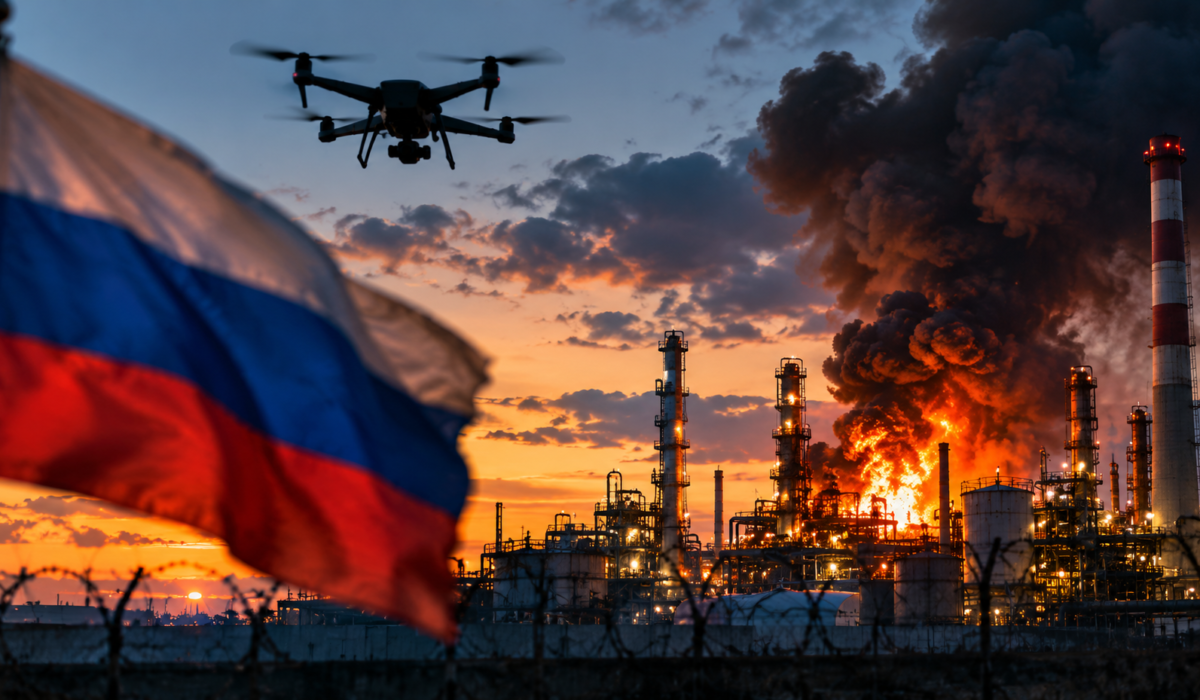
Large-scale drone (UAV) attacks on strategic facilities across Russia, including oil refineries, defense industry enterprises, and energy infrastructure, have exposed a serious shortage of air defense (AD) systems required to protect the country’s entire territory.
Analytical review by the Jnews.az editorial team.
Strike on the defense industry: Titan-Barrikady plant
In recent days, particular attention has been drawn to the attack on the Titan-Barrikady plant in Volgograd. The enterprise, which plays an important role in the production of launchers for mobile ground-based missile systems, sustained damage despite attempts to repel the aerial attack.
According to experts, the absence of a multi-layered air defense system capable of simultaneously covering all strategic directions once again demonstrates how vulnerable such large industrial facilities are.
Logistical paralysis and fuel shortages
A series of strikes on energy infrastructure and oil depots has caused serious disruptions to fuel supplies in several regions of Russia, including Moscow.
Local shortages. Queues stretching for several kilometers have been observed at fuel stations, while restrictions have also been imposed on the sale of fuel in canisters.
Disruption of the distribution system. As oil depots, which constitute a critical link in the logistics chain, have been put out of operation, producers are facing difficulties in delivering fuel efficiently to end consumers.
Impact on military logistics. Although no direct impact on the operation of heavy armored vehicles in the combat zone has been recorded so far, experts point to a growing risk of shortages of fuel and lubricants required to operate generators supplying power to unmanned aerial vehicles and ground-based robotic systems.
Situation around Crimea
A gradual isolation of the Crimean logistics hub is being observed. Although the Crimean Bridge remains operational, the intensity of strikes on facilities around the peninsula indicates risks to maintaining supply routes.
At the current stage, a gradual departure of civilians from the region is being observed. At the same time, the use of combined attack tactics makes it possible to target critical infrastructure facilities.
Socio-political landscape
Against the backdrop of military setbacks, divisions within Russian society continue to deepen. On the one hand, there are calls for the immediate cessation of the conflict; on the other hand, radical demands for the use of nuclear weapons are being voiced.
According to experts, such calls fail to take into account both the limited military effectiveness of tactical nuclear weapons along an extended frontline and the catastrophic consequences their use could have for Russia itself.
At present, the country’s internal security and repressive structures continue to maintain control over the situation. Nevertheless, the systemic logistics crisis and the growing weaknesses in the defense system are regarded as key factors that could significantly complicate Russia’s ability to wage a prolonged war in the near future.