
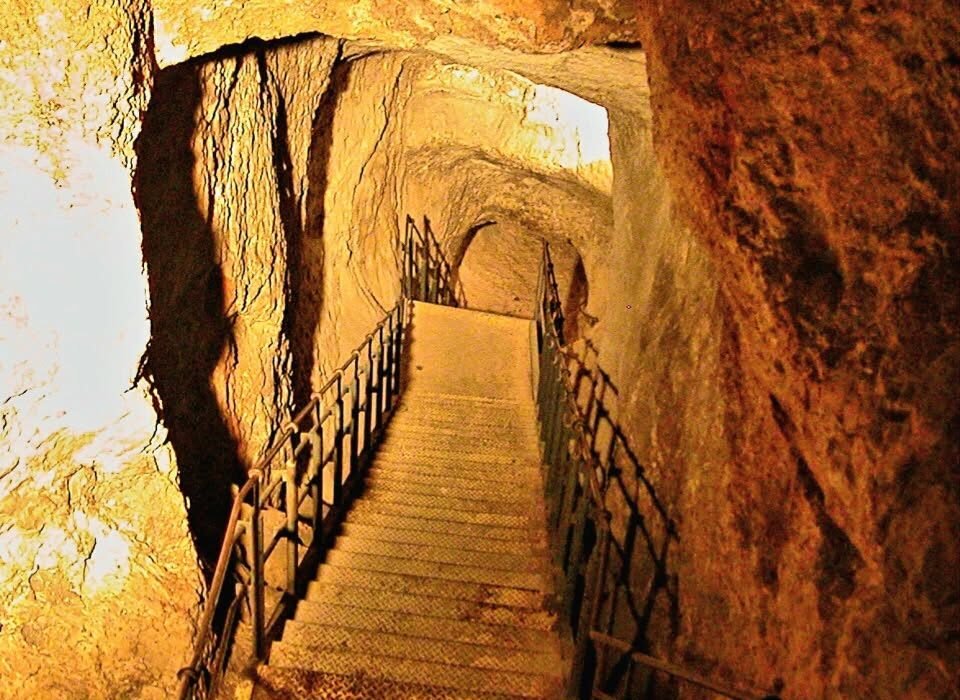
An archaeological site located beneath ancient Jerusalem and known as Warren's Shaft has once again drawn the attention of researchers. Scholars are debating whether this shaft could be the secret passage mentioned in the Bible, allegedly used by King David during his conquest of Jerusalem.
Warren's Shaft was discovered in 1867 by British researcher Charles Warren in the ancient City of David. This natural vertical shaft is considered part of an ancient water system linked to the Gihon Spring, which was Jerusalem's only natural water source during the First Temple period.
For many years, archaeologists believed that city residents could obtain water through this system during sieges without going outside the city walls. However, recent excavations have shown that the water system was more complex, and scientific debates regarding the timeframe and exact purpose of the shaft's use remain ongoing.
The discovery is also associated with a famous event described in the biblical Second Book of Samuel. According to that text, King David used a passage called a "tsinnor" when capturing Jerusalem from the Jebusites. The exact meaning of this word remains uncertain, though it is presumed to denote a long and narrow water channel or tunnel. Although a number of scholars previously suggested that this was indeed Warren's Shaft, the theory has not been conclusively proven.
Nevertheless, Warren's Shaft is considered one of the most significant archaeological monuments of ancient Jerusalem and is valued as a rare example demonstrating the engineering skills of the city's inhabitants approximately 3,000 years ago.