
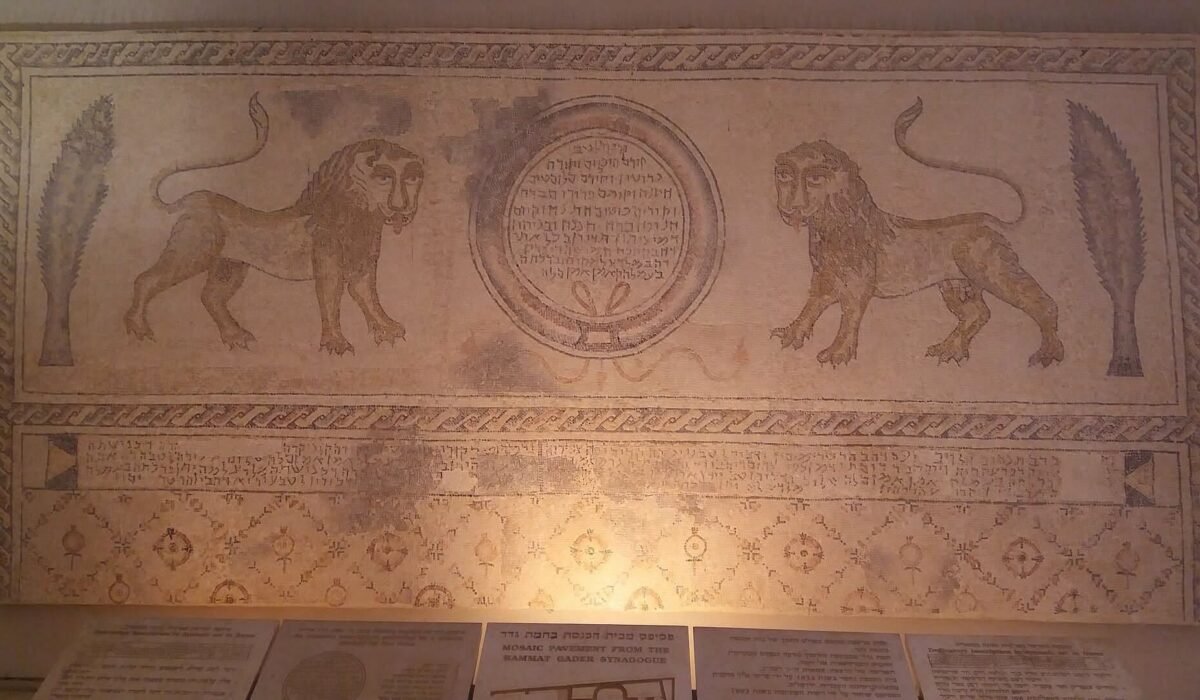
A roughly 1500-year-old mosaic floor discovered in an ancient Jewish synagogue in Israel's Hamat Gader region provides important information about the religious and social life of the Jewish community operating in the region during the Byzantine period.
A rare find from the Byzantine period
According to archaeological research, the mosaic was part of the floor of a synagogue operating in the 5th century AD in Hamat Gader, known for its natural hot springs. At that time, the region was considered one of the settlements of a developed Jewish community.
Inscriptions preserve the names of donors
Inscriptions written in Hebrew and Aramaic on the mosaic reflect the names of individuals who donated to the construction and decoration of the synagogue. Researchers believe that these writings are an important source conveying the history of the local Jewish community of that period and the memory of its members to future generations.
Shedding light on the post-Second Temple period
During the excavations, in addition to the mosaic, geometric ornaments, additional inscriptions, and other architectural elements of the synagogue were also discovered. According to experts, these findings show that Jewish religious and social life continued in the Land of Israel even after the destruction of the Second Temple.
Historical significance
Scientists state that the mosaic is one of the material proofs confirming the existence of an organized Jewish community in the region centuries after the Roman Empire destroyed Jerusalem. The Hebrew inscriptions demonstrate that religious and social life actively continued during the Byzantine period.
According to historical calculations, the mosaic was created approximately 400 years after the Bar Kokhba revolt and about 1,000 years after the reign of King David, and has been preserved to this day.