
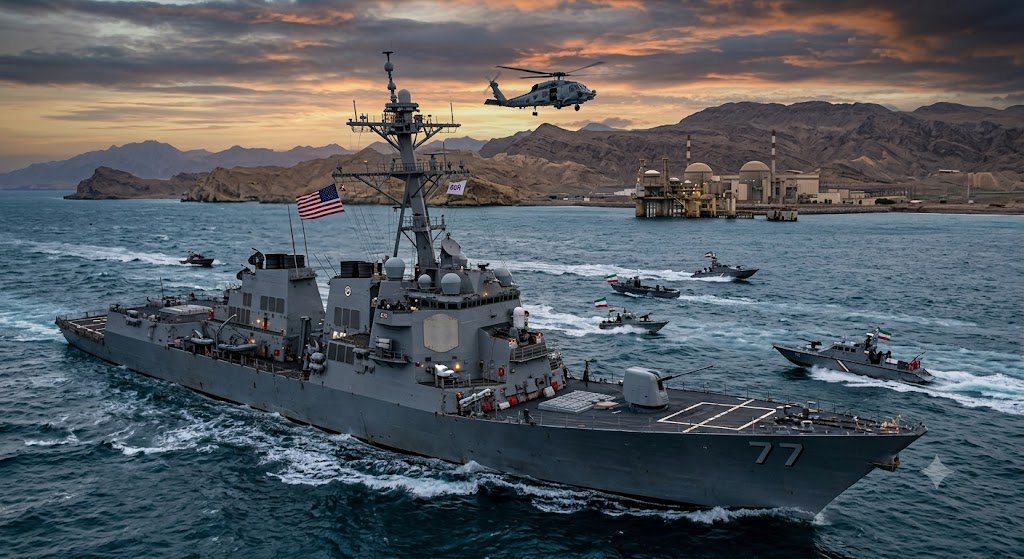
The US administration has officially warned Iran that any attempt to alter the existing status quo in the Strait of Hormuz will be regarded by Washington as a serious violation.
According to reports, Washington considers this strategic waterway critically important for regional security and a "red line" in its relations with Tehran. An official and public message sent by the US to Iranian leadership states that Tehran's every move in the region is being closely monitored and that the situation is being treated with the utmost seriousness.
The White House's key positions on the matter are as follows:
- Compliance with obligations: The current situation in the Strait of Hormuz is a direct indicator of how faithfully Iran adheres to its international commitments.
- Intensified monitoring: The US has further increased its surveillance of Iran's military and logistical activities in the region.
- Threat to agreements: Any escalation of tensions in the Strait will have a direct and negative impact on the fate of other international and regional agreements.
New Confrontation Over the Nuclear Programme and the IAEA
In parallel with the tensions in the Strait of Hormuz, a deepening disagreement between Iran and the International Atomic Energy Agency (IAEA) over the inspection of nuclear facilities is also emerging.
- Tehran's position: The Speaker of the Iranian Islamic Consultative Assembly (parliament) issued an official statement declaring that no new agreement has been reached between the parties. He stressed that international inspectors will not be granted access to some of the country's strategic nuclear facilities.
- IAEA's position: The Agency's director, by contrast, claims that a principled agreement on the continuation of inspections does exist between the parties, but has so far declined to disclose the details of this agreement to the public.
According to experts, the uncompromising stances of both sides — on strategic waterways as well as on nuclear monitoring — continue to keep geopolitical tensions in the region at a peak level.