
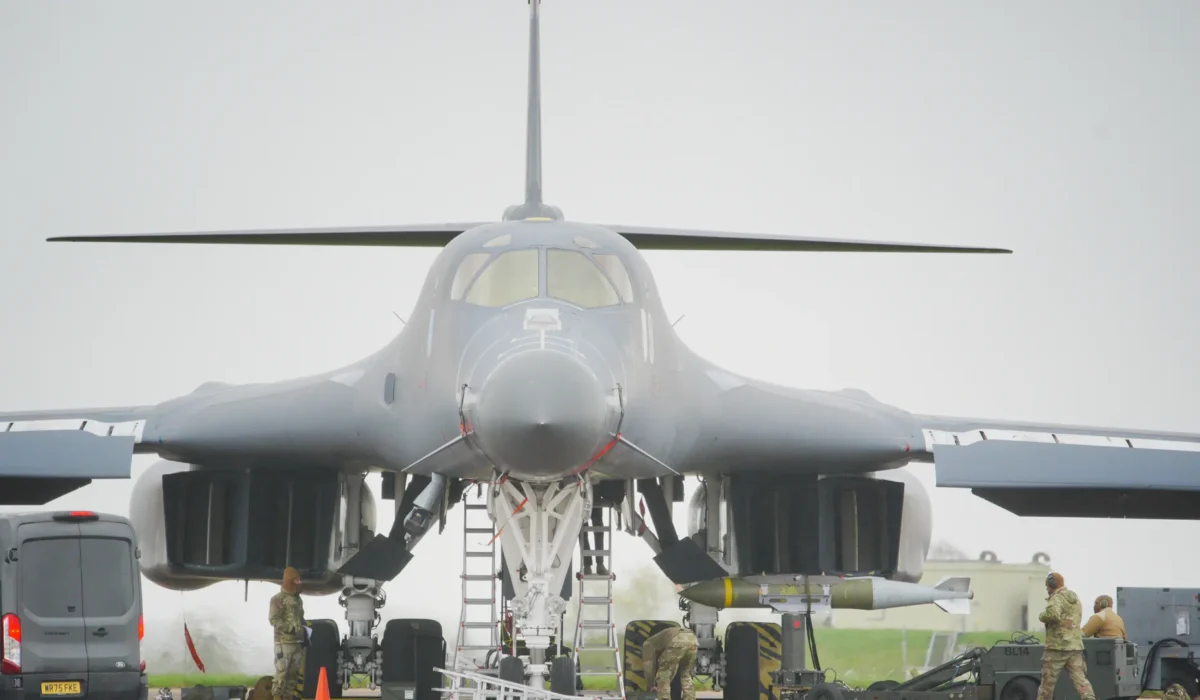
According to US officials, the US military used B-1 long-range bombers on Wednesday night to strike Islamic Revolutionary Guard Corps (IRGC) facilities.
This was the first US B-1 mission since the resumption of hostilities with Iran 12 days ago.
B-1 bombers can carry approximately 900 kg of bombs and cruise missiles.
The events indicate a significant expansion of the US military campaign and rising escalation.
B-1 bombers can fly at supersonic speeds at low altitudes and have the largest payload capacity among other types of bombers.
The B-1 bomber began its mission from an airbase in Great Britain, and its flight was observed on online flight tracking websites.
The US Central Command (CENTCOM) did not specifically mention the B-1 mission in its statement regarding the strikes carried out on Wednesday night.
CENTCOM's statement says: CENTCOM forces targeted Iran's military operations centers, naval capabilities, aircraft hangars, drone storage facilities, and military logistics infrastructure. The goal is to further reduce Iran's ability to threaten commercial shipping in the Strait of Hormuz.
It is not known which specific facilities the B-1 bomber struck or whether this large-scale operation was more effective than other strikes carried out in recent days.
The US previously carried out several B-1 missions as part of Operation "Epic Fury." During these strikes, missile bases, command centers, weapons depots, and air defense systems were targeted.
Despite the expansion of US strikes, the Iranian authorities do not appear to have changed their position regarding the Strait of Hormuz. Tehran also continues its attacks against US bases in the region.