
World
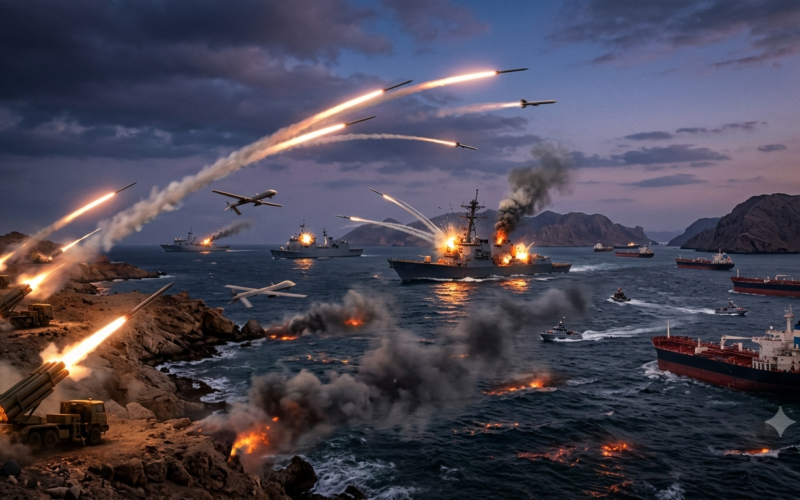
US-Iran tensions: Bases struck, Strait of Hormuz closed
Middle East, June 12 - Mutual military strikes between Washington and Tehran have escalated tensions in the Middle East to a peak.…
📅 July 12, 2026, 16:54
Gulf security encompasses regional stability, military presence, and geopolitical strategies across the Persian Gulf, involving major powers, Arab states, Iran, and Israel’s strategic interests.
Middle East, June 12 - Mutual military strikes between Washington and Tehran have escalated tensions in the Middle East to a peak.…
Gulf security refers to the complex web of military, diplomatic, and geopolitical arrangements that maintain stability across the Persian Gulf region. This critical waterway, through which vast quantities of global oil and gas transit daily, has long been a focal point of international strategic competition. Major powers including the United States, Russia, and China maintain significant naval and military interests in the region, while Arab Gulf states coordinate defense mechanisms and intelligence sharing.
For Israel and Jewish communities, Gulf security dynamics carry particular significance. Israel's normalization agreements with Bahrain and the UAE, formalized through the Abraham Accords, fundamentally reshaped regional security architecture. These agreements created unprecedented cooperation on defense, counterterrorism, and maritime security. Furthermore, shared concerns about Iranian nuclear capabilities and regional destabilization unite Israel with Gulf Arab partners in coordinating security responses and intelligence operations.
The jnews.az section on Gulf security tracks developments affecting regional stability, Israeli-Arab defense partnerships, threats posed by state and non-state actors, and implications for energy markets and international commerce. Coverage includes military modernization efforts, diplomatic initiatives, naval operations, and shifts in regional alliances that influence broader Middle Eastern geopolitics and Jewish diaspora communities across the Gulf.