
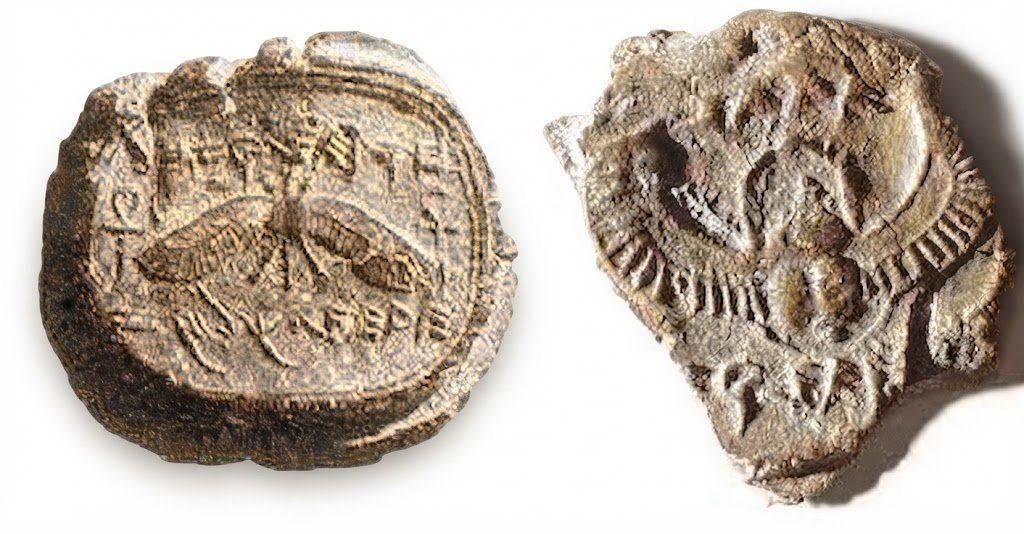
Archaeologists have discovered thousands of jar handles dating back approximately 2,700 years in Jerusalem and other sites associated with the ancient Kingdom of Judah. The stamp impressions on these artifacts are considered significant archaeological evidence demonstrating the existence of a sophisticated and organized royal administration during the First Temple period.
Among these impressions, stamped by officials of the ancient Kingdom of Judah on jar handles used to store food and other goods, the most famous are the "LMLK" seals. The Hebrew expression לַמֶּלֶךְ ("LMLK") translates to "belonging to the king" or "for the king".
The discovered seals are mostly dated to the late 8th century BCE. These findings are closely linked to the reign of King Hezekiah of Judah, mentioned in the Bible, who ruled during a period of imminent threat from the Assyrian Empire.
The seals typically feature a two- or four-winged symbol. In addition to the depiction, they include the inscription "LMLK" alongside the name of one of four towns belonging to the kingdom.
The exact purpose of the jars remains a subject of debate among scholars. Nevertheless, it is believed that the vessels were used for gathering, storing, or distributing agricultural produce as part of the Kingdom of Judah's state administration system.
According to experts, this logistical process was carried out as part of preparations for the anticipated war with the Assyrian Empire.