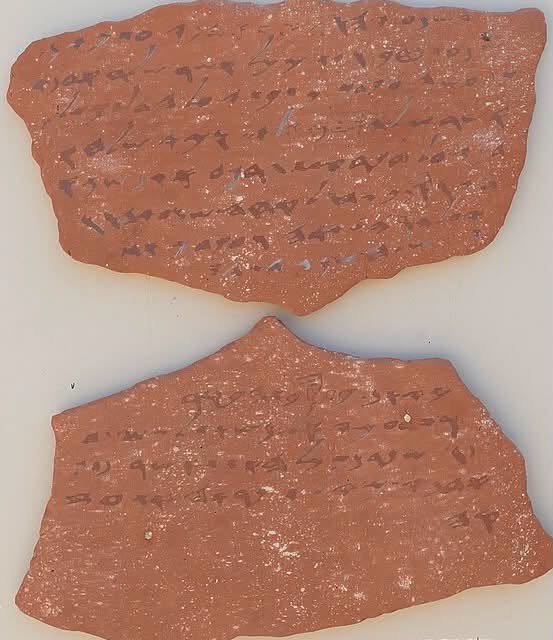
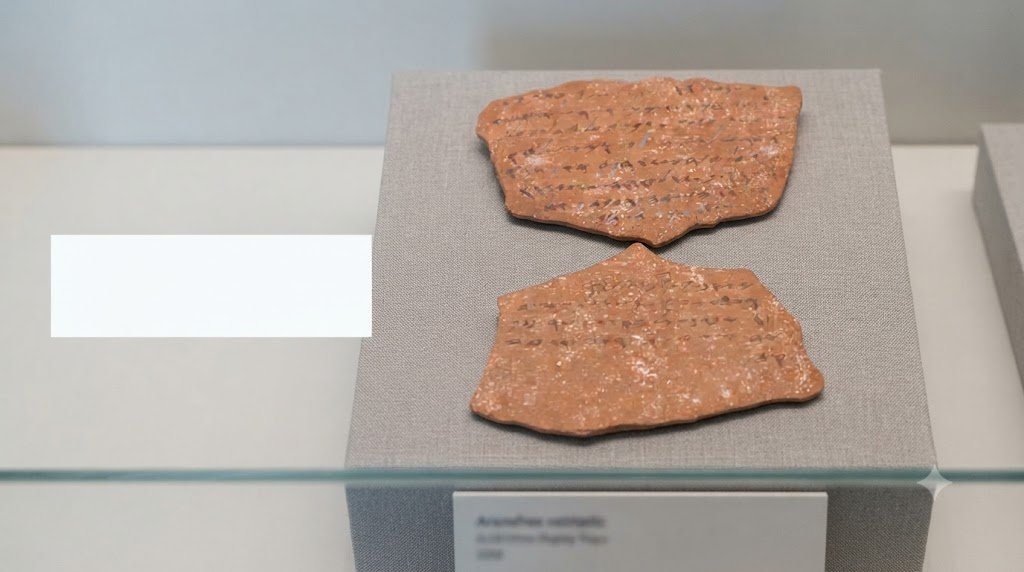
Approximately 2,600 years ago, a military commander wrote a brief message in ancient Hebrew on a pottery shard. Discovered by archaeologists in the city of Lachish, this letter is known in history as «Lachish Letter IV.»
The letter was written approximately in 588–586 BCE, shortly before the Babylonian army’s assault on the Kingdom of Judah. Its author was a military commander named Hoshaiah, and the recipient was Yaush, the governor of the city of Lachish.
The letter states: We are watching for the fire signals of Lachish, but we cannot see Azekah.
Despite being a short text, this letter provides important information about that period. The document shows that ancient Hebrew was used in official correspondence at that time, and the Kingdom of Judah’s army had a certain administrative system in place.
From the content of the letter, it is clear that the cities of the Kingdom of Judah were in serious danger, and people were awaiting the Babylonian army’s attack. The absence of signal fires from the city of Azekah suggests that the city had already fallen to the enemy.
This letter was written approximately 450 years after King David declared Jerusalem the capital, and only a few years before the destruction of the First Temple. Therefore, the Lachish letter is considered one of the most valuable historical sources regarding the final period of the Kingdom of Judah.
This writing, preserved on a pottery shard, allows us to understand how ancient people communicated with each other, what warning methods they used in times of danger, and what difficulties they faced during that period.