
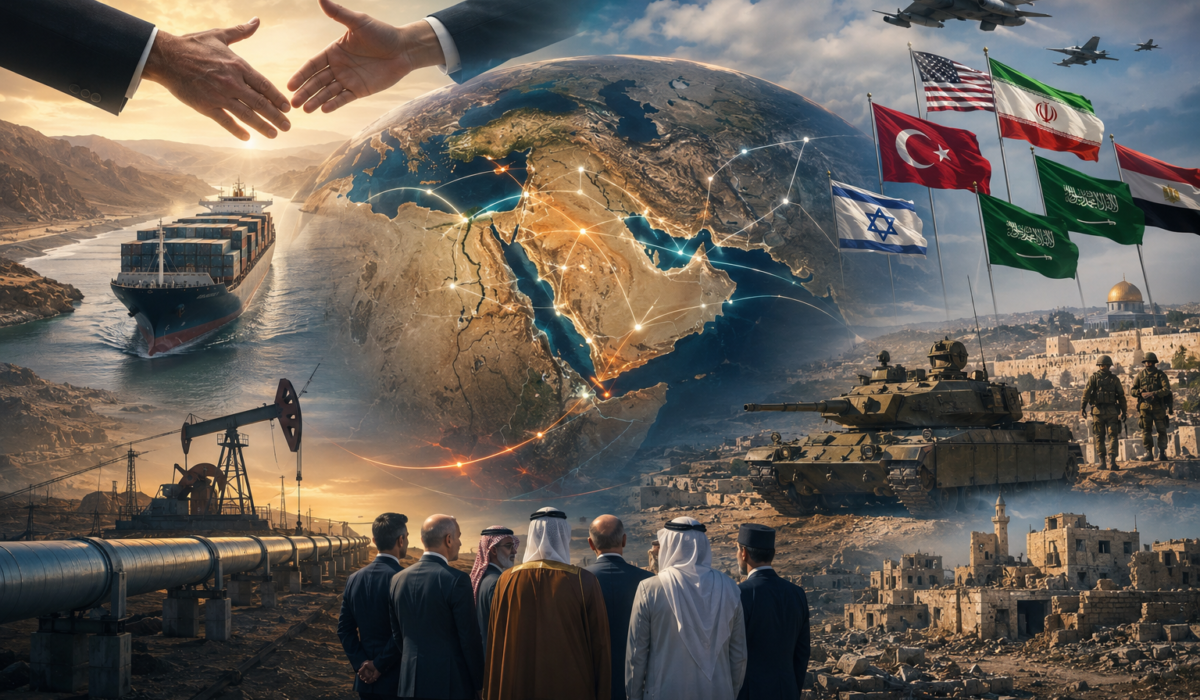
A paradigm shift: how new regional alliances are redrawing the map of the Middle East.
The regional security architecture is undergoing fundamental changes, moving away from previous containment models towards new pragmatic alliances. Negotiation processes are shifting focus from global threats to control over key logistical hubs, such as the Strait of Hormuz, and consolidating zones of control on land, creating new dynamics of influence involving regional and international players.
Shifting Priorities: From Nuclear Programs to Logistics Control
The current international agenda in the Middle East demonstrates a significant shift in priorities. Discussions surrounding nuclear programs and ballistic missiles are taking a backseat, giving way to an intense struggle for control over the Strait of Hormuz. According to available data, this issue is becoming central to the dialogue between the US and Iran. Amid rising tensions, major economic players are seeking to minimize dependence on traditional routes, stimulating the search for alternative paths for energy resource transit.
One of the strategic projects is the India-Middle East Economic Corridor (IMEC). Initially planned as a trade route from India to Europe via the UAE, Saudi Arabia, Jordan, and Israel, the project faces challenges related to the normalization of relations between countries in the region. As indicated by the information presented, there is a possibility of altering the corridor’s route to bypass Israeli territory, which is directly linked to Saudi Arabia’s internal political and diplomatic factors.
Syria as a Field of Geopolitical Rivalry
The Syrian direction remains a key node in the regional game. According to editorial assessment, the increased influence of certain political forces in Syria is aimed at consolidating control over territories, which could significantly alter the region’s logistical capabilities. Processes within Syria, including interactions between various ethnic and religious groups, such as the Druze, and new political structures, demonstrate a desire for the redistribution of spheres of influence.
Particular attention is drawn to the ideological component: educational programs and public discourse in Syria are undergoing changes aimed at forming new political orientations. According to available data, these processes are closely linked to the ambitions of regional powers seeking to expand their presence in the eastern Mediterranean. The strategic rapprochement between Turkey and Egypt, accompanied by regular military exercises, indicates the formation of a new power pole that seeks to strengthen its positions in the region.
Buffer Zones and Border Security
The agreement between Israel and Lebanon, viewed in the broad context of regional security, de facto solidified Israel’s capabilities to ensure the security of its northern borders. The Israeli presence in Southern Lebanon is considered a necessary element of a long-term strategy of deterrence and stability, given that the complete disarmament of non-state armed groups in the near future appears unlikely.
In parallel, the situation in the Gaza Strip is characterized by a high level of Israeli control over key sectors, while the international community and regional players continue attempts to maintain the status quo. Within the US administration, there is a struggle between different approaches to interacting with regional countries, creating a complex diplomatic picture that requires careful analysis of the consequences for global security.
What This Means
- Shift to Pragmatism: Regional players prioritize economic security and control over transport arteries above ideological contradictions.
- New Zones of Control: The consolidation of military presence in buffer zones (Southern Lebanon, Gaza Strip) becomes a long-term instrument for ensuring Israel’s national security.
- Revised Strategies: Attempts to create new logistical corridors (bypassing traditional routes) signal preparation for long-term economic competition.
- Rise of Regional Alliances: The rapprochement between Turkey and Egypt, reinforced by military cooperation, creates a new geopolitical factor that all players will have to reckon with.