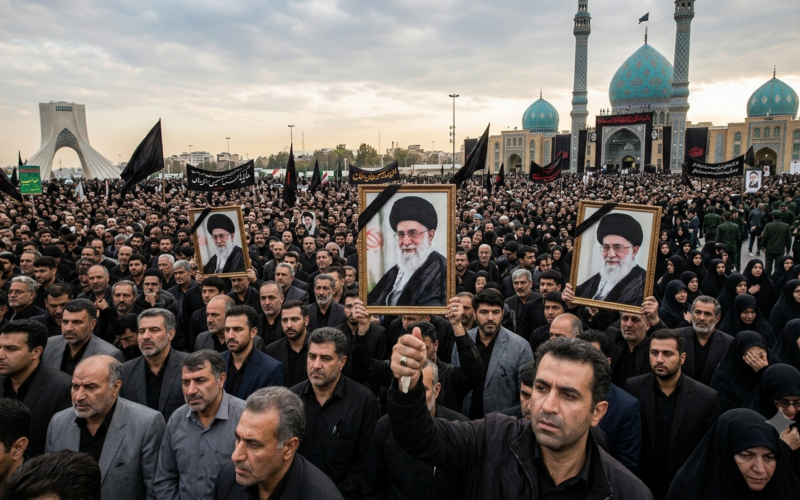
Behesht-e Zahra Cemetery
Behesht-e Zahra, meaning "Paradise of Zahra," is Iran's largest and most prominent cemetery, established in 1963 near Tehran. Covering vast grounds, it serves as the primary burial site for prominent political, military, and religious figures in Iran, as well as ordinary citizens and families. The cemetery holds deep cultural and religious significance in Islamic tradition, reflecting Persian customs of honoring the deceased.
The cemetery gained international attention during and after the 1979 Islamic Revolution, when it became the final resting place for fallen soldiers, revolutionary leaders, and state officials. The site is notable for its organized sections and monuments dedicated to significant historical events and individuals. Pilgrimage to Behesht-e Zahra remains an important religious and cultural practice for Iranians.
For readers of jnews.az, coverage of Behesht-e Zahra appears in contexts involving Iranian political developments, regional dynamics, and historical commemorations. Understanding this cemetery helps frame discussions of Iran's leadership transitions, memorial practices, and the country's relationship with its revolutionary history in broader Middle Eastern affairs.