
Maiden Tower
The most recognisable silhouette of Baku — and a monument whose purpose is still argued over.
What is known for certain
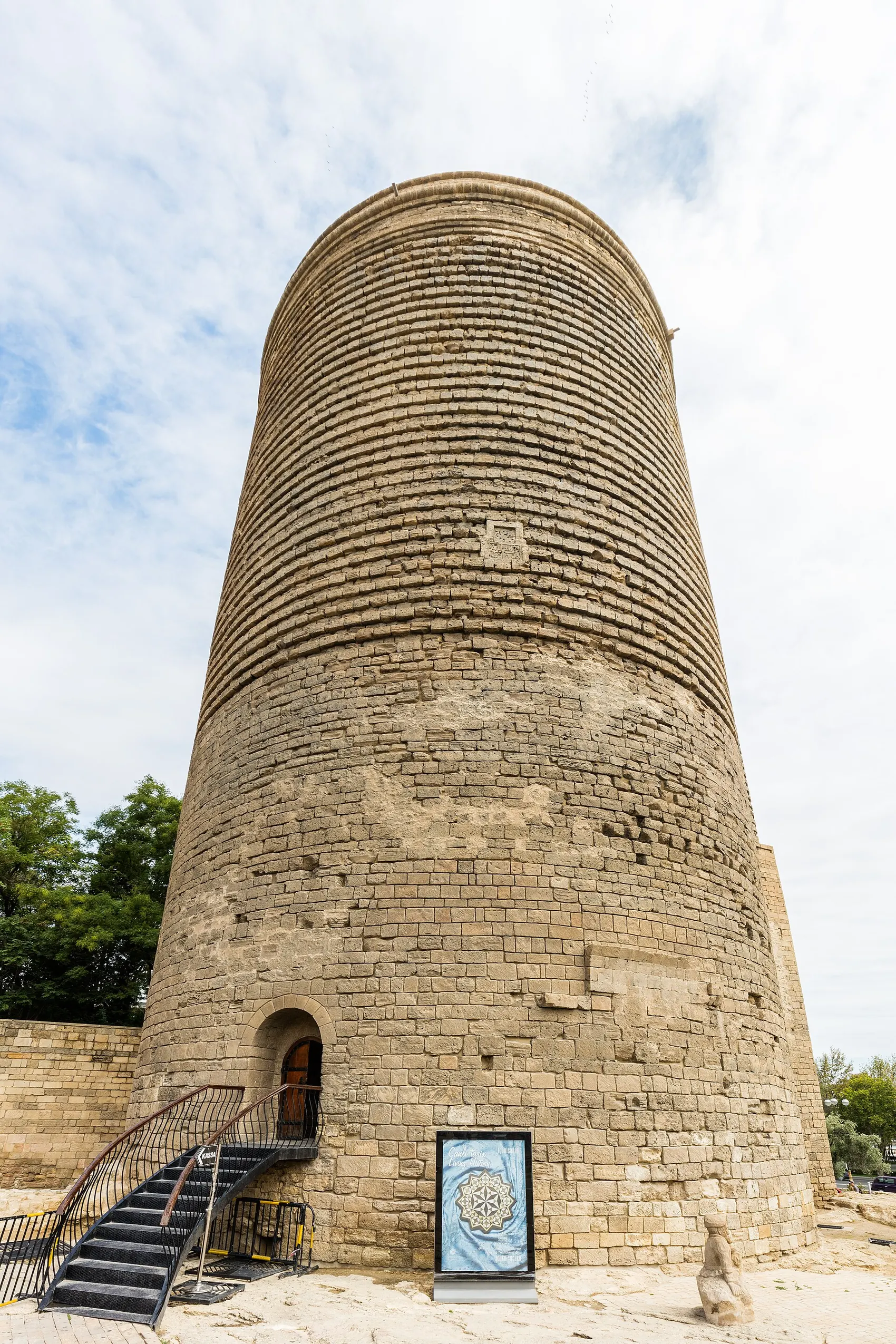
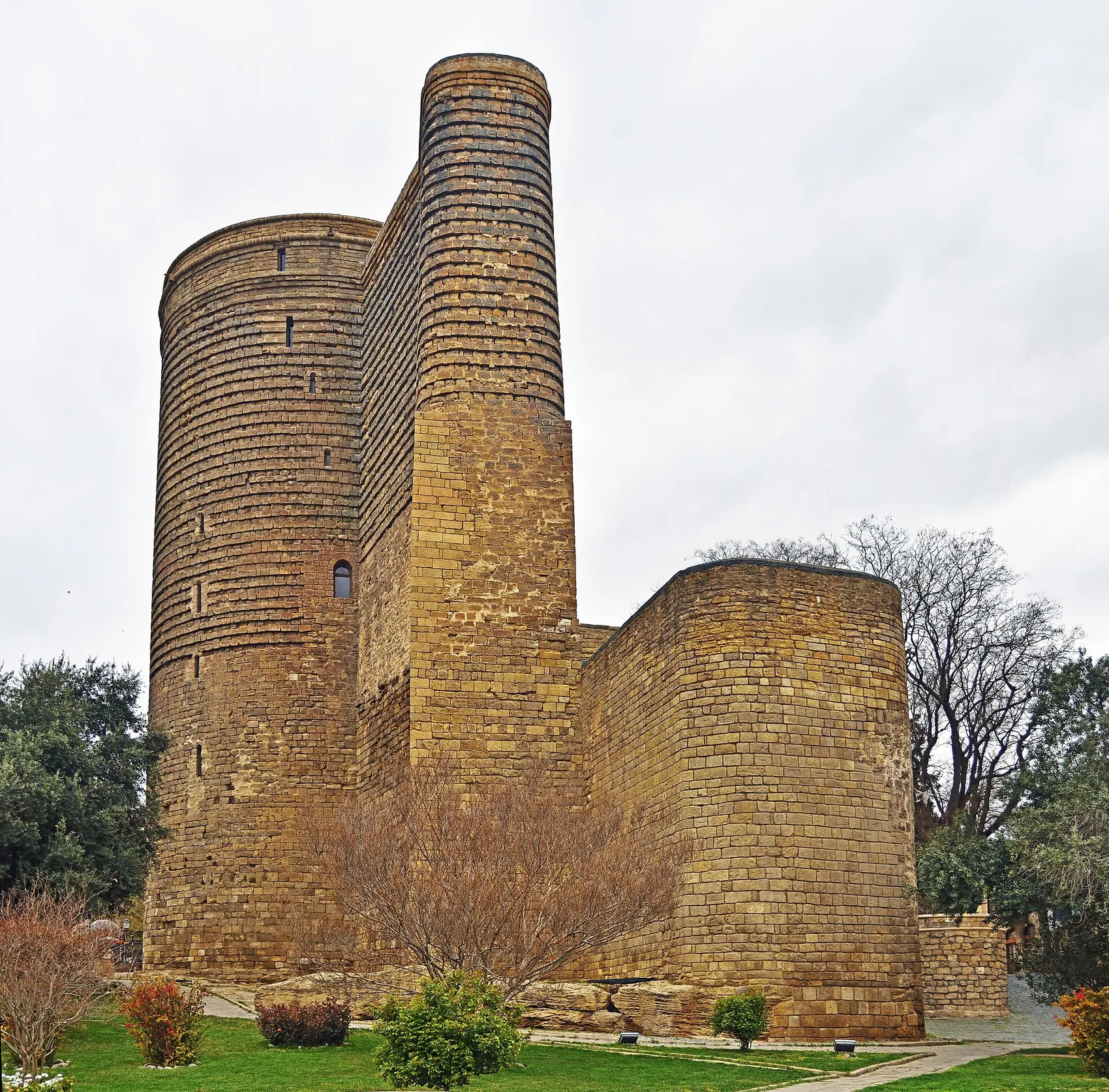
The tower stands on a rock in the south-eastern part of the fortress, by the former shoreline. Its height is 28 metres (Hebrew- and English-language sources give up to 29.5), the diameter about 16 metres, the walls five metres at the base and four at the top. Inside, flat stone domes divide the space into eight tiers linked by spiral stairs.
On the façade by the entrance is a set stone with a Kufic inscription: “The tower of Masud, son of Daud.” It bears no date, but the form of the script is typical of the 12th century. Researchers believe the tower was built in two stages, and the first may be pre-Islamic.
Its occupants — up to two hundred people — were supplied by a deep well reached through a passage in the thickness of the wall. From 13 June 1858 a lighthouse burned on the tower; in 1907 it was moved to Böyük Zirə island because its light merged with the lights of the city.
Why this is probably not a fortress
Later research does not support a defensive purpose. There are only a handful of windows, and they are set not by storey but along the staircase, facing up rather than down. The roof platform is too small for weapons. There was no permanent stair between the first tier and the rest — defenders would have walled themselves in above.
Hence the theories of a religious purpose: a Zoroastrian “tower of silence” of the Sasanian period, or something older still. Separately, Veyis Ibrahimov has argued it was an ancient rectification column for processing oil. There is no single answer, and saying so plainly is the honest option.
Legends
A shah decided to marry his daughter to a man she did not love; she asked him to build a tower and wait, and when the work was done she threw herself from it into the sea. The stone she struck was called “the virgin's stone”.
In another version her beloved took revenge on the king, while mermaids saved the girl — and years later the lovers found each other. The legend also records that the sea once came right up to the tower.
Tradition holds that the Apostle Bartholomew, who preached here in the 1st century, was executed by the tower. Excavations nearby uncovered the remains of an ancient temple identified with a basilica raised over the site of his death.
In brief
- Name
- Qız Qalası
- Height
- 28 metres above sea level
- Walls
- 5 metres at the base, 4 metres at the top
- Tiers
- eight, flat stone domes, spiral stairs
- Inscription
- “The tower of Masud, son of Daud”, Kufic script of the 12th century
- Lighthouse
- from 13 June 1858; moved to Böyük Zirə in 1907
- Museum
- since 1964; archaeological finds from the tower's well and weapons on the fourth tier
- Restorations
- mid-19th century (the machicolations were lost), 2012–2013
The tower in culture
In 1923 Jafar Jabbarly wrote the poem “The Maiden Tower”; a year later the legend became the first Soviet film shot in Azerbaijan, and in 1940 Afrasiyab Badalbeyli staged the first Azerbaijani ballet on the same subject. Since 2010 an international art festival has been held around the tower.
Baku.ws news
The feed of the news portal
 EconomyAzerbaijani oil has become cheaper909080808010:09
 WorldThe number of drones shot down on approach to Moscow has risen to 103, three people injured10:00
 PoliticsDeputy: Statements by Russian officials directed at Azerbaijan entail legal liability23:57
 WorldTrump doubts Iran's readiness to sign a deal with the US23:56
Headlines and photographs come from baku.ws; the feed was updated on 18 August 2026. The links lead to the publisher's site.
Sources
Facts were checked against Wikipedia articles in four languages, the UNESCO World Heritage entry and the site of the Reserve administration. Where sources disagree, both versions are given.