
Updated: 18 августа, 2026 11:45 дп
The American publication «The National Interest» has published an analytical article dedicated to the attitude of Central Asian countries toward Israel.
The piece, authored by Arjun Singh, notes that Muslim-majority Central Asian countries, unlike a number of Middle Eastern states, pursue a more pragmatic and cautious policy against the backdrop of the Israeli-Palestinian conflict. According to the author, the countries of the region primarily consider economic and geopolitical interests in their relations with Israel.
The article particularly emphasizes that Kazakhstan is Israel’s strongest partner in Central Asia. The piece mentions Kazakhstan’s joining of the «Abraham Accords» in 2025, its long-term diplomatic and economic ties with Israel, as well as cooperation in the energy sector. The author writes that Azerbaijan and Kazakhstan provide a significant portion of Israel’s oil imports.
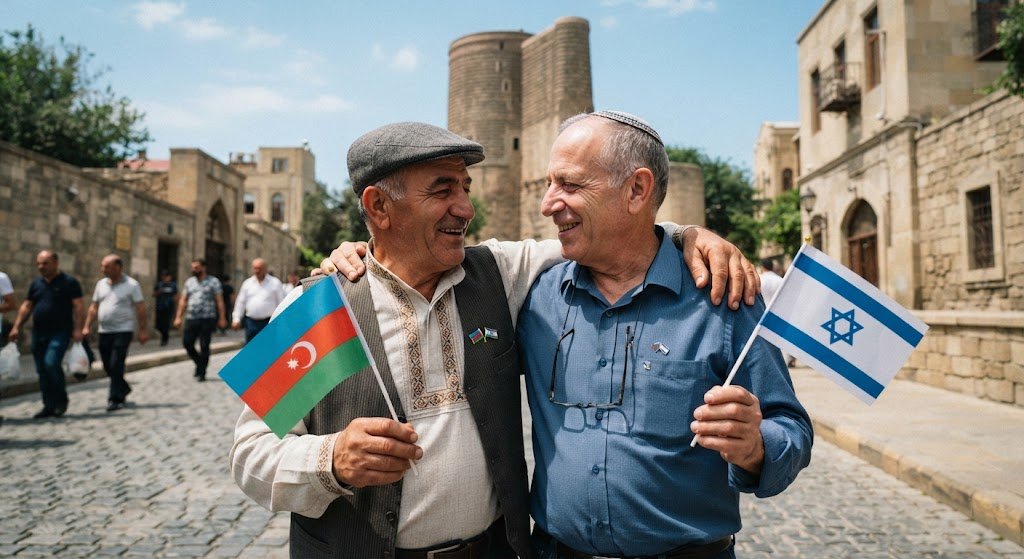
One of the notable parts of the article is dedicated to the role Azerbaijan can play in connections between Israel and Central Asia.
The author represents Azerbaijan as «Israel’s closest Muslim partner» and notes that in recent years the country has also expanded its ties with Central Asia. The publication highlights the strengthening of Azerbaijan’s position as an important transit point for goods bound for Europe, and as a political partner for Central Asian countries.
Singh writes that in late 2025, the leaders of the five Central Asian countries agreed to include Azerbaijan in the C5+1 format. This format is a platform used by major powers such as the United States, China, and India for collective cooperation with Central Asia.
In the author’s opinion, if Israel wants to expand its ties with Central Asia, it can establish more systemic cooperation with the countries of the region through the C5+1 format. This cooperation could create conditions to expand Israel’s access to critical mineral resources, as well as the oil and natural gas resources of Central Asia.
The article underscores the special importance of Azerbaijan in this process. The author believes that Israel already has an important foothold in Azerbaijan to strengthen its positions in Central Asia.
The piece also reports that although Uzbekistan, Kyrgyzstan, and Turkmenistan have diplomatic relations with Israel, their relations are more limited compared to Kazakhstan. It is noted that Tajikistan exercises greater caution in relations with Israel due to close cultural and political ties with Iran.
According to the overall conclusion of the article, Central Asian states try to maintain a balancing policy between Russia, China, and the US. Relations with Israel are viewed by these countries as an additional tool, both in terms of economic opportunities and strengthening ties with the West, particularly the US.
In this context, the author specifically highlights Azerbaijan’s position, noting that Azerbaijan is not only a close Muslim partner for Israel, but also a country of strategic importance in terms of Israel’s access to Central Asia.