
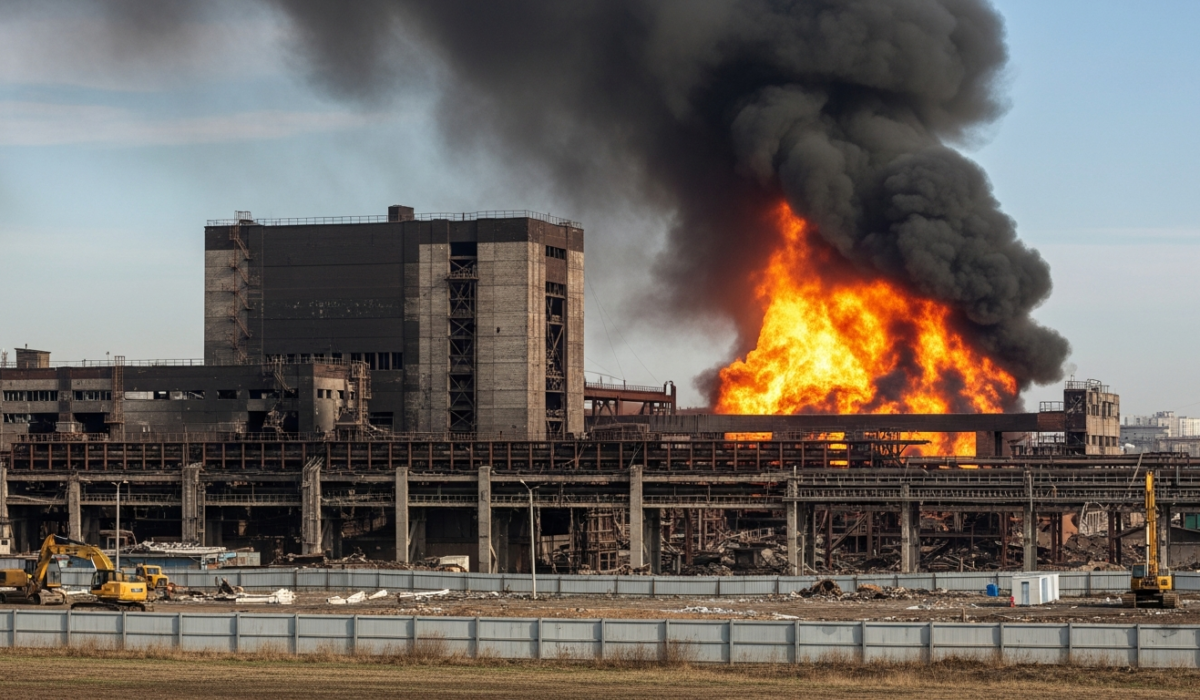
The attack on the Moscow Oil Refinery (MNPZ) in Kapotnya, which resulted in fires and damage to key facilities, including primary oil refining units, has once again raised questions about the vulnerability of Russian energy infrastructure. This event confirms a shift in tactics for impacting economic targets.
Significance of the Moscow Oil Refinery
The Moscow Oil Refinery plays a critically important role in supplying fuel to the capital region. The plant is characterized by its high compactness with an annual processing volume of up to 11 million tons of oil. It covered a significant portion of Moscow's needs for gasoline and diesel fuel, and also supplied jet fuel to the capital's airports. The high concentration of facilities in a relatively small area makes the enterprise a strategically important and vulnerable target.
Changing Strike Tactics
Despite the reinforced air defense system around Moscow, drones manage to overcome defenses. A qualitative change in attack strategy is noted:
- Accuracy and effectiveness: The focus has shifted to pinpoint and highly accurate strikes instead of massive raids requiring a large number of drones.
- Shift in priority targets: Attention is focused not only on primary refining units, but also on facilities that ensure the vital activity of plants – transformer substations and complex technological equipment for "fine" refining (production of high-octane gasoline). Restoration of such nodes is extremely difficult due to sanctions and the lack of imported spare parts.
- Logistical infrastructure: Attacks have begun on oil pumping stations, which creates obstacles for the transportation of oil and petroleum products.
Consequences for the Fuel Market
Currently, damage or shutdowns have been recorded at many Russian oil refineries, including most of the industry's largest enterprises. This creates the prerequisites for serious problems:
- Logistical collapse: Megacities, such as Moscow, are supplied "from the wheels," which makes them extremely sensitive to any disruptions in supplies.
- Panic and excitement: Fuel shortages inevitably cause panic demand, queues at gas stations, and panic among the population, for whom cars are a necessary means of transportation.
- Lowering standards: To compensate for the lack of production volumes, authorities have temporarily lowered environmental standards, allowing the release of fuel with a higher content of impurities, which simplifies the production process at the expense of quality.
Analysts note that such pressure on the fuel infrastructure has profound social consequences. Gasoline shortages directly affect daily life, creating risks of public discontent. Under the conditions of sanctions pressure and the impossibility of rapid repair of high-tech equipment, the situation in the oil refining industry remains extremely tense, and the ways to overcome it are limited.
It should be noted that this is not the first attack on Russian oil refineries. Earlier reports indicated strikes on other large enterprises, which testifies to the systematic nature of the new strategy.