The circuit
A Hermann Tilke design where cars approach a medieval wall at almost three hundred kilometres an hour and accelerate to nearly four hundred.
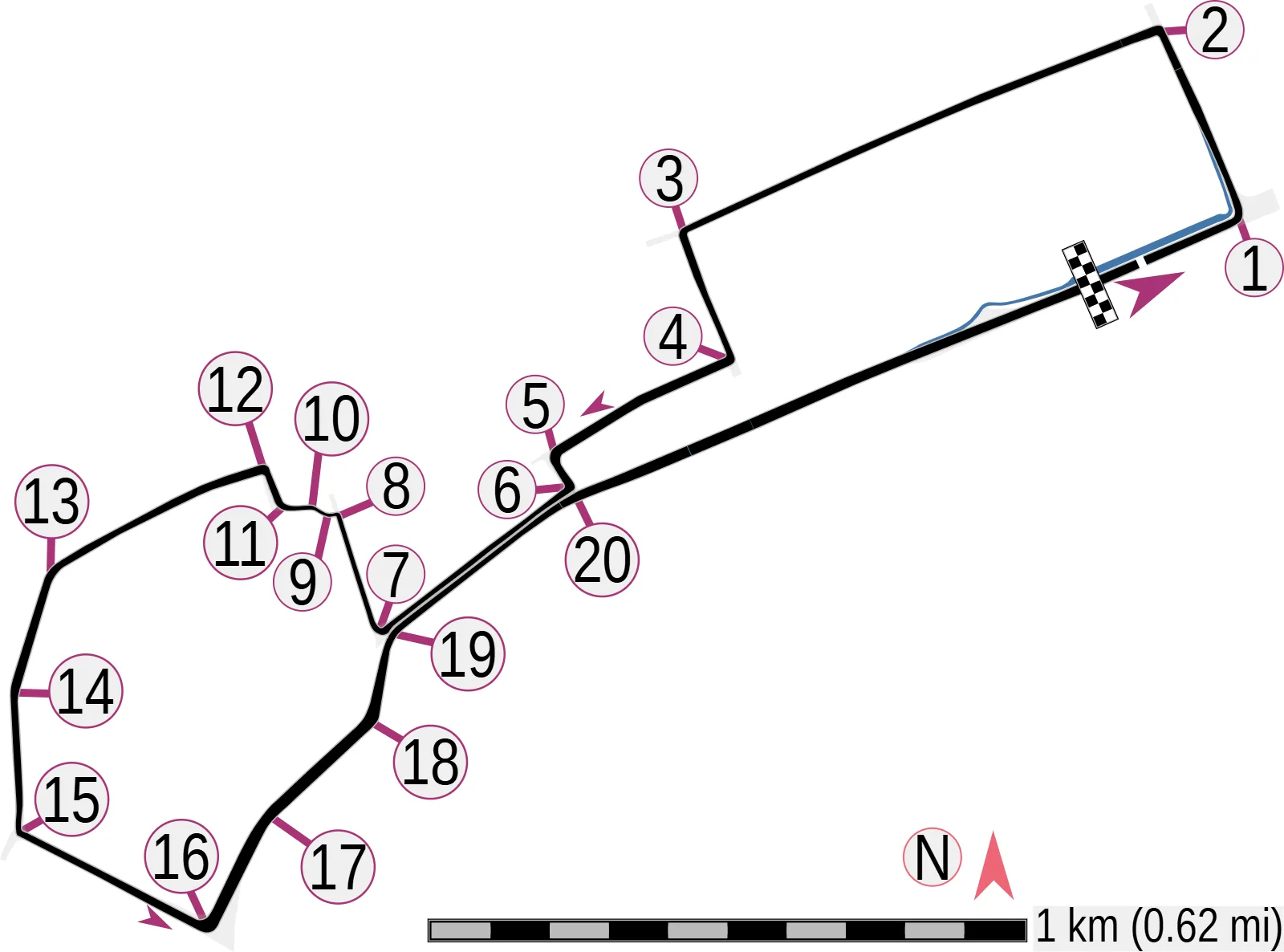
What Tilke designed
An anti-clockwise layout is rare on the Formula 1 calendar. The track starts by Azadliq Square, loops around Government House and heads west along a kilometre-long straight to the Palace of the Shirvanshahs and the Maiden Tower.
By the fortress wall the road climbs and narrows to 7.6 metres — a two-metre-wide car passes literally between the walls of the Old City. After that loop the circuit comes out onto Neftchilar Avenue: 2.2 kilometres of almost straight road along the sea back to the start line.
The circuit was projected to be the fastest street track in the world, with speeds around 360 km/h. Reality proved faster still: in the very first qualifying session Williams recorded 378 km/h for Bottas.
Six kilometres through the centre
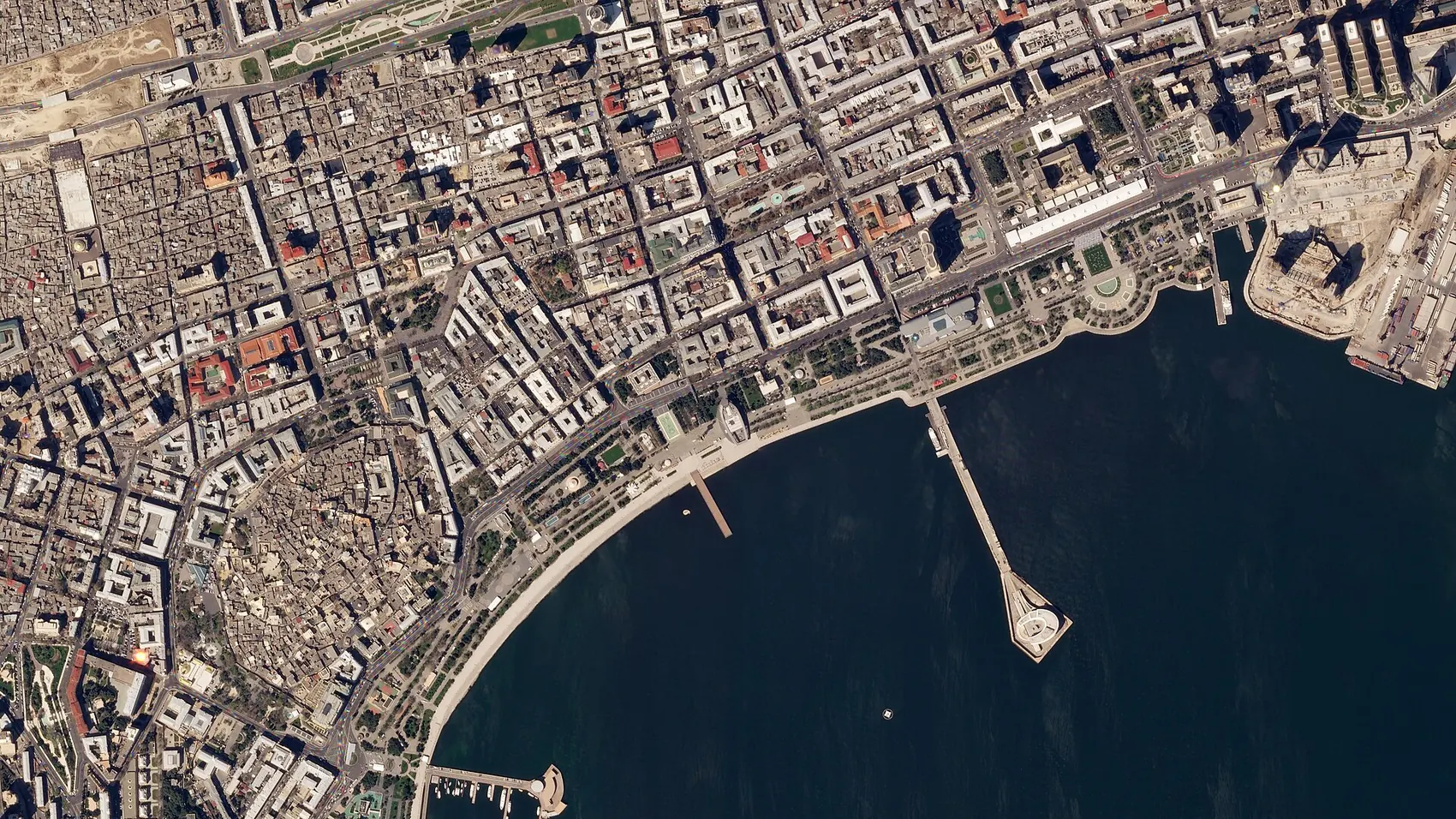
In lap length Baku is beaten only by Spa, Jeddah and Las Vegas. For a street circuit that is a great deal: almost the whole city centre ends up inside the ring.
The race distance is 51 laps — about three hundred kilometres on city streets with no run-off at all: a mistake almost always ends in a wall and yellow flags.
In brief
- Official name
- Baku City Circuit, Bakı Şəhər Halqası
- Designer
- Hermann Tilke
- Lap length
- 6.003 km
- Direction
- anti-clockwise
- Corners
- 20
- Narrowest point
- 7.6 metres — the climb by the fortress wall
- Long section
- 2.2 km along Neftchilar Avenue
- Lap record
- 1:43.009 — Charles Leclerc, Ferrari, 2019
- First race
- European Grand Prix, 19 June 2016
- Operator
- Baku City Circuit Operation Company
Key points
The start-finish line runs beside Azadliq Square; from there the cars enter the loop around Government House.
The climb along the walls of İçərişəhər and the narrowest point of the track — 7.6 metres. Overtaking here is all but impossible, and a mistake costs a suspension.
2.2 kilometres along the sea — the circuit's main argument for overtaking and the place where speed records are set.
Nico Rosberg called the pit entry next to the 350 km/h straight one of the most dangerous places of the season. Race director Michael Masi replied that the venue meets every FIA requirement.
Drain covers have wrecked a weekend twice: in 2016 Bottas missed third practice, and in 2019 first practice was cancelled after Russell's incident.
In 2016 Pirelli found cuts in 90% of the rear tyres used in free practice: they were being cut by the bolts holding down the kerbs.
The Middle Ages a few metres away
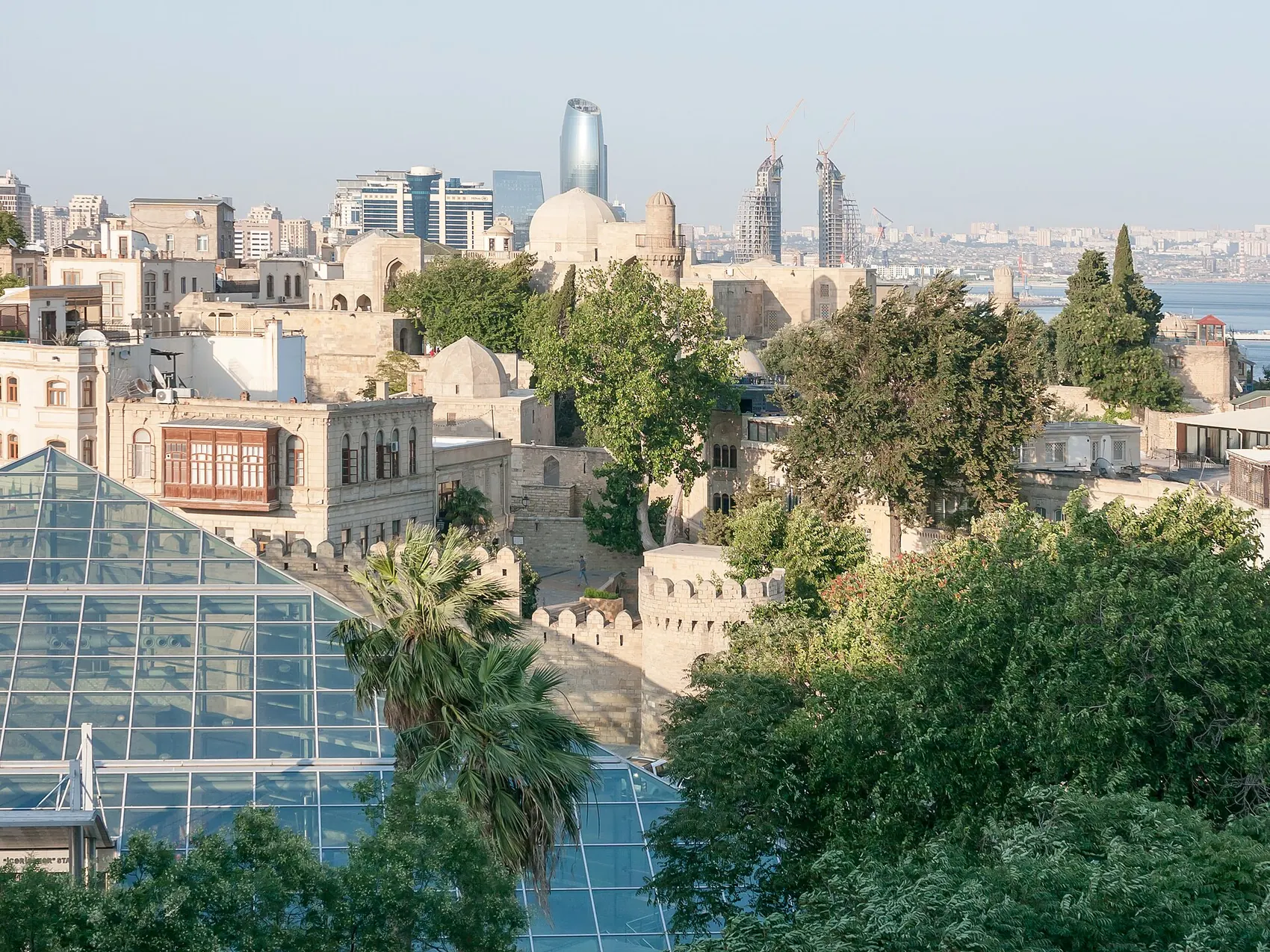
What makes Baku unique is the proximity of eras: 2026 cars sweep along 12th-century walls, and the television picture catches the Maiden Tower and a rear wing in the same frame.
Drivers praise the circuit for exactly that contrast: the long straights demand courage, while the narrow technical loop demands precision to the centimetre, because there is no right to a mistake next to a wall.
Baku.ws news
The feed of the news portal
 EconomyAzerbaijani oil has become cheaper909080808010:09
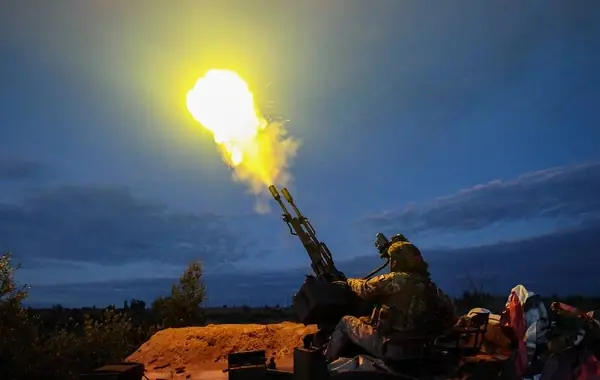 WorldThe number of drones shot down on approach to Moscow has risen to 103, three people injured10:00
 PoliticsDeputy: Statements by Russian officials directed at Azerbaijan entail legal liability23:57
 WorldTrump doubts Iran's readiness to sign a deal with the US23:56
Headlines and photographs come from baku.ws; the feed was updated on 18 August 2026. The links lead to the publisher's site.
Sources
Facts were checked against Wikipedia articles on the Baku City Circuit, the Azerbaijan Grand Prix and the individual races (2016–2025), and against the 2026 season calendar. Results and records are current as of 18 August 2026.