Formula 1 in Baku
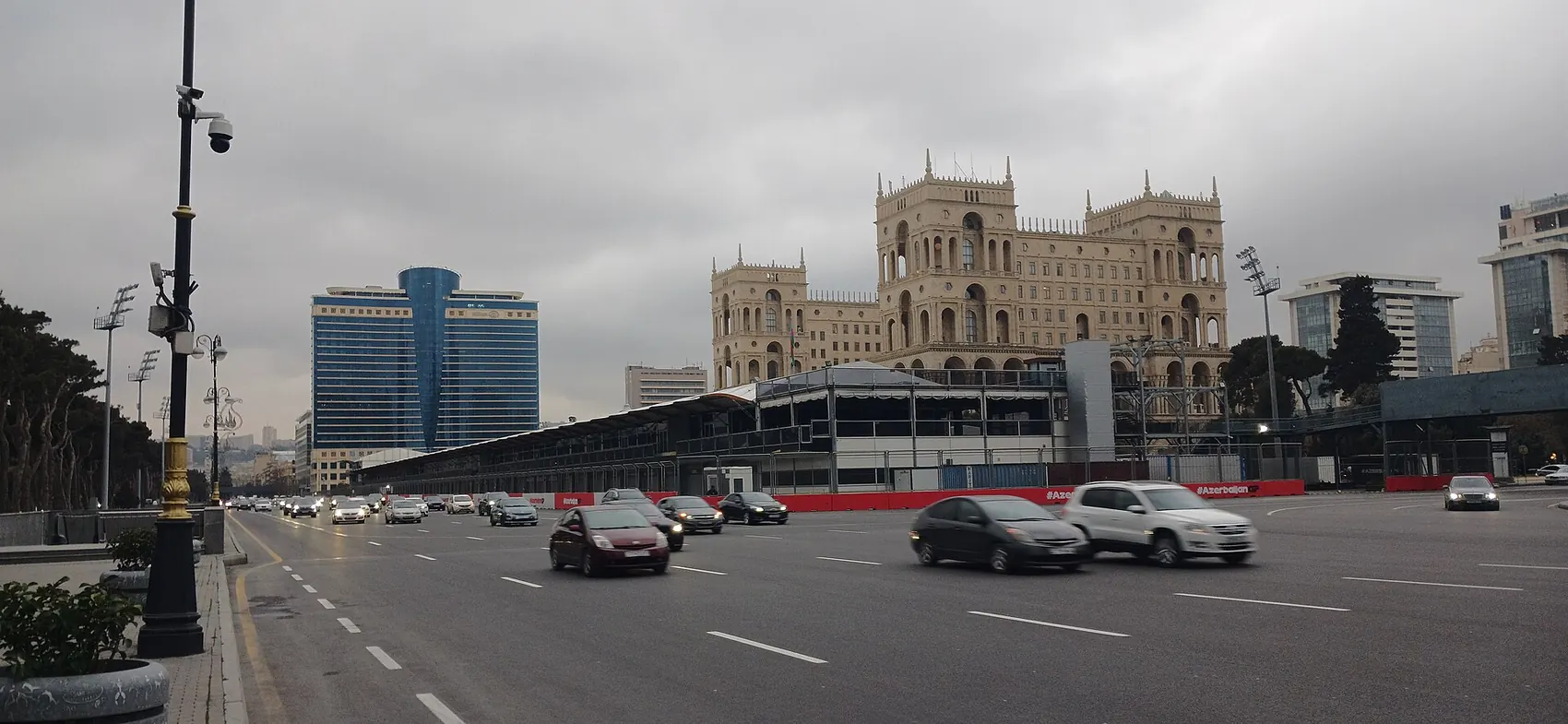
Six kilometres of city streets: the start by Government House, a narrow climb along the fortress wall, a two-kilometre run down Neftchilar Avenue — and the highest speed ever recorded in Formula 1.
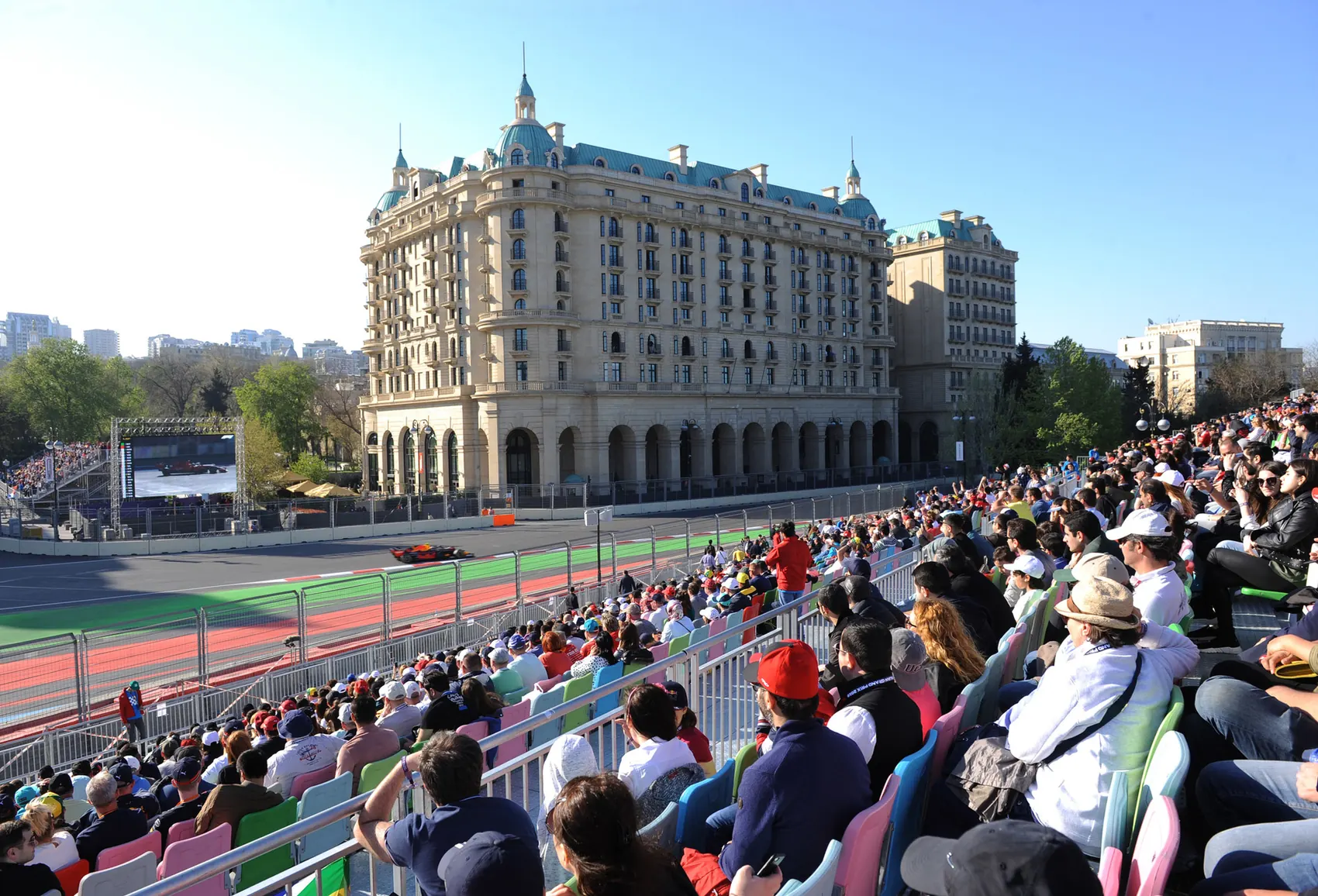
A grandstand on the waterfront during the Grand Prix · Press Service of the President of the Republic of Azerbaijan · CC BY 4.0
What this race is
The Baku City Circuit is a street track in the centre of Baku, laid out beside the seaside boulevard and around İçərişəhər. The first race was held here in June 2016 under the name European Grand Prix; since 2017 the round has been called the Azerbaijan Grand Prix.
The 6.003-kilometre lap runs anti-clockwise and remains one of the longest on the calendar — only Spa, Jeddah and Las Vegas are longer. The layout was designed by Hermann Tilke, the author of most modern Formula 1 circuits.
The next race falls on 26 September 2026, and on an unusual day: the organisers asked to move the Grand Prix from Sunday to Saturday so that it would not clash with Azerbaijan's Remembrance Day. For Formula 1 a Saturday race is a rare exception.
Sections
 01The circuit
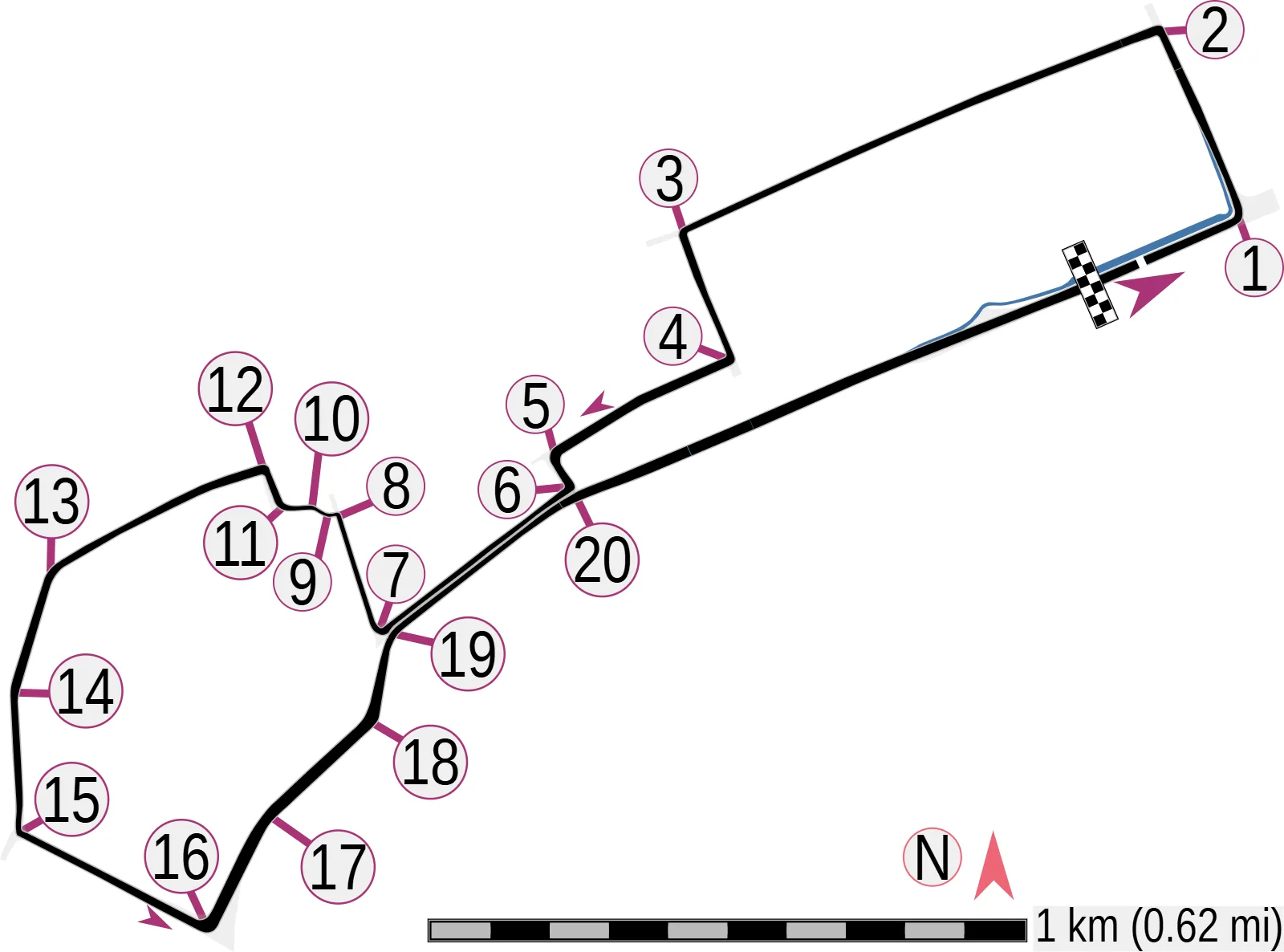
The lap layout, twenty corners, the 7.6-metre castle section and a 2.2-kilometre straight.
Read →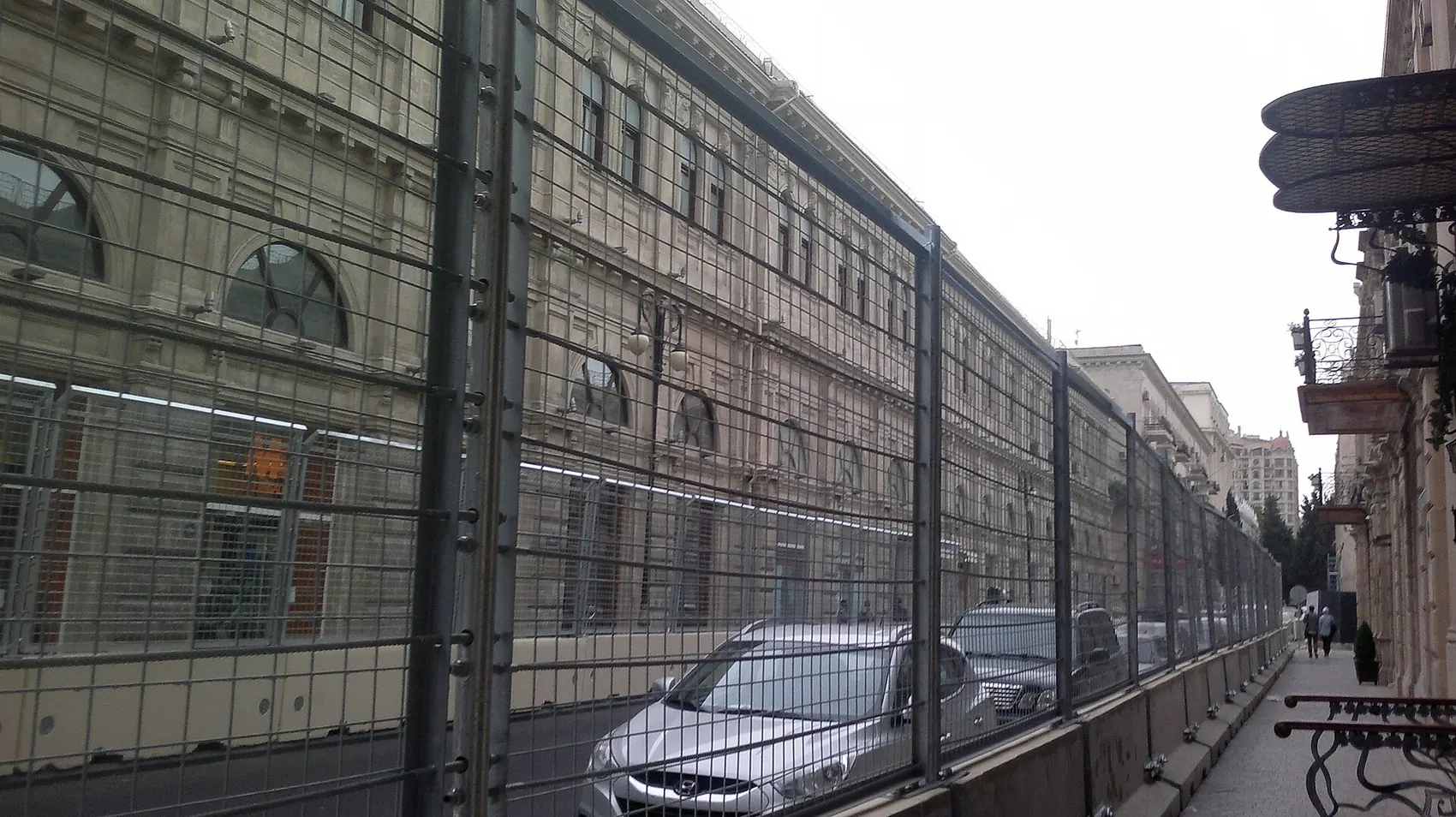 02Timeline
From the announcement in 2013 to the 2026 season: nine Grands Prix held and one cancelled.
Read →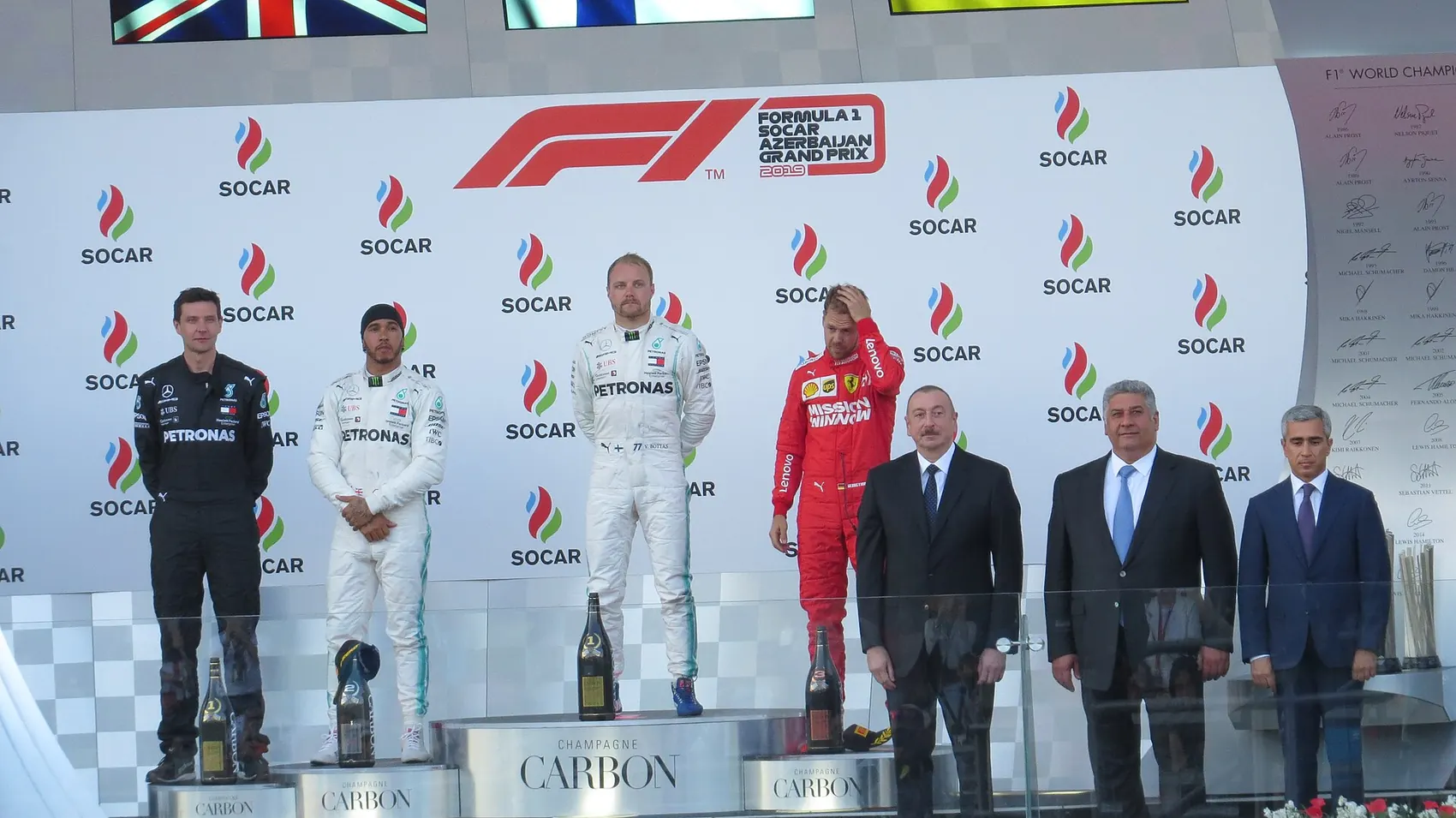 03Winners
Every winner since 2016, Leclerc's lap record and four pole positions in a row.
Read →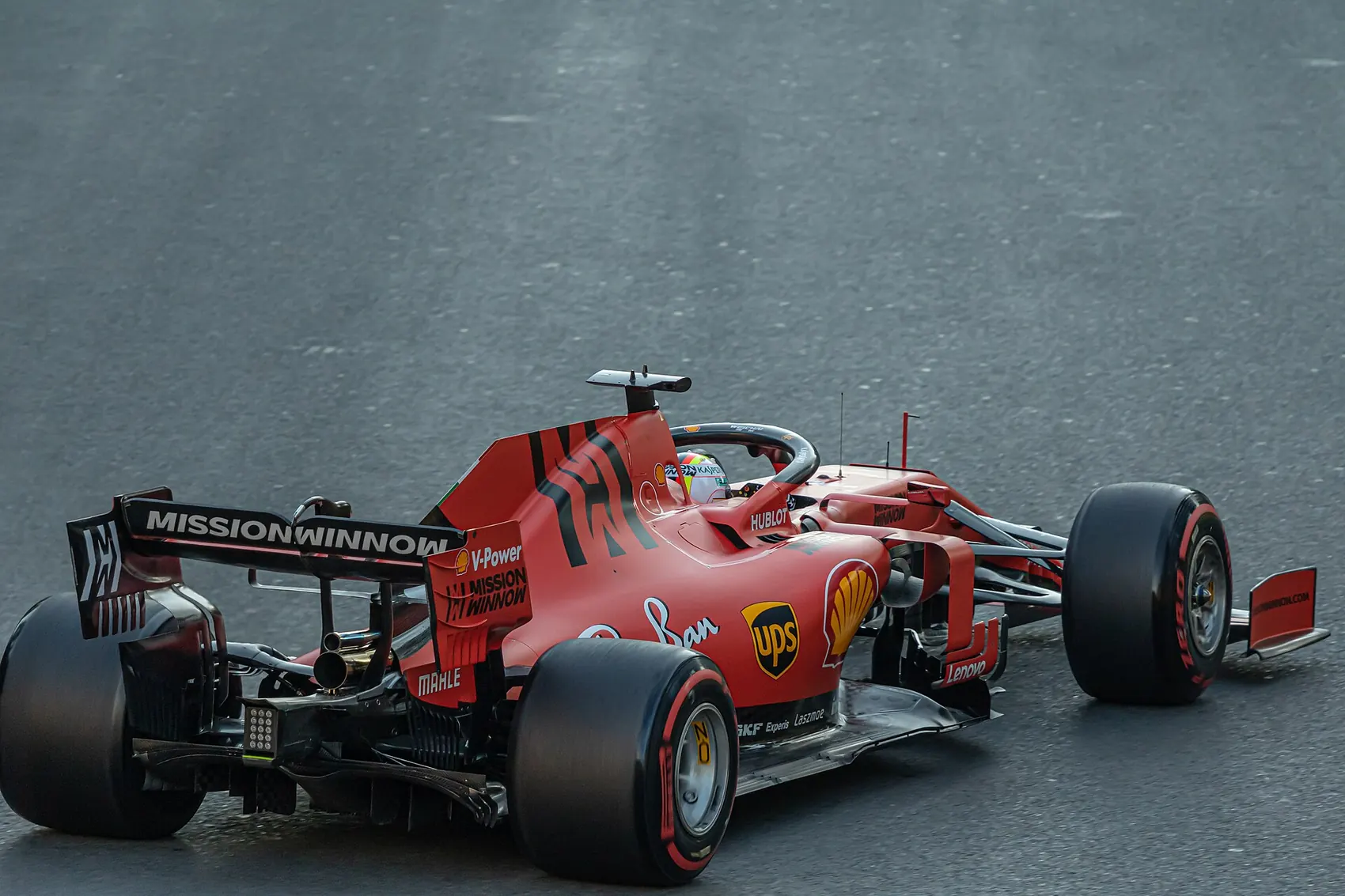 04Moments
A collision behind the safety car, a leader's tyre exploding and a podium for an eighteen-year-old.
Read →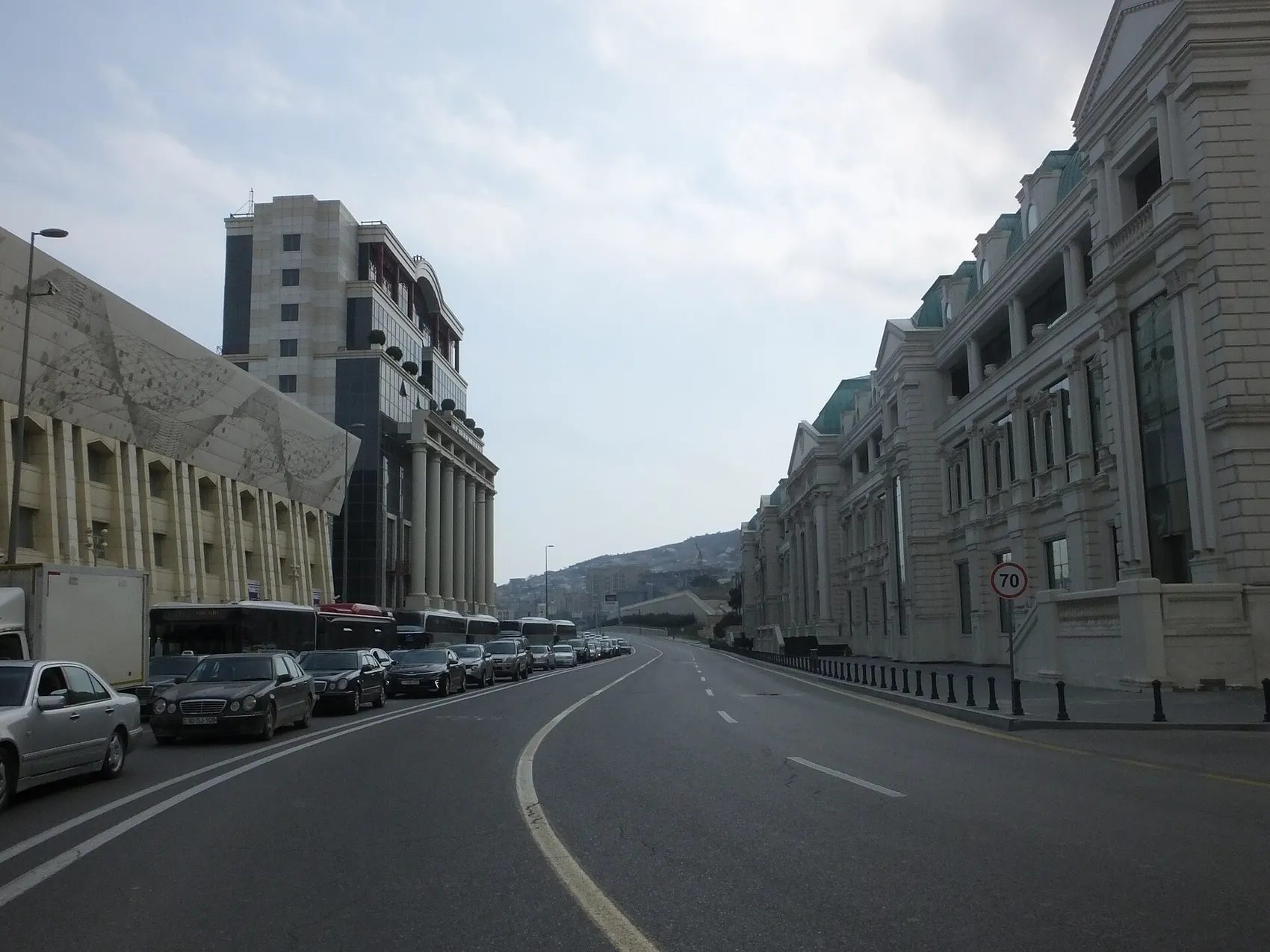 05Race and city
How the centre of Baku turns into a circuit — and what it costs the people who live there.
Read →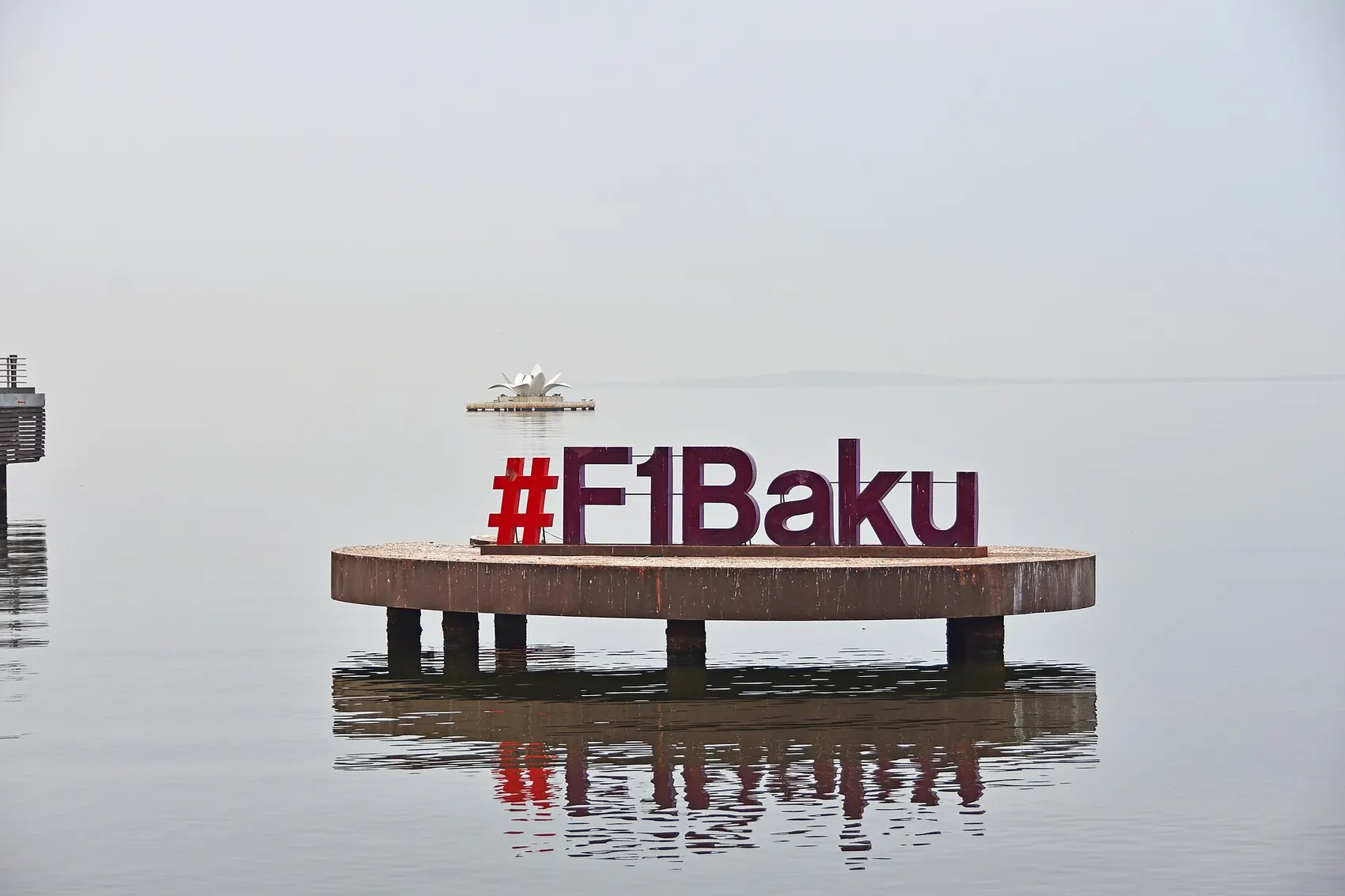 06Attending
Dates, grandstands, getting to the track and what to know before the weekend.
Read →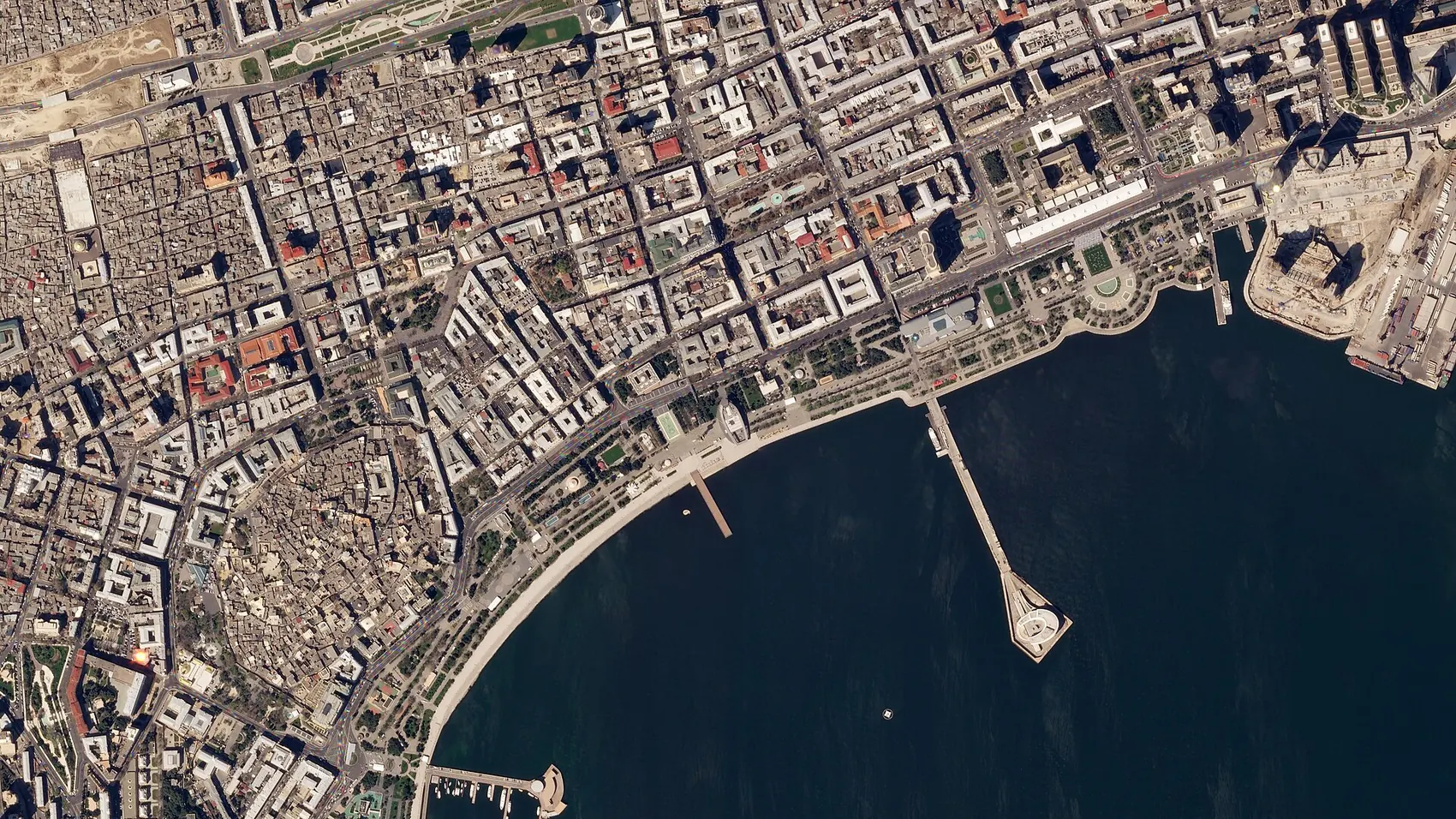 07Photographs
Sixteen images with the author and licence given for each.
Read →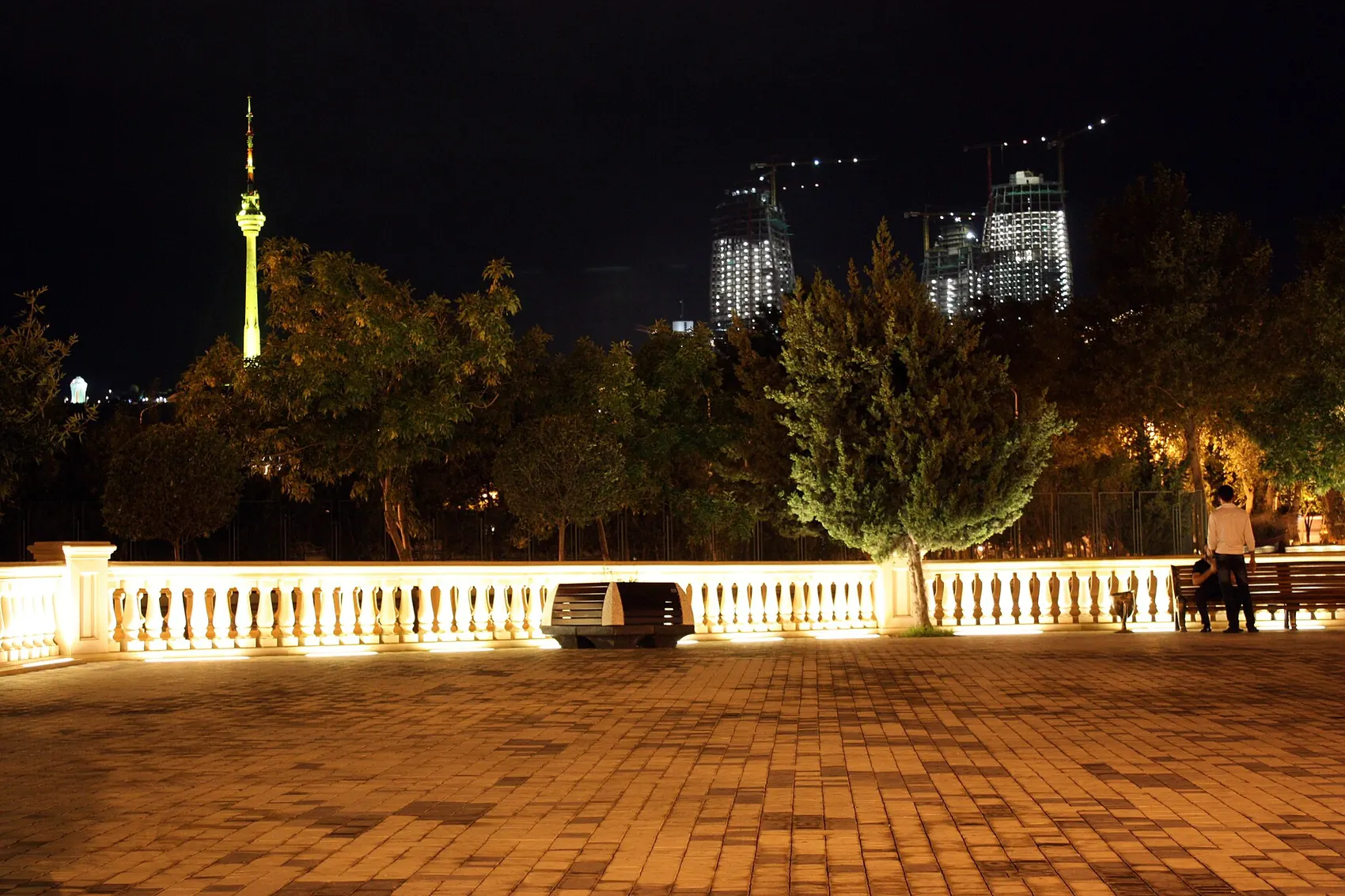 08Live
The live Baku TV stream on the page itself — our player, the channel's feed.
Read →How the lap works
The start is next to Azadliq Square. The track then loops around Government House and heads west along a kilometre-long straight towards the Palace of the Shirvanshahs and the Maiden Tower. There the climb begins, and with it the narrowest point of the circuit — 7.6 metres between the walls.
After rounding the Old City the cars come out onto a 2.2-kilometre stretch of Neftchilar Avenue and return to the start line. That combination — a slow technical loop plus a very long straight — is what makes Baku a track where cars actually overtake.
These are ordinary streets
Between races buses and taxis run along this track: the asphalt, kerbs and drain covers belong to the city. That is exactly why Valtteri Bottas missed third practice in 2016 — he damaged his car on a drain cover during his installation lap — and why first practice was cancelled in 2019 after George Russell hit another one.
Before the weekend the streets are closed and hung with barriers and fencing, and afterwards everything is taken down again. The markings and surface are renewed, but the geometry stays urban — kerbs, ramps and walls right at the edge of the track.
378 km/h
Baku.ws news
The feed of the news portal
 EconomyAzerbaijani oil has become cheaper909080808010:09
 WorldThe number of drones shot down on approach to Moscow has risen to 103, three people injured10:00
 PoliticsDeputy: Statements by Russian officials directed at Azerbaijan entail legal liability23:57
 WorldTrump doubts Iran's readiness to sign a deal with the US23:56
Headlines and photographs come from baku.ws; the feed was updated on 18 August 2026. The links lead to the publisher's site.
Sources
Facts were checked against Wikipedia articles on the Baku City Circuit, the Azerbaijan Grand Prix and the individual races (2016–2025), and against the 2026 season calendar. Results and records are current as of 18 August 2026.