Updated: 12 августа, 2026 11:47 дп
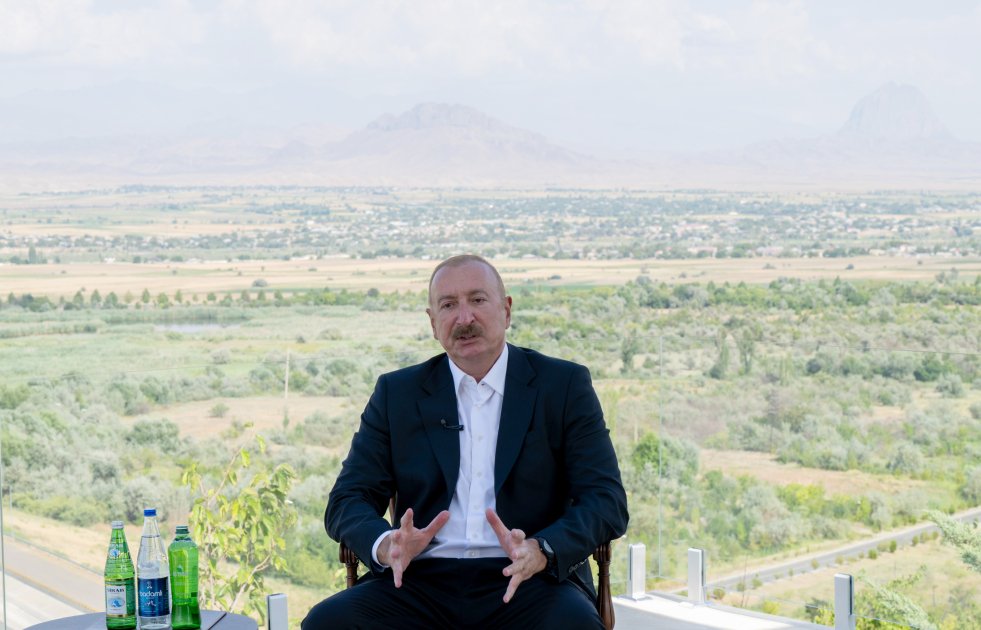
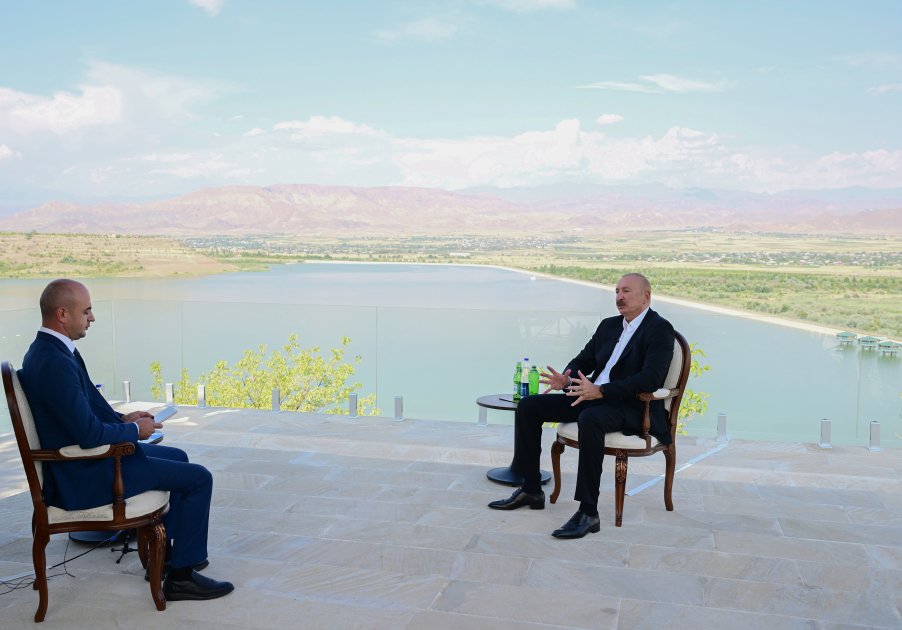
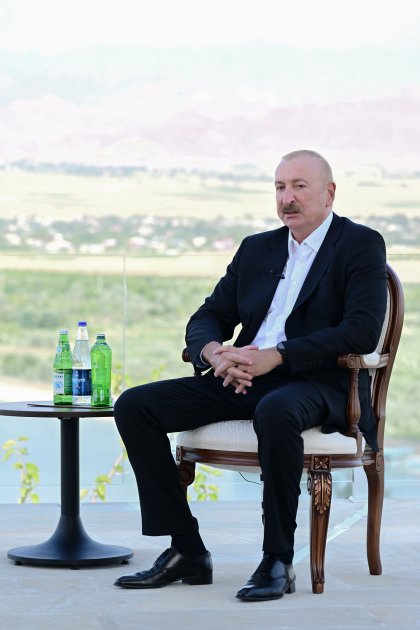
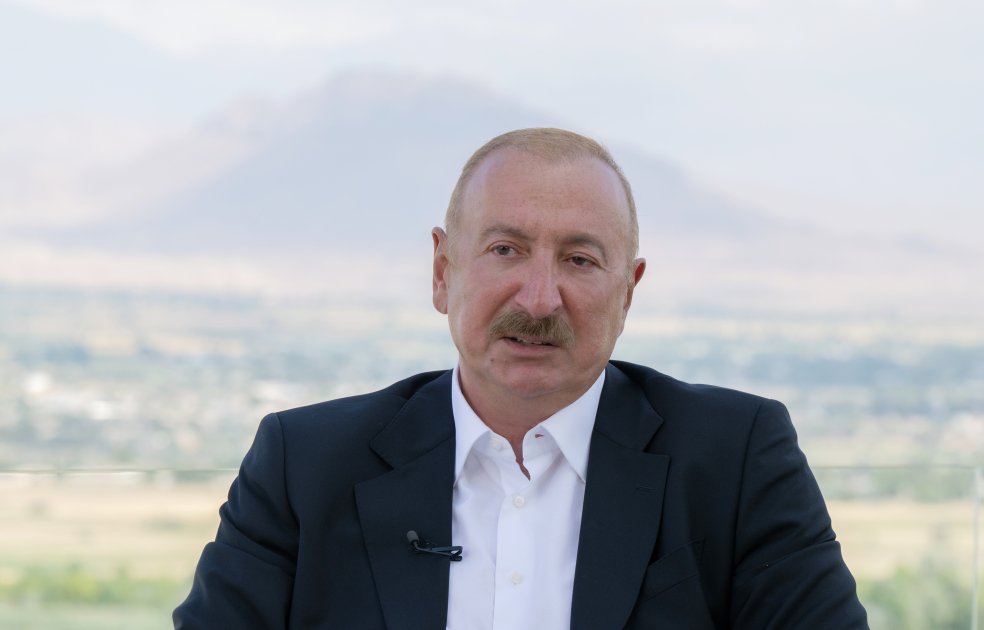
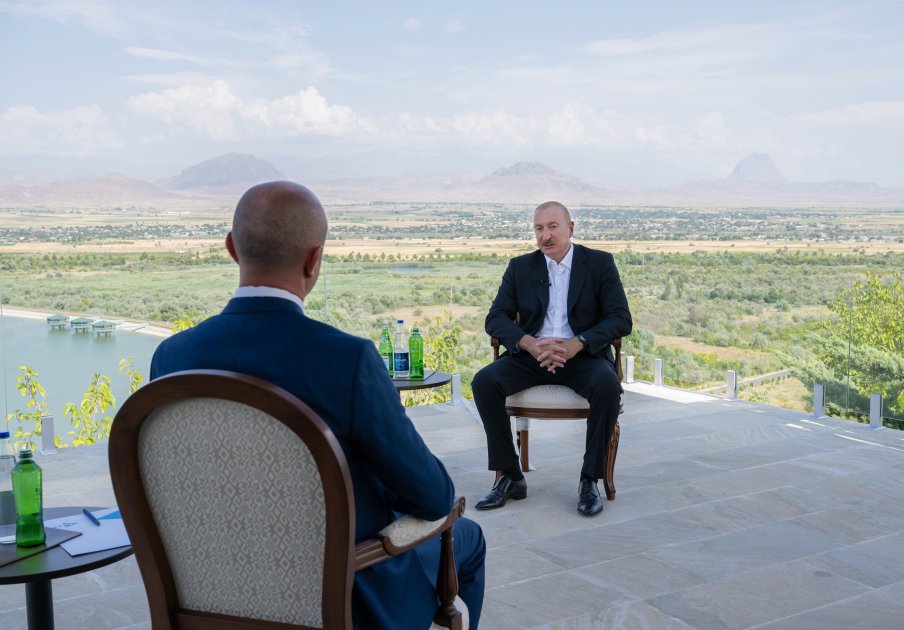
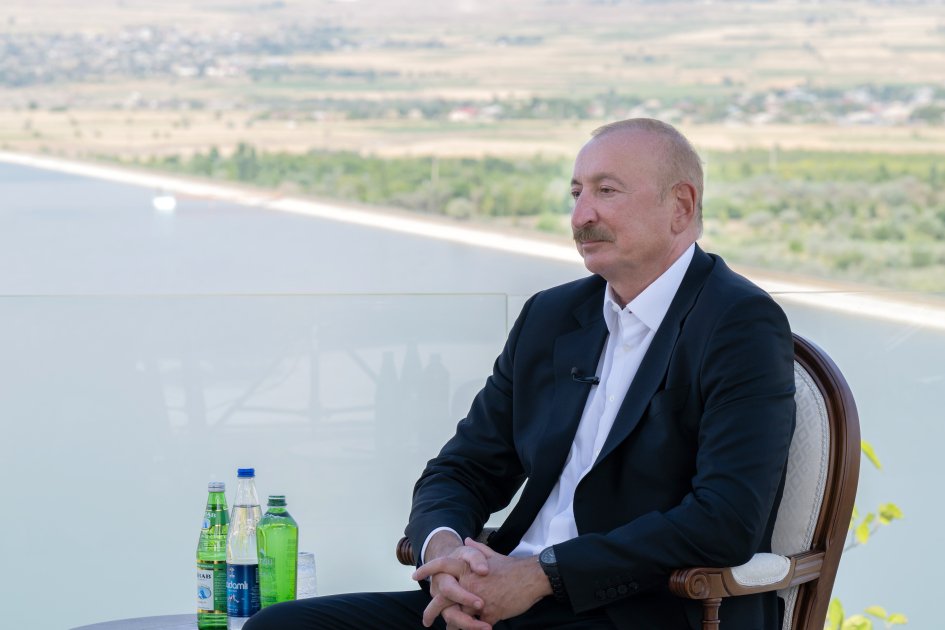
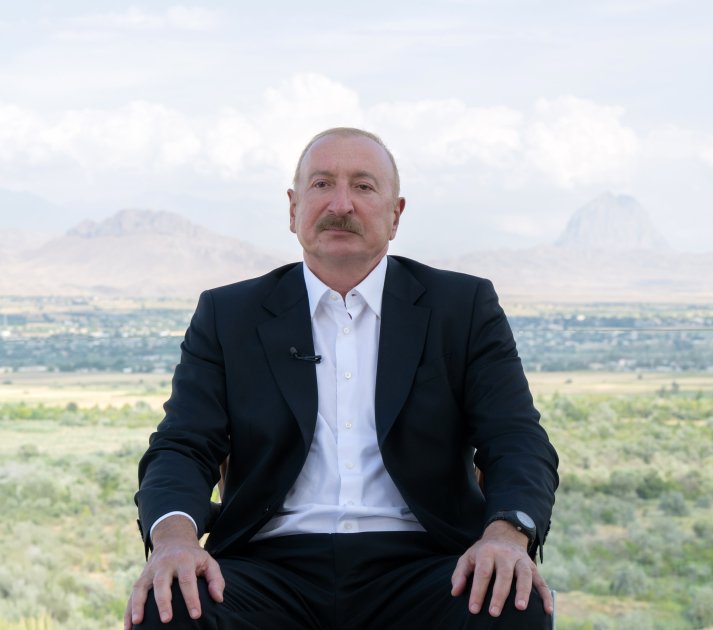
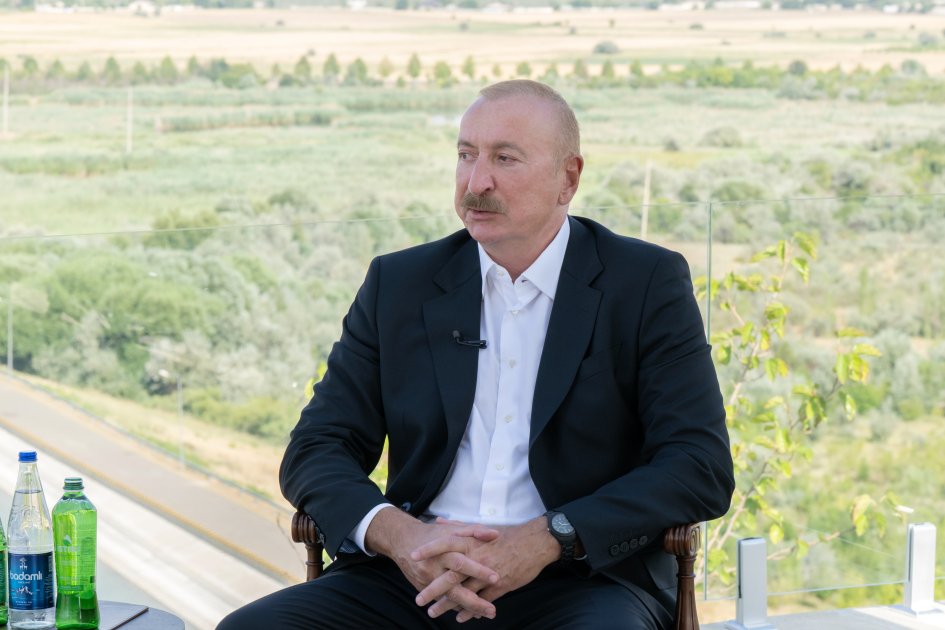
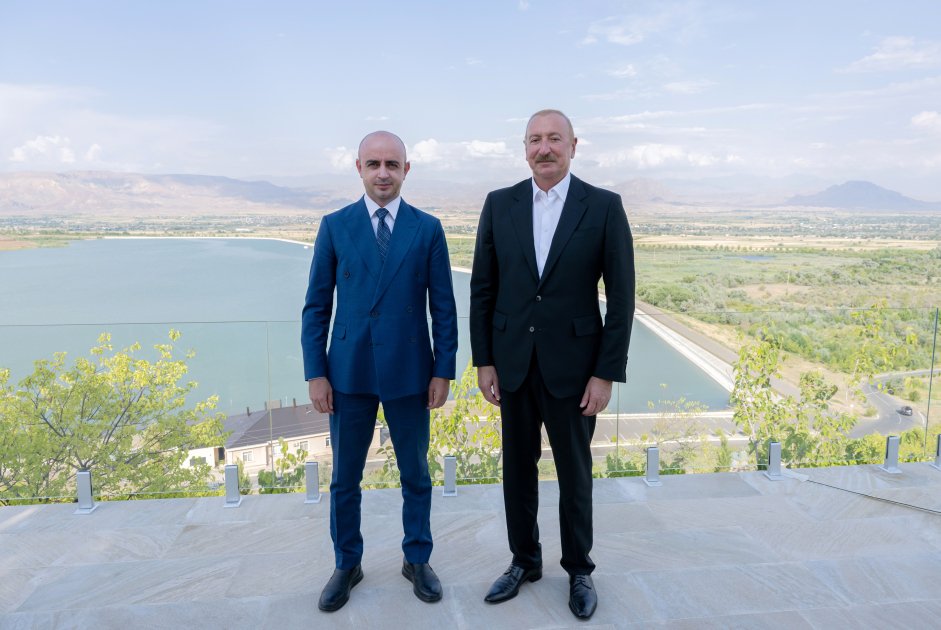
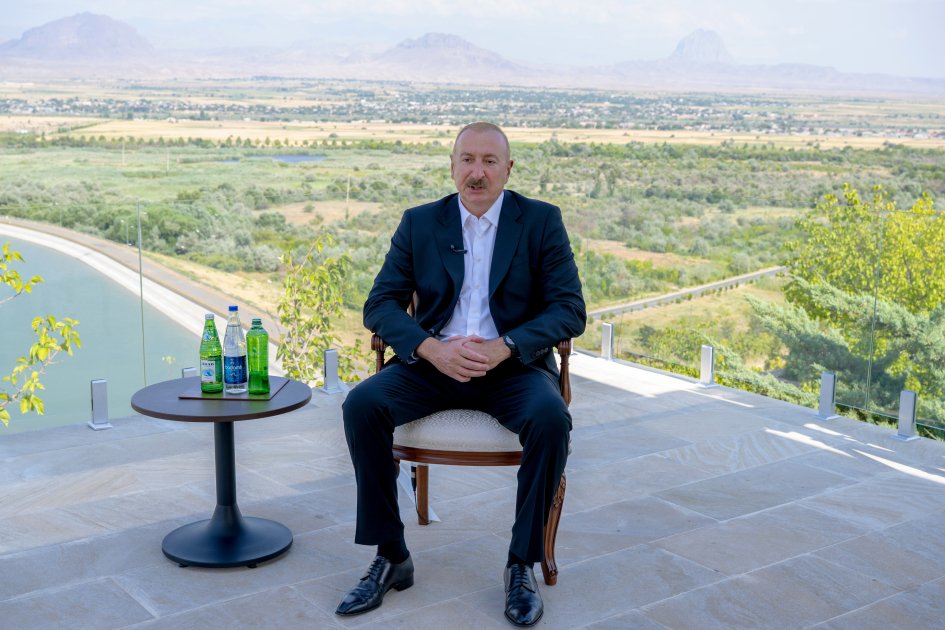
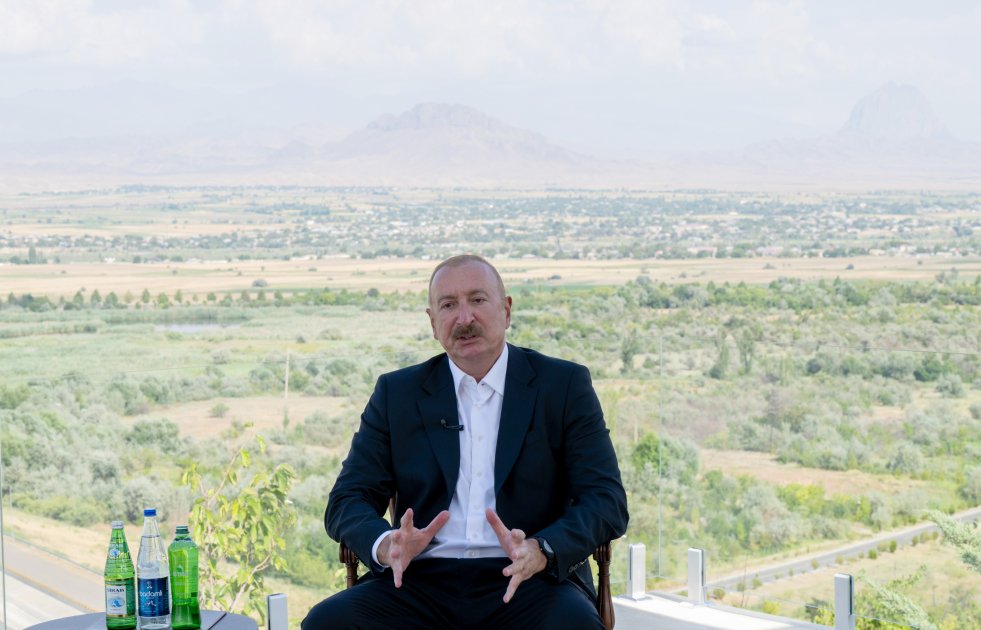
An interview given by Azerbaijani President Ilham Aliyev to Azerbaijan Television during his visit to Nakhchivan presents a comprehensive overview of the autonomous republic's future development model. The views expressed in the interview indicate that priorities for Nakhchivan are no longer limited solely to addressing socio-economic challenges. The main goal in the upcoming phase is to establish a secure and energy-sustainable Nakhchivan integrated into regional systems via modern transport infrastructure and building an export potential.
A key highlight of the President's approach is considering various projects not in isolation, but as elements of a unified strategic concept. Security, energy, transport, industry, agriculture, tourism, and social infrastructure are presented as complementary directions.
From security to the development agenda
The strategic geographical position of Nakhchivan has consistently placed its security issues at the center of attention. In the interview, the President first emphasized strengthening defense capacity. The creation of the Separate Army, equipment with modern military hardware, and the formation of new commando forces are presented as core elements of Nakhchivan's security architecture.
The important point here is that security is no longer viewed as an obstacle to economic development, but as one of its primary guarantees. In other words, in the new stage for Nakhchivan, the security agenda and the economic development agenda progress in parallel.
This approach is also significant for enabling Nakhchivan to become a participant in larger economic and transport projects in the future.
Nakhchivan transforms from energy importer into energy exporter
One of the most important aspects of the interview concerns statements on energy security.
It is clear from the President's statements that the main foundational phase in Nakhchivan's energy policy is already complete. Substantial work has been conducted toward gasification, power generation, and establishing solar and hydroelectric power stations to ensure energy sustainability for the autonomous republic. Achieving 100 percent gasification in Nakhchivan is highlighted as one of the major results of this policy.
However, the goal is now broader: not only covering Nakhchivan's own energy needs, but establishing export capabilities for the power it generates.
In this context, building a 300-megawatt thermal power plant holds special significance. As the President noted, Nakhchivan currently has a generating capacity of approximately 200 megawatts, and the new power plant will significantly increase this figure. At the same time, large-scale solar energy projects are planned.
Thus, the logic of energy policy for Nakhchivan is shifting: supply → sustainability → generation → export.
This signifies a transformation in the economic role of the autonomous republic as well.
Solar energy could become Nakhchivan's new economic resource
Nakhchivan's natural potential serves as a major pillar of the energy strategy. In the interview, the President stated that Nakhchivan is one of the most favorable locations in Azerbaijan for solar power and noted that new plants with hundreds of megawatts of capacity will be established.
The broader perspective involves export opportunities. The interview notes that solar power generation in Nakhchivan could reach at least 500 megawatts, and potentially 1,000 megawatts. The prospect of exporting this energy toward Turkey and Iran, and eventually to the European market, was also raised.
This approach demonstrates how Nakhchivan's role on the energy map could evolve. The autonomous republic is envisioned not merely as an energy consumer, but as a participant in the generation and transmission chain of the regional energy system.
Zangezur corridor: from transport project to broader geopolitical platform
One of the most important political and geostrategic messages in the interview relates to the Zangezur corridor.
According to the outline presented by the President, the essence of this project is not merely creating a transport link between mainland Azerbaijan and Nakhchivan. The corridor could become an important route connecting broader East-West and North-South transport systems.
In this context, Nakhchivan's geographical position transforms from a feature once perceived as a challenge into a strategic advantage.
If the corridor operates at full capacity, Nakhchivan will not only secure a direct connection with mainland Azerbaijan, but could also become a key transit point between Turkey, Iran, and broader Eurasian transport networks.
The 15-million-tonne cargo throughput target highlighted by the President shows that the project is viewed not merely as a regional road, but as large-scale international logistics infrastructure.
Azerbaijan builds its own infrastructure instead of waiting
A noteworthy message in the interview is the emphasis placed on the time factor in project implementation.
Regarding the reconstruction of existing sections of the Nakhchivan railway and increasing overall cargo capacity, the President stated that the Azerbaijani state possesses the necessary financial resources. At the same time, opportunities remain open for participation by international consortia.
Azerbaijan's approach appears clear: international partnership is possible, but the absence of partnership must not become an obstacle to realizing the project.
This model continues in the Nakhchivan context an approach observed in major infrastructure projects executed by Azerbaijan in recent years: building a foundation with national resources first, and then expanding opportunities to attract international capital and partners.
The "energy dimension" of the Zangezur corridor
One of the most compelling points in the interview is that the Zangezur corridor is not viewed solely as a road and railway project.
According to the President's statement, fiber-optic cables, power lines, and if necessary, oil and gas pipelines could also pass along this route in the future. It was noted that a project is already prepared to lay power lines from mainland Azerbaijan to Nakhchivan via Armenian territory.
This significantly expands the scope of the Zangezur link.
It is no longer just about the movement of people and cargo. This concerns a multifunctional regional corridor model along which energy, digital communications, and in the future, other strategic resources can transit.
In other words, the concept of a corridor is transforming from a mere road into a system of infrastructures.
Nakhchivan could become part of a regional energy hub
The interconnections of Azerbaijan's power system with Russia, Iran, Georgia, and Turkey further enhance Nakhchivan's potential. According to the President, energy links extending via Nakhchivan to Turkey and onward to Europe can contribute to regional energy security.
Two parallel processes are notable here.
On one hand, Azerbaijan secures Nakhchivan's energy security. On the other, export capabilities are being created by boosting Nakhchivan's own power potential.
Thus, the concept of energy security is also transforming: moving from self-sufficiency toward participating in regional energy supply.
Industry and employment: the social pillar of development
Nakhchivan serving merely as a transit and energy center is not enough. It is essential for these projects to generate real economic outcomes for the local population.
In this regard, establishing the Nakhchivan Industrial Park is of particular significance. The President stated that the park will spur job creation and the formation of modern industrial complexes.
This project can serve to shape a new model in Nakhchivan's economy. Combining the opportunities created by transport and energy projects with industrial production allows added value to remain in the region.
Freight passing through the corridor should not only yield transit revenue, but also stimulate the growth of production, logistics, services, and trade sectors along the route.
Karabakh, Eastern Zangezur, and Nakhchivan: a unified development concept
One of the strategically most important theses of the interview is considering Nakhchivan alongside Karabakh and Eastern Zangezur within a unified development concept.
The President sets out the objective of shaping these three regions under a development model that complements each other economically, in infrastructure, and in administration.
The economic logic of this approach is clear. Karabakh and Eastern Zangezur are territories where new infrastructure is being built from scratch. Nakhchivan, while already possessing existing urban and economic infrastructure, is strategically positioned to connect to that new regional system.
The fact that the distance between Zangilan and Ordubad is only 42 kilometers reinforces the geographical basis of this approach.
Green energy triangle
A parallelism is drawn between declaring Karabakh and Eastern Zangezur green energy zones and developing Nakhchivan's green energy potential.
Expanding solar and hydroelectric power stations in Nakhchivan and establishing energy storage systems will serve as technological pillars of this model. The President stated that instructions have been issued to create a battery storage facility with a capacity of at least 100 megawatts in Nakhchivan in the initial phase.
This is particularly important amid growing renewable energy generation, as maximizing the use of solar and hydro power requires not only increasing generating capacities, but also storing that energy and transmitting it flexibly into the grid.
Social infrastructure: the visible side of a grand strategy in daily life
Against the backdrop of strategic projects, social issues also hold a special place in the interview.
Matters such as the operations of DOST and ASAN service centers, the deployment of new electric buses, plans to purchase 217 modern buses for inter-district transit, and the construction and repair of rural roads demonstrate that Nakhchivan's development extends beyond macroeconomic indicators.
The objective here is to complement the outcomes of major projects with changes felt in people's daily lives.
Constructing and overhauling nearly 420 kilometers of roads of various categories, along with improving transport access for 26 settlements, represents the practical dimension of this approach.
Tourism: Nakhchivan's untapped potential
Tourism stands out as a distinct direction in Nakhchivan's development strategy.
Historical monuments, natural landscape, clean air, and rich cultural heritage enhance the autonomous republic's tourism potential. However, as noted by the President, infrastructure limitations, particularly hotel capacity, have constrained the full realization of this potential.
The start of construction on a new five-star hotel in the city center is one step toward addressing this issue.
The key issue here is not merely building a new hotel. Expanding transport links, laying new roads, and enhancing Nakhchivan's role on the regional transit map can also create new opportunities for tourism.
National identity at the core of the development strategy
It is no coincidence that alongside economic and geostrategic issues, special emphasis is placed in the interview on national and cultural heritage.
The restoration of the Momine Khatun Mausoleum, the erection of a monument to Ajami Nakhchivani, and the preservation of other historical and cultural sites demonstrate that Nakhchivan's development is not measured by economic projects alone.
According to the President's approach, national identity, history, culture, language, and literature form the foundation behind socio-economic development.
In this light, modernizing Nakhchivan and preserving historical heritage are not contradictory processes, but two complementary facets of a single development model.
Main message: Nakhchivan is no longer a "periphery"
One of the most important takeaways from the interview is the redefining of Nakhchivan's role on Azerbaijan's overall development map.
For a long time, Nakhchivan's main geographical disadvantage was its physical separation from mainland Azerbaijan. The upcoming projects are calculated to turn this geographical feature into an advantage.
The Zangezur corridor will link Nakhchivan to mainland Azerbaijan.
Energy projects will transform Nakhchivan into an energy producer and potential exporter.
Railways and highways will integrate it into regional logistics systems.
The Industrial Park will boost economic activity and employment.
Green energy projects will integrate Nakhchivan into the energy systems of the future.
Thus, in Nakhchivan's new development model, geographical isolation can gradually transform into a strategic connectivity advantage.
The main formula for the new stage
Summarizing the views expressed in President Ilham Aliyev's interview, the main formula for Nakhchivan's upcoming development stage can be stated as follows:
security + energy sustainability + transport connectivity + industrialization + green energy + social development + regional integration.
Each of these components complements the others.
The transport corridor expands energy and logistics opportunities. Energy projects lay the groundwork for industrial growth. Industry and logistics create new jobs. Infrastructure development broadens tourism potential. Underpinning all of this are security and political stability.
In this sense, the interview is not merely a report on work carried out in Nakhchivan. Viewed more broadly, it presents the contours of the autonomous republic's next development phase.
Conclusion: A new role is taking shape for Nakhchivan
The points raised in Ilham Aliyev's interview demonstrate that Nakhchivan's future is not limited solely to the autonomous republic's internal development.
Nakhchivan can turn into a regional platform where strategic connectivity between mainland Azerbaijan and Nakhchivan is secured, East-West and North-South routes intersect, power generation and export opportunities expand, and new industrial and logistics hubs emerge.
The key distinction of this strategy is that Nakhchivan is no longer viewed merely as a territory to be "provided for," but as a significant actor expanding Azerbaijan's regional economic and geostrategic capabilities.
As the President emphasized in his interview, the primary goal is not only to transform Nakhchivan into a safe, comfortable, and prosperous place to live, but also to ensure it plays a significant role across a broader geography. In this regard, the coming years for Nakhchivan may represent not merely a continuation of growth, but a new phase in which its economic and geostrategic functions are reshaped.