
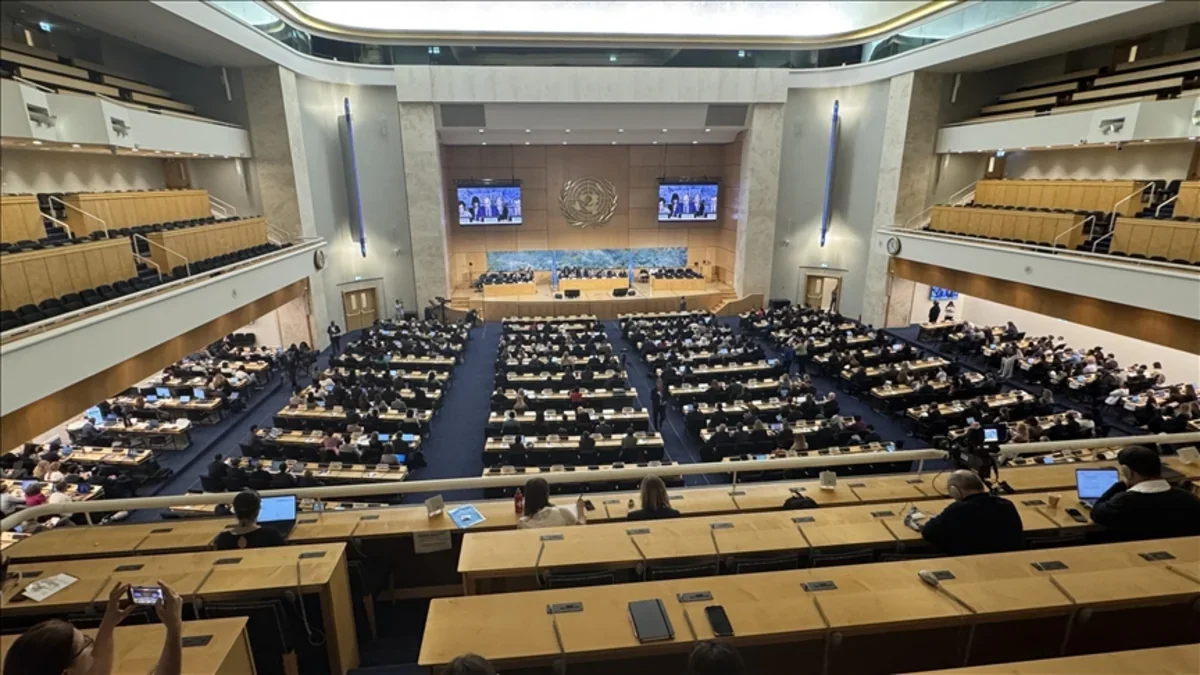
The Permanent Representation of Azerbaijan to the UN Office in Geneva and other international organizations articulated the country's position during an interactive dialogue at the 62nd session of the UN Human Rights Council, dedicated to the annual report of the High Commissioner. Azerbaijan emphasizes that the foundation of democracy, peace, and well-being is the protection and promotion of the right to development, as well as economic, social, cultural, and other human rights.
The statement also highlighted the emergence of a historic opportunity for the South Caucasus to transform from a region of confrontation into a zone of cooperation. "The benefits of this are already evident. Azerbaijan has opened and offered new economic, trade, and transit prospects not only for its immediate neighbors but also beyond the region," the document quotes.
One of the key priorities of the Azerbaijani government is the return of internally displaced persons to their homes, as well as the implementation of reconstruction and rehabilitation works. The right to return and a dignified life are considered important human rights.
However, the exercise of these rights, as well as the identification of thousands of missing citizens, is complicated by widespread mining of territories and the presence of unexploded ordnance. In this regard, Azerbaijan calls on the international community not to remain indifferent and to show solidarity.
The statement also expressed serious concern about current human rights issues, including racism and discrimination against ethnic and religious minorities in European Union countries. An increase in Islamophobia and growing social intolerance were noted.
In addition, reports of unequal treatment of migrants and asylum seekers were mentioned, as well as practices that question equal access to dignity, protection, and fundamental rights.
The document emphasizes that human rights must be consistently promoted for all without any discrimination. Effective international cooperation, according to Azerbaijan, should be built on the principles of mutual respect, objectivity, and equal standards.