İçərişəhər
Twenty-two hectares inside a fortress wall, home to more than a thousand families. The oldest part of Baku — and the only one that stayed a city rather than a museum behind glass.
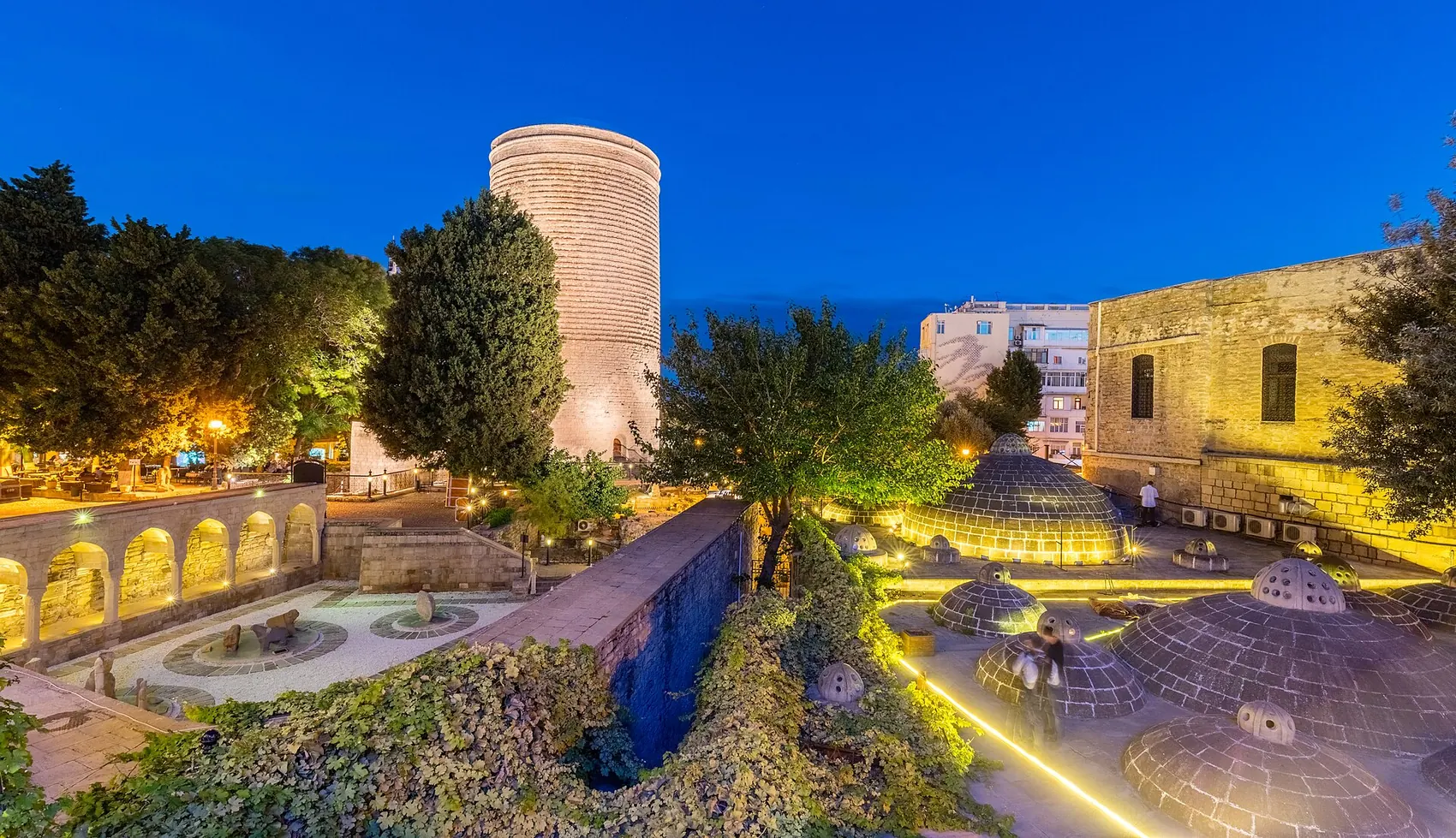
The Maiden Tower and the garden by the fortress wall · Diego Delso · CC BY-SA 4.0
What this place is
İçərişəhər — “the inner city” — is a historical and architectural reserve in the centre of Baku, ringed by a wall eight to ten metres high and up to three and a half metres thick. In shape it is an elongated oval of roughly six hundred by four hundred metres on a low hill above the Caspian.
The reserve covers 221 thousand square metres, and it is not an empty monument: more than thirteen hundred families live inside the walls. Here too are dozens of mosques, caravanserais and bathhouses, museums, embassies, hotels and cafés. The site was inhabited as early as the Bronze Age, and dense urban building dates to the 8th–11th centuries.
In 1977 İçərişəhər was declared a historical and architectural reserve. In December 2000 the Old City, together with the Palace of the Shirvanshahs and the Maiden Tower, became the first site in Azerbaijan on the UNESCO World Heritage List.
Sections
 01History
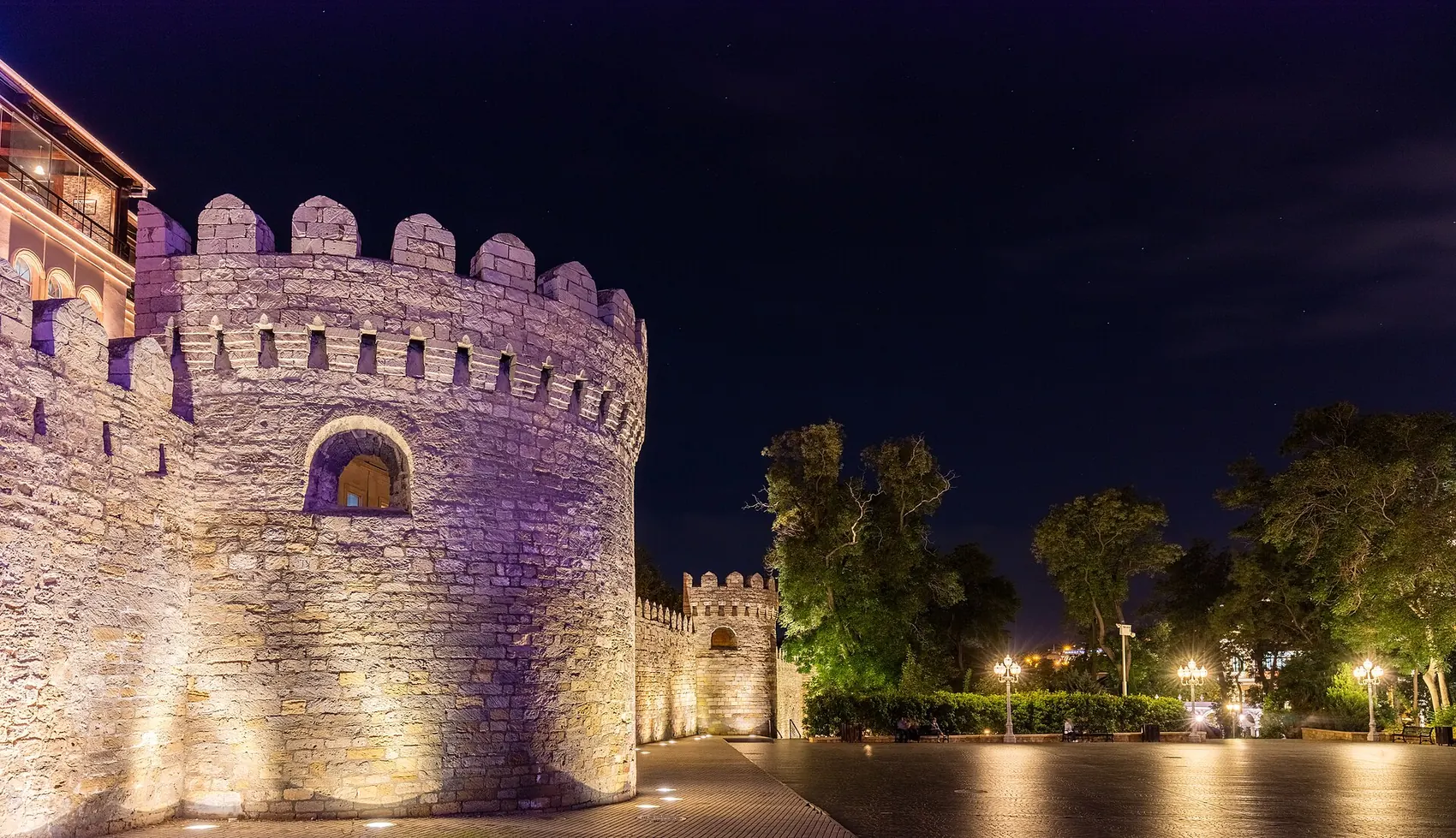
From the port of the first centuries and the raids of the Rus to the oil boom that pushed the city beyond its walls.
Read →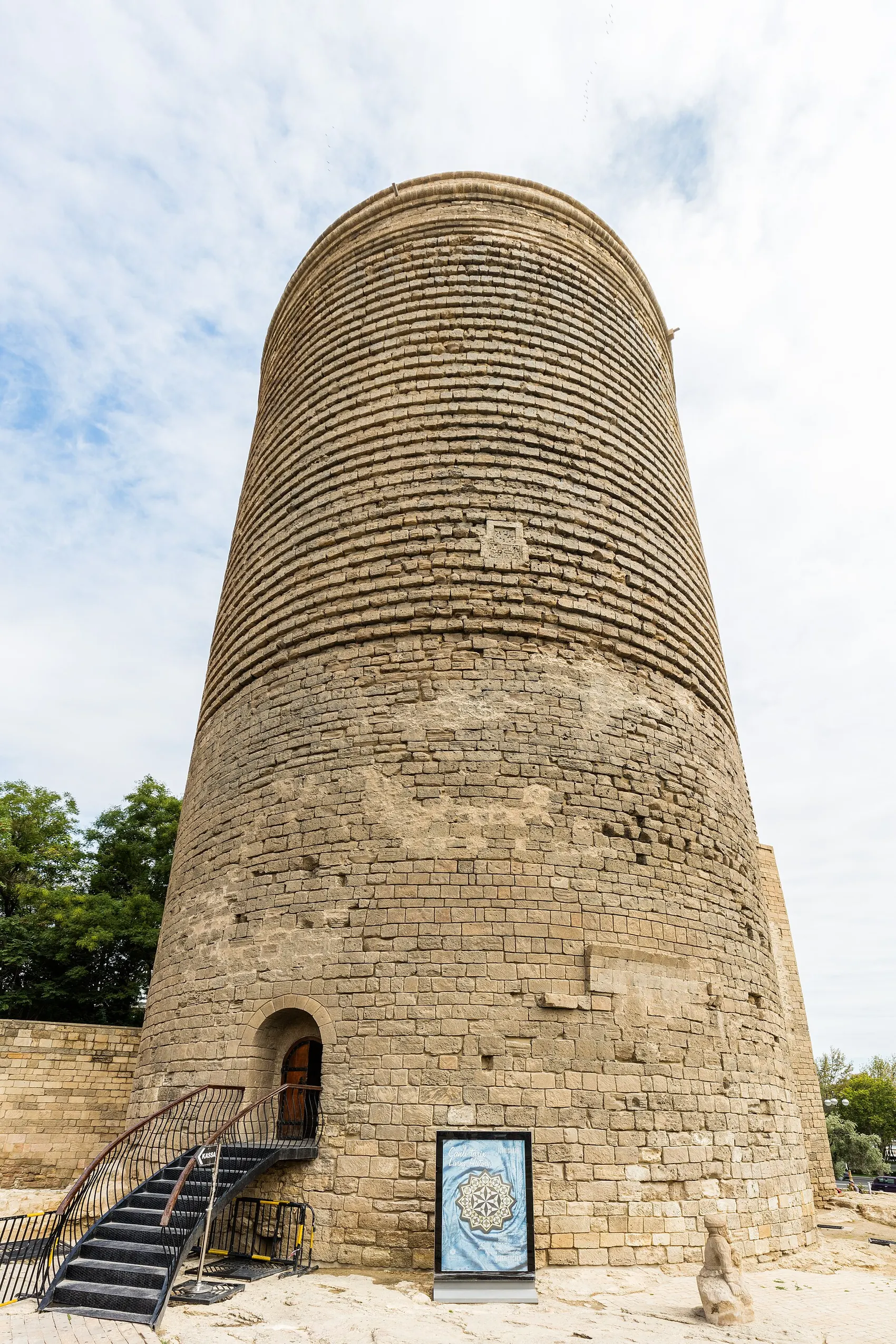 02Maiden Tower
Twenty-eight metres, eight tiers, a 12th-century inscription — and a purpose still under debate.
Read →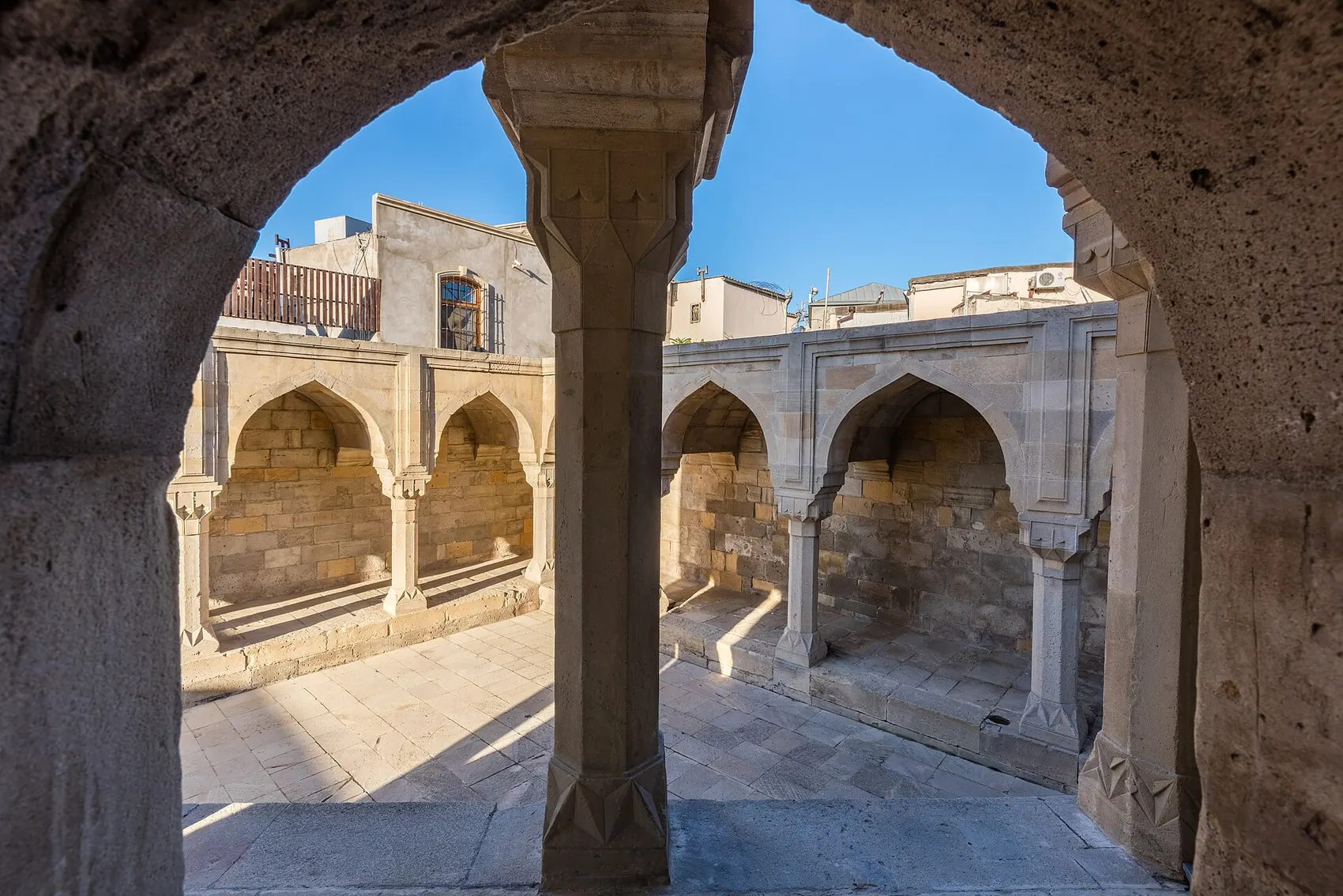 03Shirvanshahs' Palace
Three courtyards on different levels: the palace, the Divankhana, the tomb, a mosque, a bathhouse and a covered well.
Read →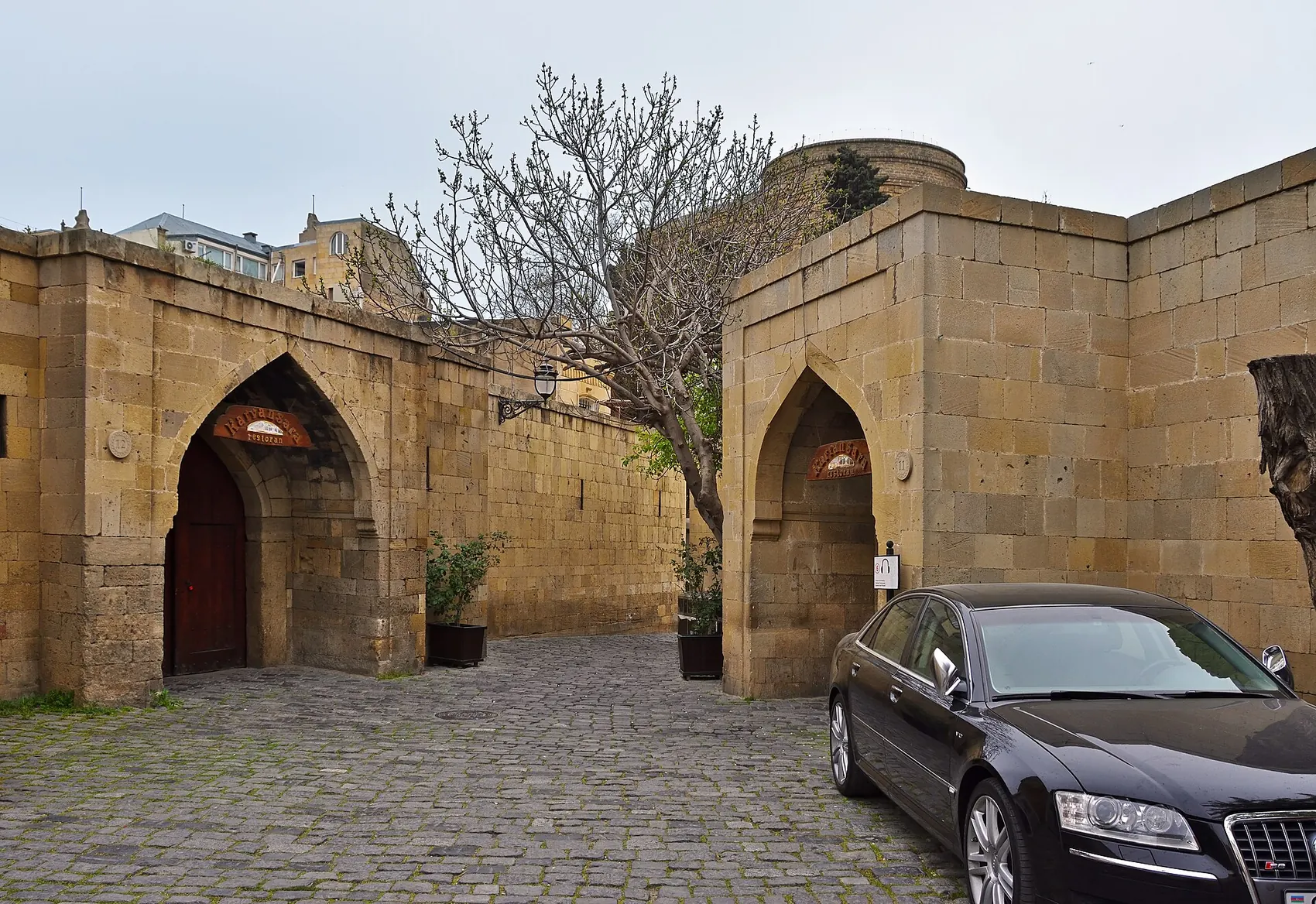 04Monuments
The Juma Mosque and the minaret of 1078, the Indian and Bukhara caravanserais, bathhouses and the Market Square.
Read →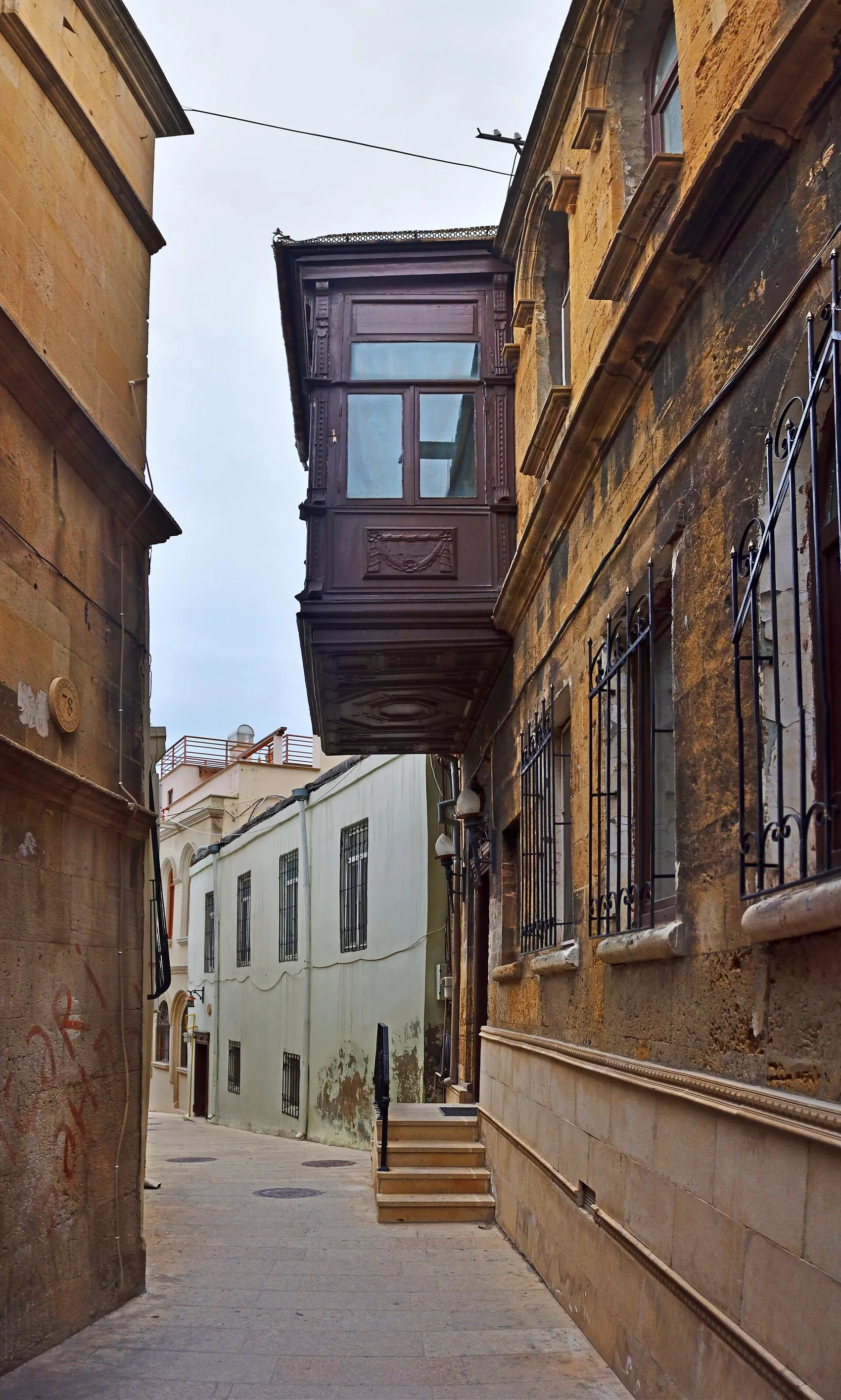 05Streets and quarters
Three main streets, crooked lanes and quarters named after trades — from boatmen to bath keepers.
Read →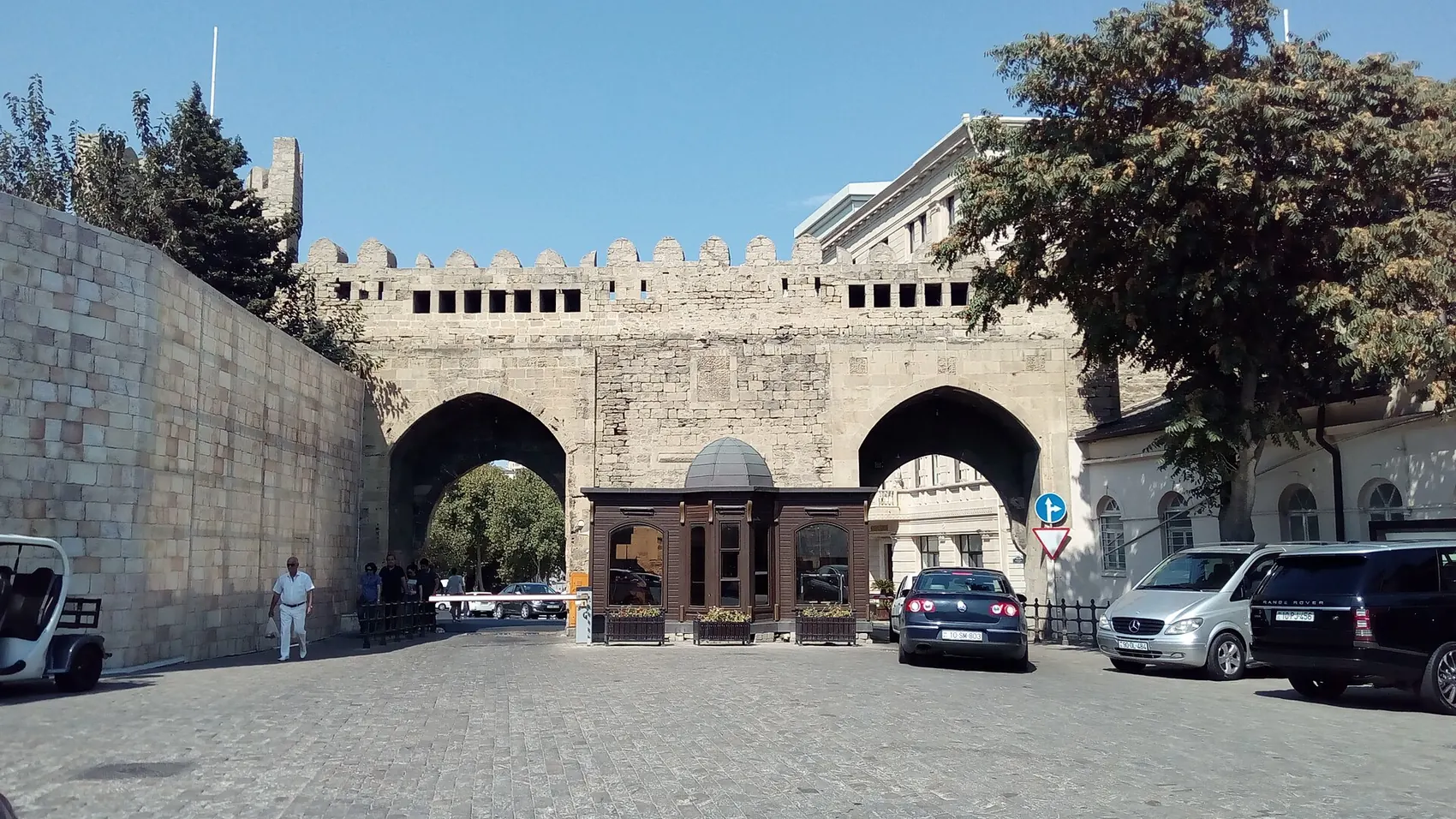 06Visiting
Where to enter, how much time to allow and what to remember while walking through a residential quarter.
Read →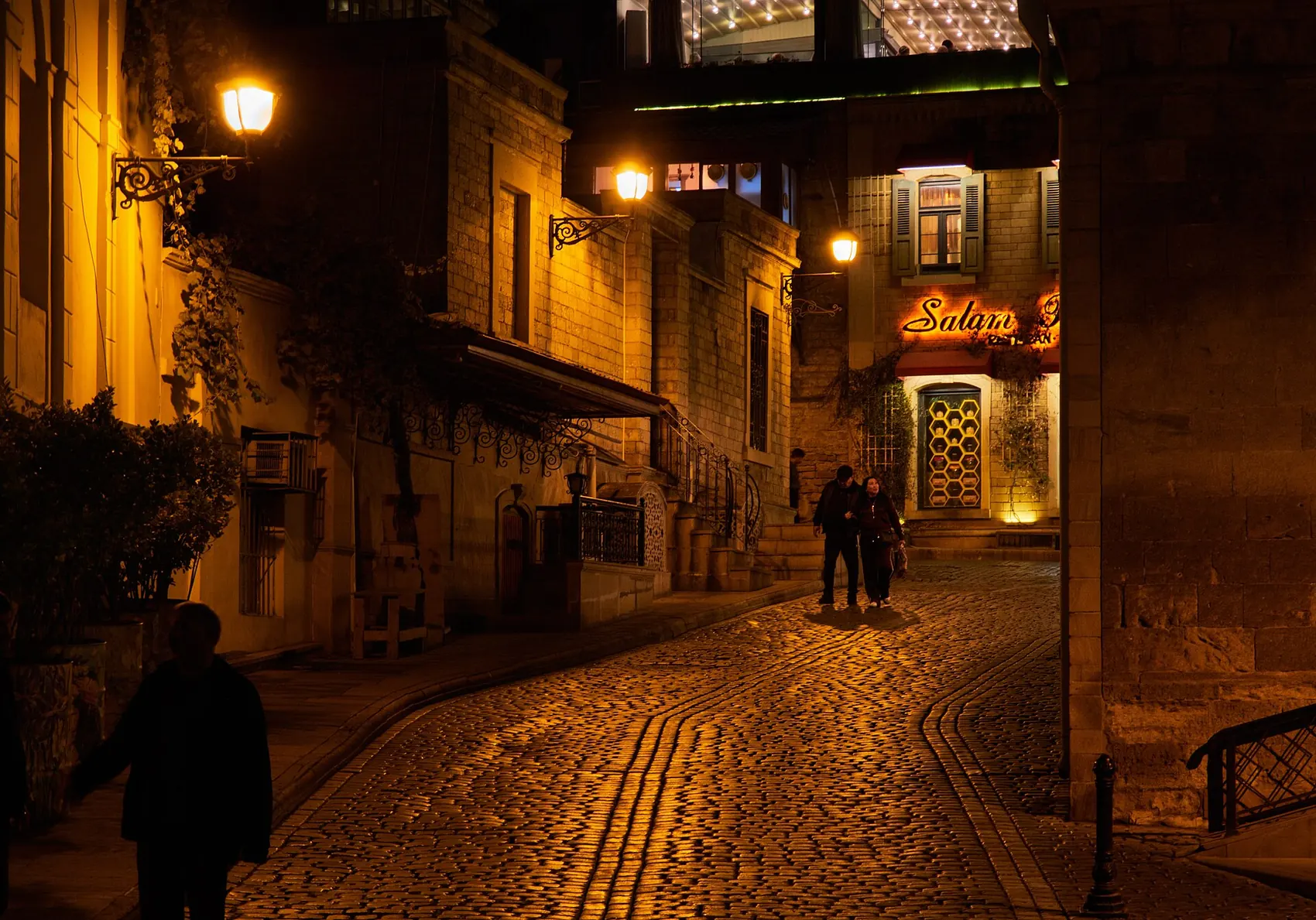 07Photographs
Twenty-five images with the author and licence given for each.
Read →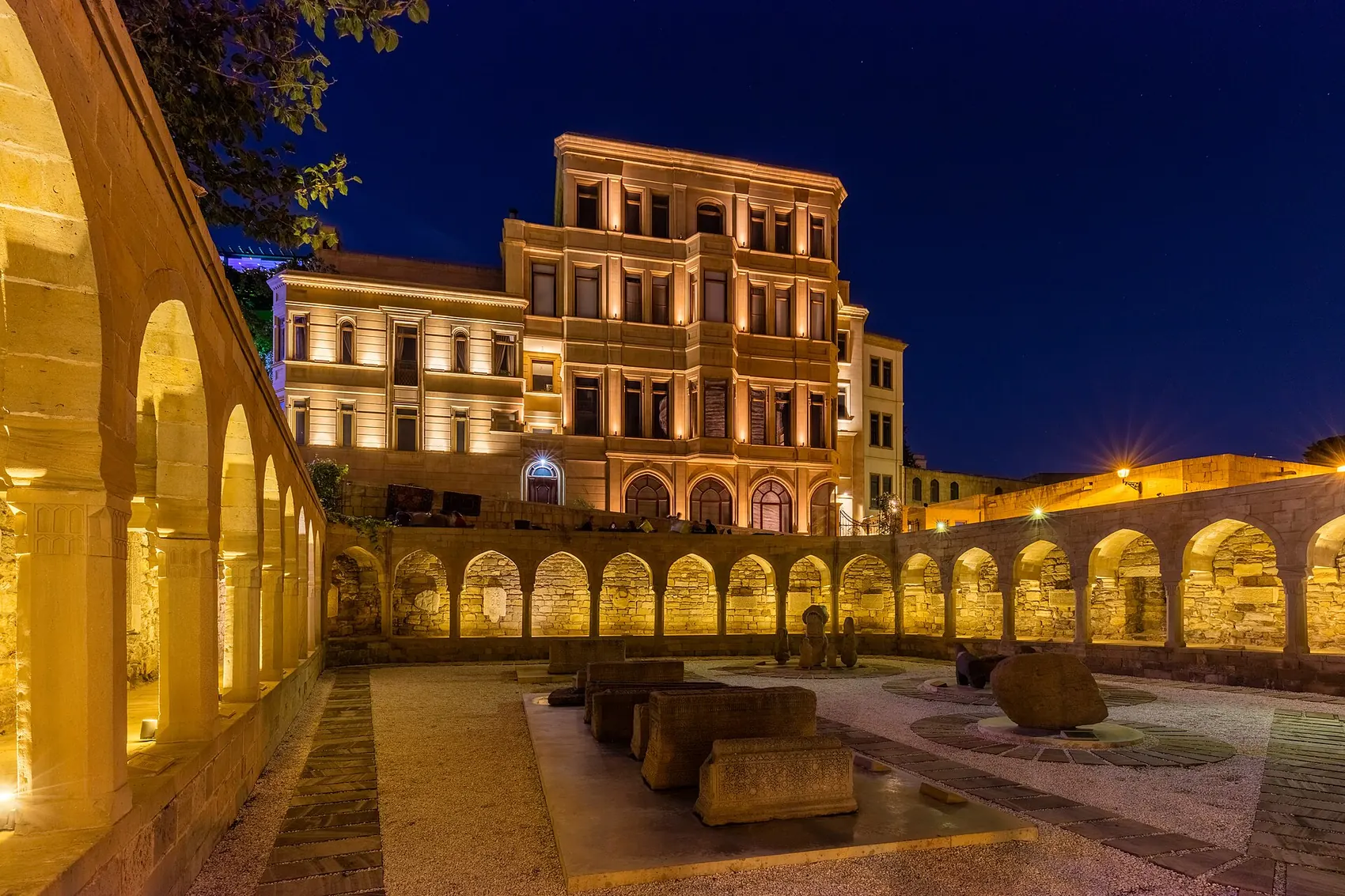 08Live
The live Baku TV stream on the page itself — our player, the channel's feed.
Read →The wall that was left alone
Baku was ringed by several lines of walls. The outer one was dismantled in the 19th century: in 1865 the section facing the sea was taken down and the stone sold for 44,000 roubles — money that went into laying out the seaside boulevard.
The surviving wall is the oldest, dated to the 12th century. In the north stand the “twin fortress gates”: the Shamakhi Gate and, built beside it in the 1880s, the Shah Abbas Gate, which received the inscription of 1608/1609 about the construction of the outer gates.
A city, not a stage set
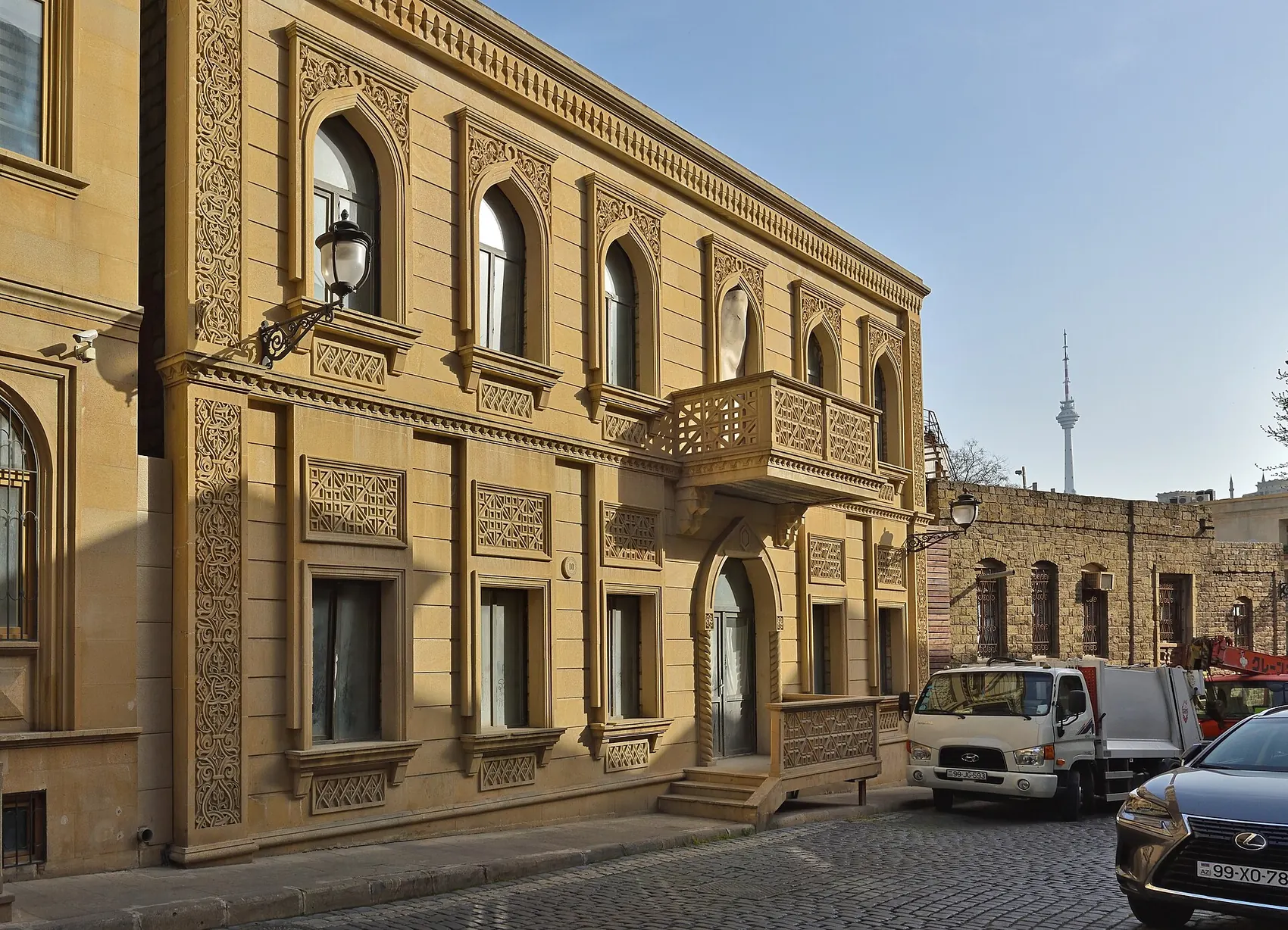
Inside the walls people still hang out laundry, walk children to school and sell carpets. That is rare for a World Heritage site: the reserve remained residential, and its main value is not the individual monuments but the surviving fabric of the quarter.
In 1806, when Russian troops took the city, İçərişəhər held 500 houses, 707 shops and about seven thousand residents — at that point this was the whole of Baku.
After a month in Baku I still did not know, on entering a street, whether I would come out of it
Baku.ws news
The feed of the news portal
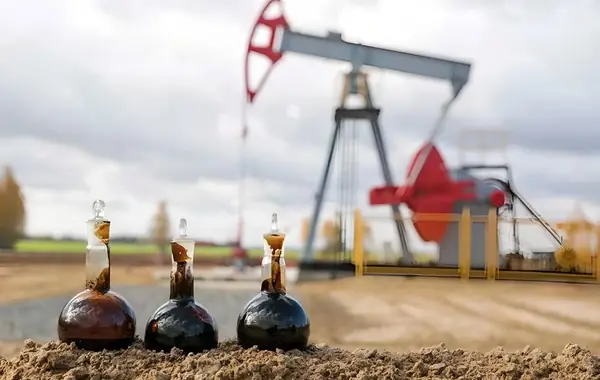 EconomyAzerbaijani oil has become cheaper909080808010:09
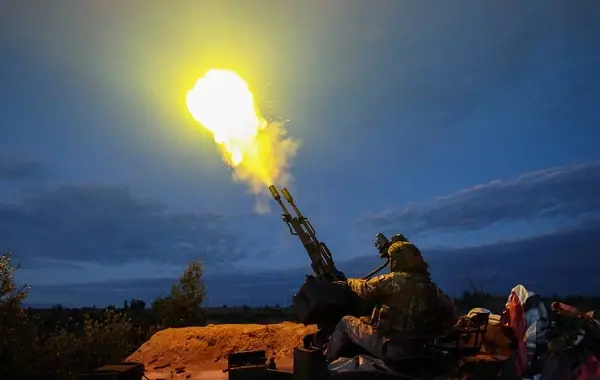 WorldThe number of drones shot down on approach to Moscow has risen to 103, three people injured10:00
 PoliticsDeputy: Statements by Russian officials directed at Azerbaijan entail legal liability23:57
 WorldTrump doubts Iran's readiness to sign a deal with the US23:56
Headlines and photographs come from baku.ws; the feed was updated on 18 August 2026. The links lead to the publisher's site.
Sources
Facts were checked against Wikipedia articles in four languages, the UNESCO World Heritage entry and the site of the Reserve administration. Where sources disagree, both versions are given.