Updated: 27 августа, 2026 5:29 пп
In the 1980s, a popular joke circulated in Baku: an Odessa Jew comes to Baku, sees a slogan hanging at the entrance to the airport and, moved to tears, cannot hold them back: “I didn’t know they considered me a son of Azerbaijan.”
The essence of the joke was that for many years, a huge poster had hung at Baku airport with the words, naturally in the Cyrillic alphabet used at the time: “Long live Azerbaijan!” Reading the phrase, Odessa-born Yasha thought that the words were addressed specifically to him.
But, as they say, there is a grain of truth in every joke.
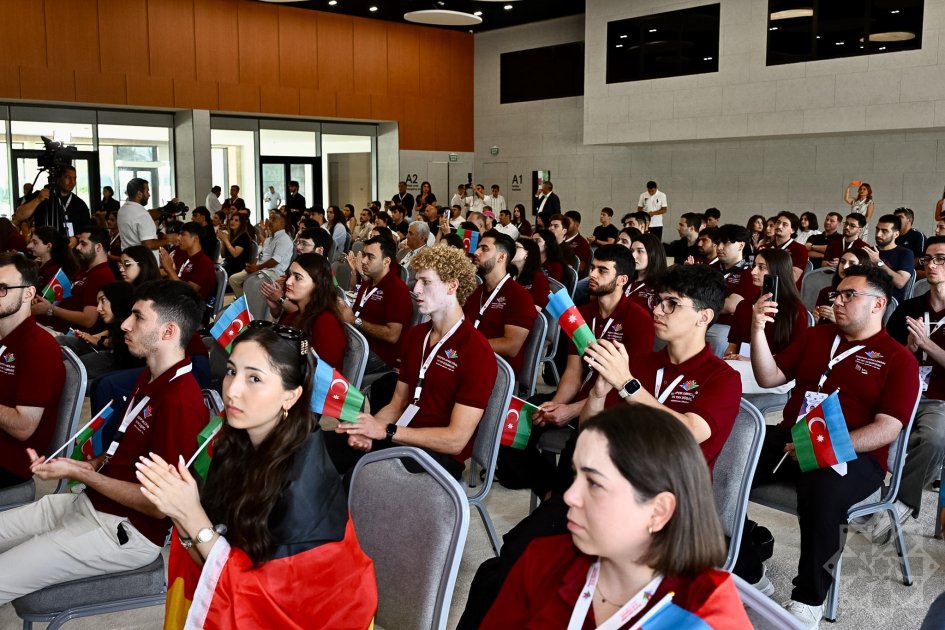
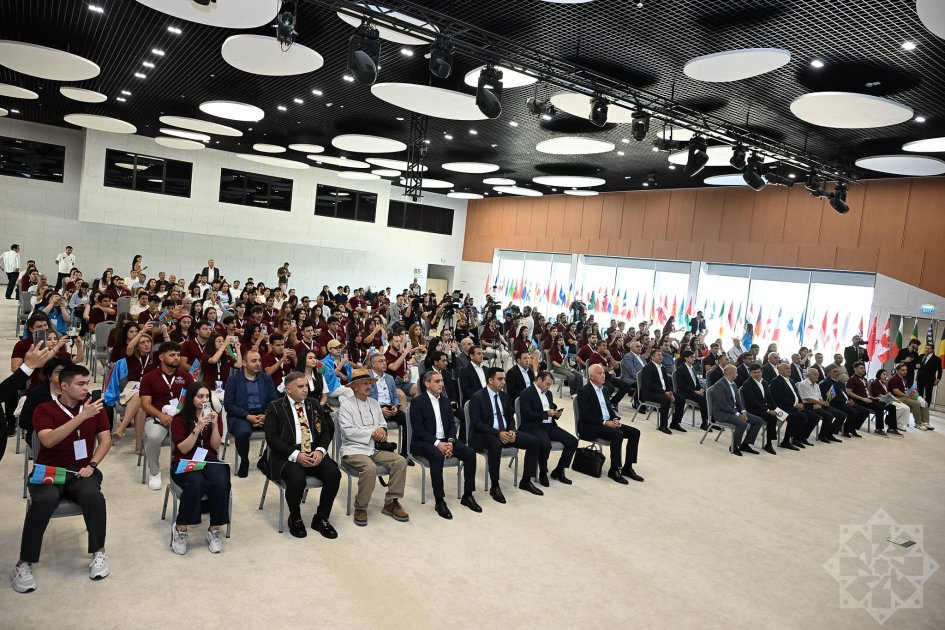
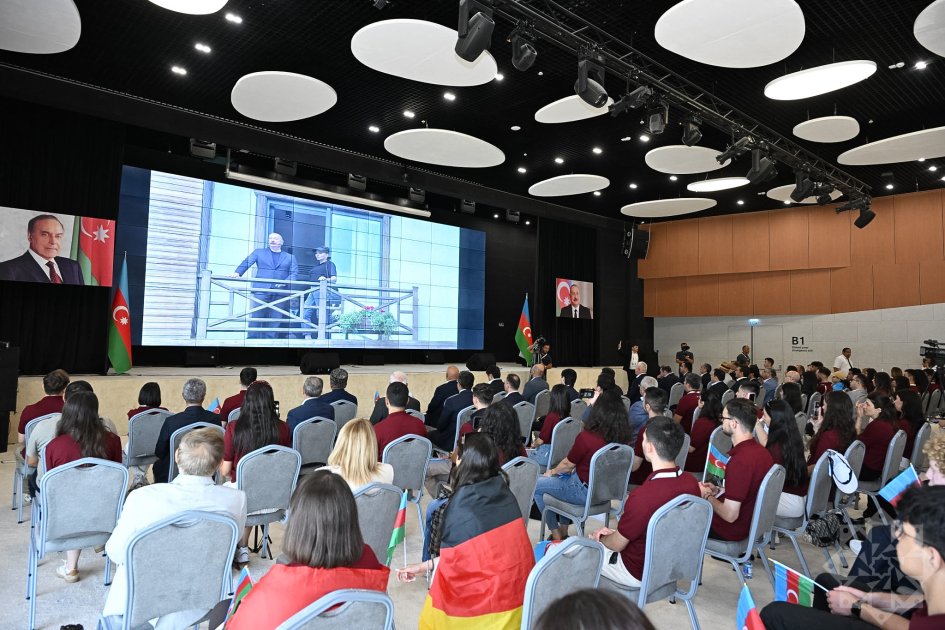
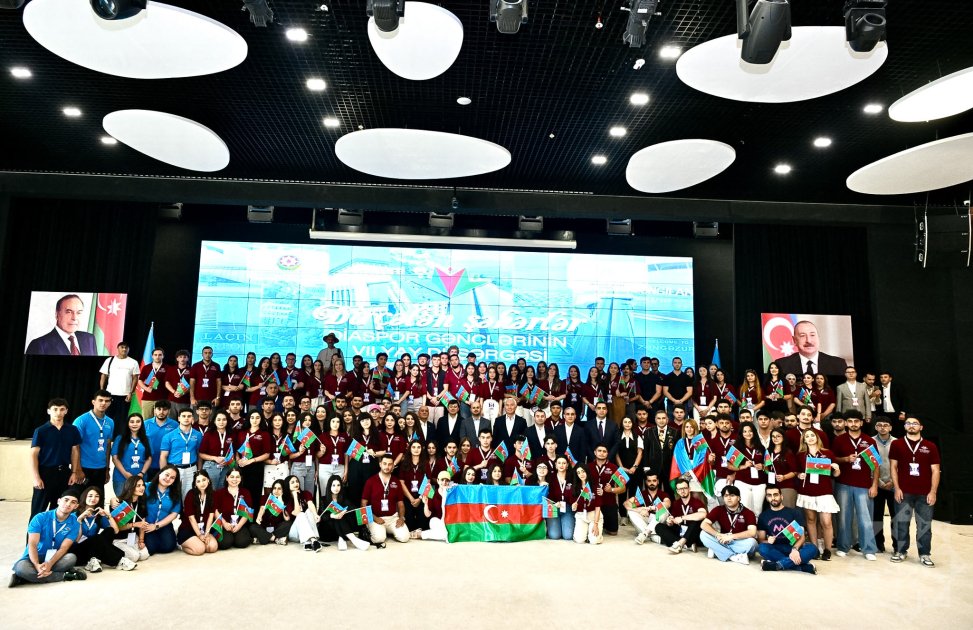
At the beginning of August, Azerbaijan hosted the 7th traditional one-week camp for young people from the diaspora. Many of the young people who came there were getting acquainted with their roots up close for the first time. Although they were born into families of Azerbaijani origin, they themselves were born and raised in other countries.
This year, one of the camp participants was 26-year-old Israeli Yakov. He is an ordinary “sabra” — that is, a Jew born in Israel — who grew up in a Russian-speaking family. However, after taking part in the camp, he told Jnews.az in an interview that he now, in a certain sense, genuinely feels like a “son of Azerbaijan.”
– Yasha, first of all, tell us what this camp is and how you ended up there. Is your father or your mother Azerbaijani?
– My parents are Ashkenazi Jews, but both are true Baku natives. They love Azerbaijani literature, music, and everything connected with Azerbaijan in general. Azerbaijani dishes are cooked in our home, and even my brothers’ and sisters’ children have been introduced to this cuisine. One of them is seven years old, and as soon as he sits down at the table, the first thing he asks is: “But where’s the narsharab?!”
When I saw the announcement about applications for the camp, I submitted my documents. Then I had an interview and was accepted. So, among approximately 150 Azerbaijanis who came to Azerbaijan from 64 countries around the world, I was the only Jew.
– Wow, what a huge geography!
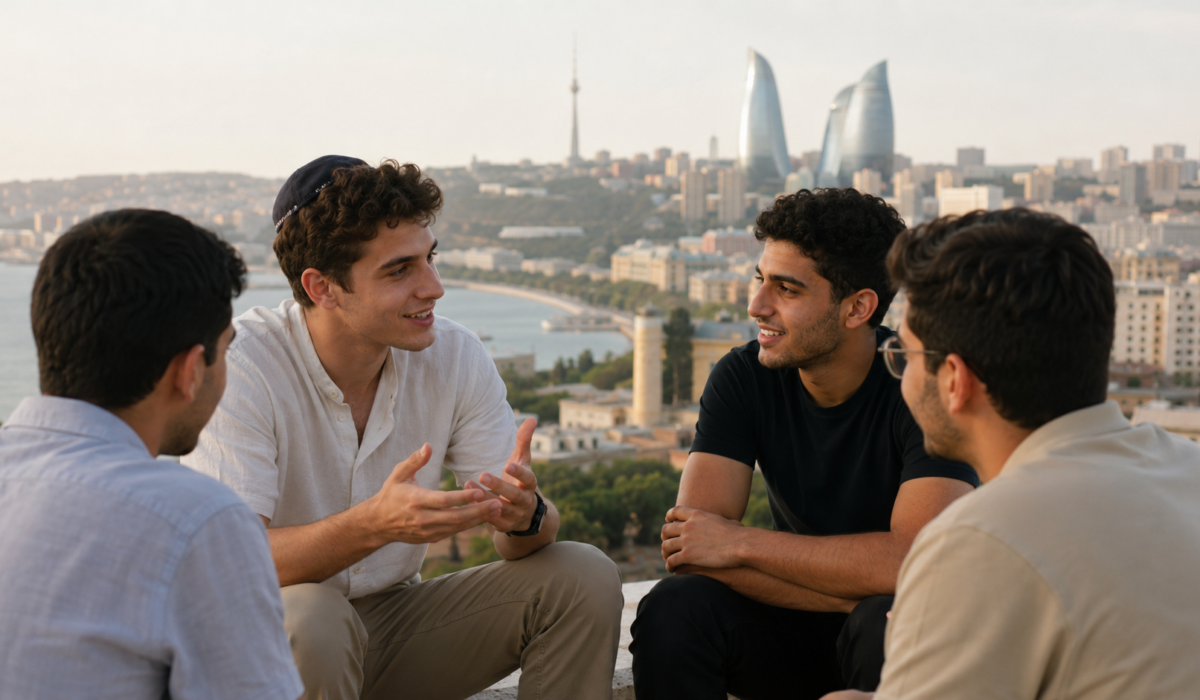
– Yes, it turned out that it is almost impossible to find a country on the map that does not have at least a small Azerbaijani community. There were young men and women from Russia, Ukraine, Poland, the Czech Republic, Germany, the United Kingdom and Latin American countries. My roommate was a young man from Moldova, while at the dining table I sat together with participants from Jordan and Syria.
Frank conversations
– How were you treated, and generally speaking, what is their attitude toward Israel?
– In short, it was very warm and friendly. Azerbaijanis are a people who are very friendly toward us. They are also very warm and welcoming. Many young people specifically approached me and said that they support Israel in its war against terrorism.
Others asked whether we really consider ourselves superior to the other peoples of the world and whether we really control the entire world media. To be honest, I was absolutely not prepared for such questions, but I had to give some kind of answer. For example, regarding the media question, I responded with a question of my own: if we really control all the world’s media, then why is that media so antisemitic?!
I became closest with a young man from Iran. He managed to leave the country at a young age, graduated from the law faculty of Peking University and currently works as a lawyer in China. He hates the mullah regime. When he was asked whether he would return to Iran if the regime were overthrown, he replied: “I’ll be the first one standing in line for a plane to Tabriz!”
During those days, we really became like brothers. But when I suggested that we take a photo together as a keepsake, he refused. He said that if a photo of him with an Israeli appeared somewhere, he would no longer be able to visit his parents, and, moreover, they could face serious problems there as well.
At first, it was also difficult to start conversations with the young people from Jordan and Syria. But there were no arguments. The atmosphere at the camp was magnificent, everything had been thought through down to the smallest detail, and no incidents occurred. It was simply that these two young men believed that our favorite activity was killing Muslim children.
The young man from Jordan admitted that when he heard there was a Jew from Israel at the camp, his blood boiled in the first few minutes and he was almost ready to grab me by the throat.
When I heard this, I suggested that the three of us make coffee together, take our cigarettes and phones, sit somewhere apart and calmly talk about everything. I am a person who is very far removed from both religion and politics. So, I repeat, I was absolutely not prepared for having to conduct such conversations on behalf of Israel.
Look, I told them, according to artificial intelligence calculations, how many people among the residents of Gaza have died during the three-year war? 70,000, right? And this is a figure based on Hamas data, which is hardly a particularly reliable source, and it includes their fighters as well. The population of the Gaza Strip is approximately 2 million, correct? Now think about it: if, with the capabilities of our army, we really wanted to commit genocide in Gaza, would we have killed only 3.5 percent of the population of the Strip over three years, more than half of them being armed fighters?! And if we wanted to commit genocide in Lebanon, why would we resort to such a complicated operation involving pagers instead of subjecting the territory to carpet bombing?!
The Syrian young man told me that we allegedly deliberately kill children.
Yes, I do not rule out and I acknowledged that children die in war, I agreed. But not deliberately; rather, because Hamas constantly uses Palestinian children as human shields and human bombs. Imagine that you are a tank commander. You see a 7- or 8-year-old child coming toward you with a bomb in his hands. You have a wife and children, too. But there are three other people in the tank besides you: one of them is getting married in a week, another is an 18-year-old whose life is only beginning, and the third has a wife who has just given birth to their eighth child. What will you do: fire at that child, or allow him to blow up the tank so that all of you die?
At this point, both of them said that in such a situation there is no choice and that the child would have to be shot.
But do you know what the most horrifying thing about this story is? I continued. The child you killed will never leave you in peace for the rest of your life. Because of post-traumatic stress disorder — PTSD — he will repeatedly appear before you in your dreams like a nightmare. Thousands of young people who have been in the war are suffering from this today. Some of them, unable to endure it, commit suicide. Because unlike Hamas, we do not want to kill anyone. We do not rape anyone, we do not burn anyone alive. The only thing we want is peace and tranquility. The problem is that our enemies want us to be destroyed.
I spoke to them at length about the atrocities committed by terrorists on October 7. I do not know whether I managed to convince them. I do not know to what extent I represented Israel appropriately. But I tried.
It is important to know your roots
– I suppose that during that week you were taken to different regions of Azerbaijan?
– We visited Zangilan, Karabakh and, of course, Shusha, which was the capital of the Karabakh Khanate. We were shown photographs depicting the horror and vandalism that the Armenians left behind in Azerbaijan’s formerly occupied territories. What shocked me most were the images of desecrated mosques. I am not Muslim. But I believe that desecrating someone else’s holy places and mocking someone’s faith are among the worst things one can do.
But you cannot even imagine what an incredible job Azerbaijanis have done in the territories liberated over the past few years! Shusha, which not long ago was among ruins, is today an amazingly beautiful city, like something out of a fairy tale.
We also had very interesting meetings with artists, scientists and specialists working in the field of high technologies.
– How would you sum up your impressions of what you heard and saw during your time at the camp?
– First of all, I realized how important a person’s national roots are. After all, I had the opportunity to observe from the outside how some people live far from the land of their ancestors, do not know their language or culture, but suddenly rediscover their people and their history…
I myself studied at a “secular” school, and we were told that nationality does not matter at all; the important thing is to be a good and tolerant person. But at the camp I realized that it is not quite that simple.
During these days, I also learned that Azerbaijan is a modern state that continues to develop rapidly. I saw that everything my parents had told me about the tolerance and openness of Azerbaijanis was true. Today, Azerbaijan is also a state that is very friendly toward us. We need to value this friendship and categorically avoid any hasty, populist steps that could harm our relations. I think that if someone in our Foreign Ministry reads these words, they will understand what I mean.
I also want to say this: you absolutely have to visit Azerbaijan as a tourist, and not just once. It is an extraordinarily beautiful and generous country. And the qutabs here are something else — you will lick your fingers! I know that trips to Azerbaijan for holidays are currently very popular in Israel. But believe me, this country deserves to be known much better by Israelis.
Finally, I want to draw attention to one more point. As is known, Azerbaijanis have already been organizing such a camp for the seventh year. Those who participate in this camp can subsequently answer various questions related to the conflict between Azerbaijan and Armenia more fully, represent their homeland better in general, and better convey Azerbaijan’s rightful position to the public in the countries where they live.
I think Israel has a lot to learn from Baku in this regard. I know that there is the MASA program, through which young people are brought to Israel, including Jewish youth, but this program lasts for a year and has different objectives. If we brought young people, not only Jews, to Israel for one week, organized a seminar for them about the events of October 7, gave them the opportunity to meet eyewitnesses of those events, and took them to areas near the border with Gaza, every person who went through such a camp would, in a certain sense, become an ambassador of Israel and a fighter for their country in the information war. That would be magnificent!
Emil Shleymovich